A former Speech and Language Pathologist for nearly 20 years, I began educating our 3 children full-time in 2015 and have cherished every gifted moment (even the challenges). But what is interwoven into all aspects of daily life (as a wife, via motherhood, teaching, friendship, fitness, etc.) is Christian Apologetics (1 Peter 3:15)… which is why this blog exists.
“For if someone comes and proclaims another Jesus different from the one we proclaimed, or if you receive a different spirit than the one you received, or a different gospel than the one you accepted, you put up with it well enough!”
2 Corinthians 11:4
In 2021 I began learning about an old Christian heresy called, Gnosticism. And friends, it has been heartbreaking, not to mention mind-blowing to witnessing how prevalent Gnostic beliefs are in society…Even in many of our churches! Below you will find articles by GotQuestions.org as well as 2 videos and 1 Podcast episode which will (Lord willing) equip you as to detect what is Biblical teaching, (Historic Christianity) from any Gnostic version you might encounter.
🔍A quick example of Gnostic Terminology: “True Self,” “Divine Self,” ”Authentic Self”, “Essence,” and/or ”Divine spark.” These are Gnostic in meaning, and therefore heretical when applied to Christianity. Please pray for the Church as well as keep reading God’s Word (Bible). We need to know what is Truth as to recognize the counterfeits.
“Gnosticism presents a radically self-centred alternative gospel. Instead of pointing to Christ, Gnosticism proclaims that salvation comes from inside, finding your true identity within. It denies the goodness of the Creator and the glory of his creation. It denies the Incarnation, the resurrection and the need for redemption. Gnosticism sets itself against true Christianity at every point. It has been described as the ultimate heresy. This false teaching was faced by the Church in the second and third centuries AD.”
“O Timothy, guard the deposit entrusted to you. Avoid the irreverent babble and contradictions of what is falsely called ‘knowledge,’ for by professing it some have swerved from the faith.”
1 Timothy 6:20-21
“See to it that no one takes you captive by philosophy and empty deceit, according to human tradition, according to the elemental spirits of the world, and not according to Christ.”
Colossians 2:8
Beloved, do not believe every spirit, but test the spirits to see whether they are from God, for many false prophets have gone out into the world. 2 By this you know the Spirit of God: every spirit that confesses that Jesus Christ has come in the flesh is from God, 3 and every spirit that does not confess Jesus is not from God.
“What is the definition of the term Gnostic?” By GotQuestions
The definition of the word Gnostic is about as easy to nail down as a flopping fish. It is derived from the Greek word gnosis, meaning “to know.” In the case of Gnosticism, what is “known” has shifted over the thousands of years since Gnosticism first reared its head during the formation and solidification of the early church.
Basically, the Gnostic believes in acquiring special, mystical knowledge as the means for salvation. According to Gnostic beliefs, there is a Great God that is good and perfect, but impersonal and unknowable. The creator of the universe was actually a lesser deity—a cheap knock-off of the “true God”—who wanted to create a flawless material universe but botched the job. Instead of having a utopia, we ended up with a world infected with pain, misery, and intellectual and spiritual blindness; all matter is now corrupt and evil. However, when this lesser deity created man, he accidentally imbued humanity with a spark of the “true” God’s spirit, making man an inherently good soul trapped in the confines of an evil, material body.
Contrary to a message of salvation through Christ alone (Acts 4:12), the Gnostic Jesus brings a message of self-redemption. Man only needs to examine his inner “spark” to find the knowledge needed to free himself from his material body and reach God. This alleged purity of heart is the exact opposite of what is stated in Jeremiah 17:9: “The heart is more deceitful than all else and is desperately sick; who can understand it?”
Today, Gnosticism has evolved and branched out from the exclusively spiritual into the secular and scientific. Psychologist C. G. Jung praised Gnosticism as superior to traditional Christianity as a way of thinking. Another form of Gnosticism denies the existence of God altogether, while embracing an eternal—but still flawed—universe. This atheistic form of Gnosticism doesn’t see the material world as totally evil, but as flawed and incomplete. Mankind becomes the “deity,” and it is his right to improve the human body and the world around him through his own wisdom.
Christianity and Gnosticism are mutually exclusive; however, it is easy for a Gnostic mindset to seep into our own thinking if we’re not careful (1 Peter 5:8). The Gnostic is pursuing goodness, but, instead of seeking to be regenerated by Christ, he grabs hold of a man-centered purpose for living. Gnostic thought makes man “wise in [his] own eyes” (Isaiah 5:21), something Proverbs 3:7pointedly advises against: “Do not be wise in your own eyes; fear the Lord, and turn away from evil.”
Gnostic thinking claims that deeper truth can be found apart from God. But Proverbs 1:7 says, “The fear of the Lord is the beginning of knowledge; Fools despise wisdom and instruction.” Instead of searching our corrupt, flawed “inner selves” for answers, we should instead test everything against the revealed Word of God (1 Thessalonians 5:21). In the end, it is God’s truth alone that can be trusted.
Nick Needham gives a church history talk on the topic of Gnosticism: Past & Present, in which he discusses the roots of Gnosticism and what form it takes in our present day. Although the audio quality is not the best, it is a helpful listen. Original audio here, with some other church history lectures.
The following post consists of 2 videos (at the end), along with 2 articles. The first piece was written by GotQuestions.org and the second, much larger exposition, was authored by Marcia Montenegro on behalf of Midwest Christian Outreach. Both provide a Biblical perspective regarding the growing popularity of Contemplative Prayer within numerous churches. Friends, please grab your Bibles and be Bereans alongside me…We need to examine this trend, as popular does not equate always equate to Biblical. We need to trust (and follow) God and His Word, not our feelings and experiences.
It is important to first define “contemplative prayer.” Contemplative prayer is not just “contemplating while you pray.” The Bible instructs us to pray with our minds (1 Corinthians 14:15), so, clearly, prayer does involve contemplation. However, praying with your mind is not what “contemplative prayer” has come to mean. Contemplative prayer has slowly increased in practice and popularity along with the rise of the emerging church movement—a movement which embraces many unscriptural ideas and practices. Contemplative prayer is one such practice.
Contemplative prayer begins with “centering prayer,” a meditative practice where the practitioner focuses on a word and repeats that word over and over for the duration of the exercise. The purpose is to clear one’s mind of outside concerns so that God’s voice may be more easily heard. After the centering prayer, the practitioner is to sit still, listen for direct guidance from God, and feel His presence.
Although this might sound like an innocent exercise, this type of prayer has no scriptural support whatsoever. In fact, it is just the opposite of how prayer is defined in the Bible. “Do not be anxious about anything, but in everything, by prayer and petition, with thanksgiving, present your requests to God.” (Philippians 4:6). “In that day you will no longer ask me anything. I tell you the truth, my Father will give you whatever you ask in my name. Until now you have not asked for anything in my name. Ask and you will receive, and your joy will be complete” (John 16:23-24). These verses and others clearly portray prayer as being comprehendible communication with God, not an esoteric, mystical meditation.
Contemplative prayer, by design, focuses on having a mystical experience with God. Mysticism, however, is purely subjective, and does not rely upon truth or fact. Yet the Word of God has been given to us for the very purpose of basing our faith, and our lives, on Truth (2 Timothy 3:16-17). What we know about God is based on fact; trusting in experiential knowledge over the biblical record takes a person outside of the standard that is the Bible.
Contemplative prayer is no different than the meditative exercises used in Eastern religions and New Age cults. Its most vocal supporters embrace an open spirituality among adherents from all religions, promoting the idea that salvation is gained by many paths, even though Christ Himself stated that salvation comes only through Him (John 14:6). Contemplative prayer, as practiced in the modern prayer movement, is in opposition to biblical Christianity and should definitely be avoided.
“CONTEMPLATING CONTEMPLATIVE PRAYER: IS IT REALLY PRAYER?” By Marcia Montenegro
[First published in Midwest Christian Outreach Journal, February, 2005; this version has been modified with additional information]
“God’s first language is silence.” 1
“Progress in intimacy with God means progress toward silence.” 2
“The important thing is that we are relaxed and our back is straight so that the vitalizing energies can flow freely.” 3
Contemplation is “a pure and a virginal knowledge, poor in concepts, poorer still in reasoning, but able, by its very poverty and purity, to follow the Word ‘wherever He may go.’” 4
Contemplative Prayer, also called Centering Prayer or Listening Prayer, has been taught by Roman Catholic monks Thomas Merton, Thomas Keating, and Basil Pennington, as well as by Quaker Richard Foster, and is being advocated by many others. There is no one authority on this method, nor is there necessarily a consistent teaching on it, though most of the founding teachers quote medieval mystics, Hindu, and Buddhist spiritual teachers.
According to http://www.contemplativeoutreach.org, “Centering Prayer is drawn from ancient prayer practices of the Christian contemplative heritage, notably the Fathers and Mothers of the Desert, Lectio Divina, (praying the scriptures), The Cloud of Unknowing, St. John of the Cross and St. Teresa of Avila. It was distilled into a simple method of prayer in the 1970’s by three Trappist monks, Fr. William Meninger, Fr. Basil Pennington and Abbot Thomas Keating at the Trappist Abbey, St. Joseph’s Abbey in Spencer, Massachusetts.” It should be added, “During the twenty years (1961-1981) when Keating was abbot, St. Joseph’s held dialogues with Buddhist and Hindu representatives, and a Zen master gave a week-long retreat to the monks. A former Trappist monk who had become a Transcendental Meditation teacher also gave a session to the monks.” 5
The influence of Buddhism and Hinduism on Contemplative Prayer (hereafter referred to as CP) is apparent. Words such as “detachment,” “transformation,” “emptiness,” “enlightenment” and “awakening” swim in and out of the waters of these books. The use of such terms certainly mandates a closer inspection of what is being taught, despite the fact that contemplative prayer is presented as Christian practice.
Themes that one finds echoed in the CP movement include the notions that true prayer is: silent, beyond words, beyond thought, does away with the “false self,” triggers transformation of consciousness, and is an awakening. Suggested techniques often include breathing exercises, visualization, repetition of a word or phrase, and detachment from thinking.
Beyond words: The Silence
As we see from the quotes above, silence is assumed to be God’s “language.” This seems contradictory since language usually involves the use of words, or at least symbols. From whence did this idea arise? Some quote Ps. 62:5, “My soul, wait in silence for God only, for my hope is from Him.” But the passage is about depending on God for refuge and salvation, and is not instructing how to pray. The emphasis is expectation for God only – only God can save. Even if the psalmist is praying, it is not telling us that silence is the only way to pray, or that we must approach God in silence. However, Keating states that vocal prayer is not “the most profound prayer.” 6
According to St. John of the Cross, who is heavily quoted by CP advocates, entering an “advanced state of Contemplation” requires education and training.7 This type of prayer has “nothing to do with the words and petitions of what is commonly called prayer. It is not articulate; it has no form.”8 Certainly one of the ironies of CP is that it essentially is not prayer.
It is a Zen Buddhist concept that truth is beyond words (this is also a Taoist view; Zen’s roots are in Taoism and Buddhism). Zen teaches that truth must be realized as one practices sitting meditation (zazen), cultivating an empty mind by letting go of thoughts so that rational thinking is transcended; or perhaps, as in the Rinzai school of Zen, one’s awareness is triggered by koans such as, “What is the sound of one hand clapping?” or “What was your face before you were born?” According to Zen, Buddha’s “real message remained always unspoken, and was such that, when words attempted to express it, they made it seem as if it were nothing at all.” 9
The Unity School of Christianity, a church founded on New Thought principles, and whose founders were influenced by Eastern beliefs, is a forerunner of the New Age Movement. Jesus is known as a “Way-Shower” and is believed to have become the Christ when he attained perfection; all people are believed to have the inner potential to be the same as Christ. In a Unity booklet, “The Adventure Called Unity,”10 it states that prayer involves
“[C]oncentrating one’s entire intellect on God, affirming a positive statement of truth, meditating on Divine Principles, and finally turning within one’s own being in a wonderful time of quiet which Unity calls ‘the silence,’ wherein one becomes receptive to the ‘still small voice’ of God.” 11
The above, with the exception of the phrase “Divine Principles,” is similar to statements found in CP literature. Unity also asserts that “spiritual communion takes place through prayer and meditation in the silence.” 12
A popular Bible passage used to advocate silent meditation as prayer is Ps. 46:10, “Be still and know that I am God.” However, this is being taken out of context.13 A study of this Psalm shows this is actually a rebuke from God to those striving against Him. Some translations render this as “Cease striving and know that I am God,” (NASB, ESV). Charles H. Spurgeon’s remarks on verse 10 are “Hold off your hands, ye enemies! Sit down and wait in patience, ye believers! Acknowledge that Jehovah is God, ye who feel the terrors of his wrath! Adore him, and him only, ye who partake in the protection of his grace.” 14
Praying in silence, or ruminating on a passage of scripture in silence, is normal, but silence should not be regarded as superior to words; nor does the Bible give any support to the notion that the “language of God” is silence. Interestingly, Foster even warns about silent CP, saying that it is for more mature believers, that “we are entering deeply into the spiritual realm” where we may encounter “spiritual beings” who are not on God’s side. He suggests a prayer of protection in which one surrounds himself with “the light of Christ,” saying “all dark and evil spirits must now leave,” and other words to keep evil ones at bay.15 I could not help but think of my New Age days when I was taught to invoke a white light of protection before psychic activity or contact with the dead. Jesus, in teaching the disciples to pray, said, “Keep us from the evil one,” but this was a petition to guard us from Satan’s schemes, not a formula for warding off evil spirits while we pray.
In the preface to a book about Christ, an author states that Jesus is not outside our mind, but that “it is in your mind that Jesus addresses you. He is your most intimate friend speaking to you, sometimes in words, often beyond words.”16 This book is a classic New Age book, yet these words are not that dissimilar to many statements made by CP authors.
Silence can be soothing and comforting; we can get deep insights when we are quiet. But simply trying to be quiet is not prayer, and there is no biblical basis for the belief that real prayer is wordless. After all, God has given us a written revelation, and God’s laws and words are acclaimed throughout the Bible, such as Psalm 119, which extols God’s word as a treasure and lamp. In Is. 40:8, we learn, “The grass withers, the flower fades, but the word of our God stands forever,” and Jesus declares to the Father in Jn. 17:17, “Your word is truth.”
Beyond the mind: No-thinking
According to Keating, CP should be “detachment” from thought, getting into a state of “no-thinking” and that “it is the time to let go of all thoughts, even the best of thoughts,” so that only “pure awareness” exists.17 He even claims that the Holy Spirit will not “barge in” if we are using reason and intellect, and it is “only when we are willing to abandon our very limited human modes of thought and concepts and open a welcoming space that the Spirit will begin to operate in us at this divine level . . . when we Center we practice leaving our human thoughts and reason behind and attending to the Divine, to the Spirit.”18 This presents a radical redefinition of prayer, as well as a false duality between thought or reason and spirituality, a concept common in the New Age.
Pennington discusses “a shift in consciousness” and going beyond “ordinary consciousness” into a state of “pure consciousness” in which we leave the “false self” for the “true self,” and attaining a “unity-consciousness” with God.19 He quotes “the Fathers”20 as saying that “so long as a man is aware he is praying, he is not yet praying,” and he agrees with Merton that we should “rise above thought.”21 Pennington has a chapter titled “Pure Consciousness” in which he states that God “is known in pure consciousness rather than by some subject-object knowledge.”22
A writer for Youth Specialties, an organization devoted to youth ministries, states that his interest in CP began by reading Dallas Willard and Richard Foster, and later, mystics like Meister Eckhart, Teresa of Avila, and Morton Kelsey.23 He built a prayer room and reports: “In that space I lit candles, burned incense, hung rosaries, and listened to tapes of Benedictine monks. I meditated for hours on words, images, and sounds. I reached the point of being able to achieve alpha brain patterns, the state in which dreams occur, while still awake and meditating.” This sounds like going into an altered state of consciousness — a light trance state — which is the same state one enters in Eastern/New Age meditation, and which parallels techniques of self-hypnosis. In fact, the purpose of Eastern and New Age meditation is to go beyond the mind because the belief is that the mind is a barrier to spiritual enlightenment. This same writer also states that at a retreat, “We held ‘thin place’ services in reference to a belief that in prayer, the veil between us and God becomes thinner. Entire nights were devoted to guided meditations, drum circles, and “‘soul labs.’”24
Yet in the Bible, meditation on God or on the words of God is never presented as an exercise without thinking. Many of the words translated as “meditation” in the Bible are words meaning to muse, ponder, utter, or make a sound. Most of these words are in Psalms where the psalmist is praising the precepts and words of God and affirming that these are what we should learn, obey, and think upon. This is definitely not leaving ordinary thinking for another level of consciousness. Nor do we take actions to make a (non-existent) “veil” between God and us thinner. Did not the death of Jesus on the cross rip the heavy veil in the Holy of Holies of the Temple, forever serving as a symbol of how Jesus opened the way to God for those who believe?25
Due to Eastern and New Age influences in our culture, the word ‘meditation’ has come to mean a technique to enter another state of consciousness, to go inward, to go beyond thinking, or to realize spiritual enlightenment. We cannot read these techniques and purposes into the Biblical word translated as “meditation,” which originates from several different Hebrew words that do not carry the Eastern-New Age meanings. The contexts of these words indicate an active pondering, thinking and learning, not a technique nor a disengagement from the mind.
Beyond self: the false self vs. the true self
Thomas Merton claims that “the superficial ‘I’ is not our real self,” but only our “individuality” and “empirical self,” not the “hidden and mysterious person in whom we subsist before the eyes of God.”26 This kind of thinking is found also in Keating and Pennington.
Keating states that CP takes us to a place “in which the knower, the knowing, and that which is known are all one. Awareness alone remains. The one who is aware disappears along with whatever was the object of consciousness. This is what divine union is.”27
Little realizing that he was anticipating many of the teachings of CP today, one writer on mysticism asserts that the “highest state of the mystic life can only be reached when there has been a complete death of the selfhood” and when one enters the “Dark Silence, that Nothingness, that Wayless Way.”28 The author goes on to say that mystical states are “more than states of feeling, they are states of knowledge.”29 This is a gnostic view of knowledge– a secret knowledge obtained only by those able to attain these higher states.
Keating and Merton both discuss the false self and the true self. Keating capitalizes Self, and states, “God and our true Self are not separate. Though we are not God, God and our true Self are the same thing.”30According to Merton, our “external, everyday self” is mostly a “fabrication” and is not “our true self” which “is not easy to find. It is hidden in obscurity and ‘nothingness,’ at the center, where we are in direct dependence on God.”31 Likewise, another writer asserts that the “basic idea always found in God-mysticism is that of the return of the spirit to its immortal and infinite Ground, which is God.”32 Note the word “return,” as though our spirits were originally with God, a distinctly unbiblical notion.
Buddhism teaches that our identities are merely fleeting images or impressions, like images on film, or a “sequence of happenings, of processes,”33 and that we must discover our true nature, the Buddha nature. The “conventional ‘self’ or ‘person’ is composed mainly of a history of consisting of selected memories.”34 As one Zen Buddhist says, “There is no you to say ‘I.’ What we call ‘I’ is just a swinging door which moves when we inhale and when we exhale . . . when your mind is pure and calm enough to follow this movement, there is nothing: no ‘I,’ no world, no mind nor body; just a swinging door.”35 Self is illusory in Hinduism, Taoism, and Buddhism, because the only reality is the Absolute, the Tao, or the Buddha nature.
The CP teachers do not say that we are really God, but they present a dichotomy between a false and true self. The Bible talks about the old sin nature versus the “new creature” in Christ; it is not put in terms of “true” and “false” selves, or illusion and truth, but rather in terms of bondage to sin and regeneration. It is not a matter of awareness, but rather a matter of being born again and being regenerated by the Holy Spirit. Merton does acknowledge this point in one book,36 though he still speaks of false and true selves, sometimes in Freudian psychological terms, sometimes in spiritual terms. Is our sin nature a “false self?” Not false in the sense of not being real, certainly. Such terms echo Eastern concepts, and, at the very least, are confusing and misleading.
Beyond natural: special spiritual techniques
Most of the CP teachers announce that CP is not a technique, and then they go on to recommend various techniques. Pennington offers three “rules or guides,” which include being relaxed, to be “in faith and love to God who dwells in the center of your being,” to “take up a love word,” and “whenever you become aware of anything, simply, gently return to the Lord with the use of your prayer word.”37
Merton, Keating and Pennington, and sometimes Foster, suggest repeating a word or phrase such as Jesus, Lord, Father, Friend, or the Jesus Prayer38during CP. This can be repeated aloud or “deep within,” or used as a word to return to when one become aware of anything else. Pennington advises, “Memorize it and slowly repeat it to yourself, allowing it to interact with your inner world of concerns, memories, and ideas.”39 Keating credits the mystical Cloud of Unknowing for this idea, and states that it should be a “love word” which will take us “beyond our ordinary consciousness” as “an outreach of love to the Infinite.”40
In Hinduism, Tibetan Buddhism, Transcendental Meditation, and sometimes in New Age meditation, a word, called a mantra, is given to the meditator to repeat. This is often the name of a deity, or sometimes a phrase meaning, “I am That,” “Not this, not that,” or simply, “I am.” The purpose of this mantra is self-purification, and to become open to spiritual truths. Repeating a word or phrase over and over is also one of the tools of self-hypnosis.41 Many of the terms used by CP teachers are the same terms used in hypnosis and in Eastern/New Age teachings (i.e., “shift in consciousness, “pure consciousness,” “emptying the mind,” “creating a space,” “go beyond thought,” etc.).42
Foster quotes heavily from CP teachers and mystics. There are problematic statements such as, “Let me suggest we take an experiential attitude toward spiritual realities;” “We are working with God to determine the future! Certain things will happen in history if we pray rightly;” and, when praying for others, we should not pray “if it be Thy will” to God.43 He advocates using a visualization technique when praying in order to bring about the results.44 He also comments that “God is not a male deity as opposed to a female deity.”45
The focus on relaxation, repeating a word or phrase, concentrating on breath, detaching from thought, and trying to go beyond reasoning should cause concern. Having learned and practiced various forms of Eastern and New Age meditation for many years before becoming a Christian, I can attest to the ability to enter a light trance state using the techniques suggested by CP advocates. This state is one which New Agers and others call “pure consciousness,” where one is suspended from active thought and the ability to make judgments. In fact, Zen Buddhism teaches that one needs to cultivate the ability to detach and to set aside judgment. The mind is open and receptive, without critical thinking skills in place.46Although Christians are indwelt by the Holy Spirit, we are not immune to deception or delusion; otherwise, the Bible would not so consistently warn believers about deception and false teachers.
Do techniques bring closeness to God, especially when such techniques are parallel to Eastern religious practices? Ephesians 2:13 tells us, “But now in Christ Jesus you who once were far off have been brought near by the blood of Christ.” We draw near to God through Christ (Heb. 4:16), not through techniques. When First John talks about abiding in Christ, it speaks of following Christ’s commandments and showing love for each other.
Beyond the west: wisdom from the east
Keating quotes from a major Buddhist text, the Diamond Sutra, to discuss “letting go,” and tells the reader that although psychic powers such as levitation may result from CP, such powers “are like the frosting on a cake and we cannot survive on frosting alone,” and so, if the reader is interested in psychic phenomena, to “be sure to practice them under an approved master.”47 Such warnings about getting attracted to psychic gifts resulting from meditation are commonly issued by those teaching Hindu and Buddhist meditation.
One author on mysticism, who also discusses many of the same techniques as used in contemplative prayer, declares: “[M]ay we not see in the mystics the forerunners of a type of consciousness, which will become more and more common as mankind ascends higher and higher up the ladder of evolution?”48 This idea is parallel to one in the New Age, which posits that as man spiritually progresses, he will gain an expanded consciousness that will include psychic or super mystical powers and insights into the nature of reality. Referring to mystics and practitioners of the medieval practice of contemplation, the author states that the contemplative has contact “with the same Reality” as the mystic, and that he “feels he has received a pure, direct vision of truth.”49 This idea is found in Eastern meditation beliefs that teach one perceives or attains truth in a more pure form through meditation techniques and in non-thinking states.
Pennington writes of his admiration for “the great Yogi, Swami Satchidanandaji” and his (Pennington’s) approval of an American professor who, “in search of true wisdom,” had gone to India to study under a Hindu Swami.50 He states that for “most Hindus, Jesus is just one of the many manifestations of the one God” but that “each person is entitled to have his or her own chosen deity or manifestation of God. Jesus is the manifestation for the West.”51 Pennington also acknowledges that both Merton and another person saw the parallels of CP with Sufi meditation and prayer,52 and he approves of Christians’ participation in Transcendental Meditation.53 He writes that CP can be learned and used effectively by anyone (i.e., non-Christians), and that he has not “hesitated” to share it with anyone.54
Another CP teacher heavily influenced by the East is Thomas Merton. Merton was a man of great intelligence, and this is apparent in his writings. But he writes of his meetings with the Dalai Lama in Asia, saying he felt a “spiritual bond” with him; he stated that he found parallels between the meditation concepts and methods of the Catholic monks with the Tibetan Buddhists, and he was even discussing establishing a Tibetan Buddhist meditation center in the U.S.55 He also called Tibetan Buddhist leader Chogyam Trungpa “wise” and a “genuine spiritual master.”56 Merton was even considering being initiated into dzogchen, an esoteric Tibetan Buddhist meditation practice, and was thinking of editing a book of Buddhist writings.57 These projects were cut short by his sudden accidental death in Asia in December, 1968, although he had written on Zen Buddhism previously.
Merton’s Asian Journals, the last words he penned, reveal his fascination with Eastern beliefs and practices. While never showing an inclination to substitute Eastern beliefs for Christianity for himself, he seemed to acknowledge Eastern religions as equally valid and showed a willingness to adapt some of their beliefs into his Christian ones. What else can one think when he writes of seeking advice on initiation into dzogchen and thinking of helping to establish a Tibetan Buddhist meditation center? Most Christians instead would be in quest of dialogue with these Buddhists in order to present Christ to them, not seeking initiation into their practices or to spread their teachings.58
Reflecting on God’s word, in the sense of thinking it over and letting it sink in, are normal ways of learning and understanding. Using our mind is not a barrier to understanding God or his word. In fact, in Matt. 22:37-38, Jesus says, “Love the Lord your God with all your heart and with all your soul and with all your mind. This is the first and greatest commandment.” This references Deut. 6:5, which is rendered in many versions as loving God with all one’s “heart,” soul, and strength (or might).
The NET Bible gives this explanation about the Hebrew word, lebab, which is translated “heart” in Deut. 6.5: “Heb ‘heart.’ In OT physiology the heart was considered the seat of the mind or intellect, so that one could think with one’s heart.”59 Even the Greek word for “heart,” kardia, used in Matt. 22, is translated as “mind” in other passages. Another explanation: “The Hebrew word for heart is ‘LEB’ . . . The Greek counterpart is ‘KARDIA.’ Zodhiates says in his Hebrew Lexicon that the main use of the word heart refers to ‘the totality of man’s inner or immaterial nature’ . . . The heart is the seat of your intellect, feelings and will. It is ‘almost a synonym for mind.’”60 Vine’s Expository Dictionary states, “The heart, in its moral significance in the O.T., includes the emotions, the reason and the will.”61 The words translated as “understanding,” “mind,” and “heart” are often interchangeable in the Bible. “The heart in the Scripture is variously used; sometimes for the mind and understanding, sometimes for the will, sometimes for the affections, sometimes for the conscience, sometimes for the whole soul. Generally, it denotes the whole soul of man and all the faculties of it, not absolutely, but as they are all one principle of moral operations, as they all concur in our doing good or evil.”62
The false dichotomy in our culture between mind and heart does not exist in the Bible! Our culture associates feelings and often spirituality with the heart, and separates that from thinking, but this is a modern concept, not a Biblical one.
We see this fictitious dichotomy in CP between the mind or reasoning on the one hand, and feelings or spiritual experiences on the other. Foster creates a theme of this in one of his books in which he endorses the prayer of the mind apart from the prayer of the heart.63 The message comes across clearly that if one is using one’s mind, one is unable to truly commune with God – one must go beyond the rational in order to actually experience closeness with God. One must go beyond words into silence to have true union with God. Not only are these concepts not supported by the Bible, but they also set up false expectations and are likely to evoke artificial experiences.
Christian prayer should be taught as it is modeled in the Bible, particularly in the New Testament. Some key passages include: Matt. 5:43-45 (pray for our enemies); Matt. 6:6 (pray without showing off); Matt. 6:9-13 (the Lord’s Prayer); Matt. 7:6 (do not pray with repetitions); Matt. 9:38 (pray for God to send workers into His harvest); Matt. 21:22 and James 1:6 (pray in faith); Lk. 18:1-8 (pray/petition without losing heart); ask in the name of Christ (Jn 16:23-24); Rom. 8:25-27 (the Holy Spirit prays for us when we do not know how to pray); 1 Cor. 14:15 (pray with the spirit and with the mind); 1 Thess. 5:17 (pray without ceasing – not mindlessly, but having an attitude of prayer and being in the Lord in all things); and James 5:14-16 (pray for the sick). Our prayers are to make use of words and thought.
A feature article on the Roman Catholic apologetics website, Catholic Answers, warns: “Many people assume centering prayer is compatible with Catholic tradition, but in fact the techniques of centering prayer are neither Christian nor prayer. They are at the level of human faculties and as such are an operation of man, not of God. The deception and dangers can be grave.”64
Final words
People promoting CP often present a false dilemma between “neatly packaged” evangelical Christianity oriented toward logic and reason, versus the experiential, mystical aspects of CP. This idea is becoming more common now with the influence of postmodernism. This has been shown to be a false dilemma. By supporting reason and thinking as part of communication with God, one is in harmony with the biblical text; one is not discriminating against silent prayer, feelings or experiences.
Nowhere in the Bible is prayer a technique or a way to go beyond thinking. Creating a whole theology of prayer apart from the Bible is dangerous, precisely because we are entering an area fraught with subjectivism, truth based on experience, and therefore, an area where we can be deceived. CP teachers tell us that prayer is listening to and having “divine union” with God,65 but the Bible presents prayer as words and thoughts. CP tells us to focus inward, but the Bible admonishes us to focus outward on the Lord. An evaluation of CP reveals it to be a melange of New Age and Eastern-tinged techniques and concepts that exist outside the Bible.
CP is a misnomer, since it is neither contemplation nor prayer as found in the Bible. We should be wary of any instruction that advises us to:
-Breathe a certain way before or during prayer -Maintain a certain posture or bodily position -Repeat a word or phrase, even if it’s from the Bible, or use a word or phrase to stay “focused” -Go beyond thinking or thought -To turn inward in order to find or be with God -Be in silence in order to truly pray -Believe that CP is true prayer
1 Thomas Keating, Open Mind, Open Heart (Rockport, MA: Benedict’s Monastery, 1992), 57. 2 Richard Foster, Prayer: Finding the Heart’s True Home (NY: HarperCollins, 1992), 155. 3 M. Basil Pennington, An Invitation to Centering Prayer (Liguori, MO: Cistercian Abbey of Spencer, Inc., 2001), 20. 4 Thomas Merton, New Seeds of Contemplation (Abbey of Gethsemani, Inc., 1961), 4. 5 The Rev. John D. Dreher, “The Danger of Centering Prayer,”http://www.freerepublic.com/focus/f-religion/1246339/posts 6 Keating, 89. 7 F. C. Happold, Mysticism: A Study and An Anthology (Baltimore: Penguin Books, 1964), 73. 8 Ibid. 9 Alan Watts, The Way of Zen (NY: Pantheon Books, Inc., 11957), 55. The writer of this article studied both Tibetan and Zen Buddhism, and was taught Tibetan and Zen Buddhist meditation by teachers in those traditions; she practiced both forms of meditation. 10 By Charles R. Fillmore, the founder of Unity along with his wife, Myrtle; (published by Unity, Unity Village, MO). 11 “The Adventure Called Unity,” 9. 12 Phil and Mary Stovin, revised and edited by the Executive Ministry Team and Management Staff of the Association of Unity Churches, “twenty questions and answers about Unity,” (Lee Summit, MO: Association of Unity Churches), 10. [Bolding is mine]. 13 For a fuller discussion of this passage, see my article at Meditation and Psalm 46:10 14 The Treasury of David at (http://bible.crosswalk.com/Commentaries/TreasuryofDavid/tod.cgi?book=ps&chapter=046&verse=010) . 15 Foster, 156-157. 16 Paul Ferrini, Love Without Conditions: Reflections of the Christ Mind, (Heartways Press, 1995). 17 Keating, 44, 57, 74, 90, 91. 18 Ibid., 36. 19 M. Basil Pennington, Centered Living: The Way of Centering Prayer (NY: Image, Doubleday, 1988), 51, 92-93, 192. 20 Catholic mystics known as the “desert fathers.” 21 Ibid., 53, 77. 22 Ibid., 95. 23 Mike Perschon, “Desert Youth Worker,” http://youthspecial target=”_new”ties.com/articles/topics/spirituality/desert.php 24 Ibid. 25 Matt. 27:51; Mk. 15:38; Lk. 23:45; Heb. 10:19-20. 26 Merton, New Seeds of Contemplation, 7. 27 Keating, 74. 28 Happold, 52. 29 Ibid., 54. 30 Keating, 127. 31 Thomas Merton, Contemplative Prayer (The Merton Legacy Trust, 1969; Garden City, NY: Image Books Edition, Division of Doubleday & Company, Inc., 1971), 70. 32 Happold, 44. 33 Joseph Goldstein, “Exercise/Eating” in Jean Smith, ed., Breath Sweeps Mind: A First Guide to Meditation Practice (NY: Riverhead Books, 1998), 184. 34 Watts, 20. 35 Shunryu Suzuki, “The Swinging Door” in Breath Sweeps Mind: A First Guide to Meditation Practice, 158. 36 Merton, New Seeds of Contemplation (Abbey of Gethsemani, 1961), xiv, 41. However, a clear understanding of the atonement is not presented and Merton states that “God wills that all graces come to men through Mary,” 168. 37 Pennington, Centered Living, 199. 38 “Lord Jesus Christ, Son of God, have mercy on me, a sinner.” 39 Pennington, An Invitation to Centered Prayer, 50. 40 Keating, 51. 41 “A Lesson in Self-Hypnosis,” http://www.barbaraford-hammond.com/selfhyp.htm ; “How Can I Learn Self-Hypnosis?”http://www.ingenieus.com/ingenieus_page_24_self_hypnosis.htm ; “Live More of Your Life with Self-Hypnosis,”http://www.maxpages.com/autohypnosis 42 See Breath Sweeps Mind and Thich Nhat Hanh, The Miracle of Mindfulness (Boston: Beacon Press, 1976). 43 Foster, Celebration of Discipline: The Path to Spiritual Growth (NY: HarperCollins, HarperSanFrancisco, 1998), 23, 35, 37. 44 Ibid., 41-44. 45 Foster, Prayer: Finding the Heart’s True Home, xi. 46 The meditator is conscious, but there are alterations in the brain patterns. 47 Keating, 7, 8, 74. 48 Happold, 34. 49 Ibid., 39. 50 Pennington, Centered Living, 7. 51 Ibid., 7, 191. 52 Ibid., 191. Sufism is a mystical offshoot of Islam that started in Persia. 53 Dreher. Note: Transcendental Meditation involves an initiation honoring dead gurus, and the mantras are usually the names of Hindu deities. 54 Ibid., 192. 55 Merton, The Asian Journals (New Directions Publishing Corporation, 1975), 125, 166, 179. 56 Ibid., 30. Note: Trungpa was the leader of the particular school of Tibetan Buddhism I studied in the late 1970’s. Trungpa established several centers in the U.S. 57 Ibid., 30, 31. 58 In fact, it is from these very teachings (Tibetan Buddhism and others) that I was delivered in late 1990! 59 NET Bible, http://netbible.bible.org/ 60 Greg Brown, “The Dangers of Hypnosis,”http://logosresourcepages.org/Occult/hypnosis.html 61 “Heart=Mind: A Biblical Perspective,”http://www.biblestudymanuals.net/heart.htm [W. E. Vine, ed. F. F. Bruce, Vines Expository Dictionary of Old and New Testament Words (Old Tappan, N.J.: Revell Co., 1981) 206-207]. 62 Greg Herrick, “The Seat of Sin, The Heart, ” http://www.bible.org/page.asp?page_id=858 63 Foster, Prayer: The Heart’s True Home, 136 (this theme is found throughout the book). 64 Dreher. 65 Foster, Prayer: The Heart’s True Home, 159 (this view is also found in Keating and Pennington).
“Put yourselves to the test to see if you are in the faith; examine yourselves! Or do you not recognize regarding yourselves that Jesus Christ is in you – unless, indeed, you fail the test!”
2 Corinthians 13:5
Friends, sin makes everything about us. Not only is “i” central to this tiny, English word, but it is the primary lens through which our self-bent hearts interpret meaning and purpose. “I know best!” “I need to be right.” “I know what they need!” And on and on it goes. Sin sets our gaze “in.” It focuses our minds upon the desires and dreams we have as opposed to recognizing that God’s might be completely different.
“There is a way that seems right to a man, but its end is the way to death.” Proverbs 14:12
Are we living as we used to live: Following the whims of our hearts and seeking the approval of man? Or, are we looking to God for His wisdom and leading? You see, looking within is what we used to do… it’s the old way of examining ourselves. We are not to set our minds on us, but on things above where Christ is (Col 3:2). And to acknowledge Him in all our ways (Prov 3). It’s his Holy Spirit that needs to examine our hearts…and it’s completely by His grace.
“Trust in the Lord with all your heart, and do not lean on your own understanding. In all your ways acknowledge him, and he will make straight your paths.” Proverbs 3:5-6
“in which you once walked, following the course of this world, following the prince of the power of the air, the spirit that is now at work in the sons of disobedience— among whom we all once lived in the passions of our flesh, carrying out the desires of the body and the mind, and were by nature children of wrath, like the rest of mankind. But God, being rich in mercy, because of the great love with which he loved us, even when we were dead in our trespasses, made us alive together with Christ—by grace you have been saved— and raised us up with him and seated us with him in the heavenly places in Christ Jesus, so that in the coming ages he might show the immeasurable riches of his grace in kindness toward us in Christ Jesus. For by grace you have been saved through faith. And this is not your own doing; it is the gift of God, not a result of works, so that no one may boast. For we are his workmanship, created in Christ Jesus for good works, which God prepared beforehand, that we should walk in them.” Ephesians 2:2-10
Its not the flesh (old self) that should control the flesh (self-control), and it’s not the heart which can judge the heart? It’s not even by knowing your personality type that all of your brokenness can be quelled (a false hope). Friends, it’s by Grace alone! It’s through the Gospel of Jesus!
“But the fruit of the Spirit is love, joy, peace, patience, kindness, goodness, faithfulness, gentleness, self-control; against such things there is no law. If we live by the Spirit, let us also keep in step with the Spirit.” Galatians 5:22-23, 25
As we pray (depend on Him) and read God‘s word (fill our minds with Truth) the peace and joy that Jesus gives holds us through each and every circumstance. Repentance brings rest, dear sister. Look to Him! Repent and look up! Let God examine your heart…He knows what He is doing!
Friends, if you hear anyone quote Augustine and/or Calvin in such a way that promotes “knowing yourself as to know God,” please do the following 3 things:
1) Grab your Bible.
2) Read Augustine’s words (Calvin’s source) for yourself (here).
3) Peruse this Biblical response by Marcia Montenegro from Christian Answers for the New Age (here).
2 Corinthians 13 NET
Paul’s Third Visit to Corinth
13 This is the third time I am coming to visit[a]you. Bythe testimony[b]of two or three witnesses every matter will be established.[c]2 I said before when I was present the second time and now, though absent, I say again to those who sinned previously and to all the rest, that if I come again, I will not spare anyone,[d]3 since you are demanding proof that Christ is speaking through me. He[e] is not weak toward you but is powerful among you. 4 For indeed he was crucified by reason of weakness, but he lives because of God’s power. For we also are weak in him, but we will live together with him, because of God’s power toward you. 5 Put yourselves to the test to see if you are in the faith; examine yourselves! Or do you not recognize regarding yourselves that Jesus Christ is in you—unless, indeed, you fail the test![f]6 And I hope that you will realize that we have not failed the test![g]7 Now we pray to God that you may not do anything wrong, not so that we may appear to have passed the test,[h] but so that you may do what is right[i] even if we may appear to have failed the test.[j]8 For we cannot do anything against the truth, but only for the sake of the truth. 9 For we rejoice whenever we are weak, but you are strong. And we pray for this: that you may become fully qualified.[k]10 Because of this I am writing these things while absent, so that when I arrive[l] I may not have to deal harshly with you[m] by using my authority—the Lord gave it to me for building up, not for tearing down!
Final Exhortations and Greetings
11 Finally, brothers and sisters,[n] rejoice, set things right, be encouraged, agree with one another, live in peace, and the God of love and peace will be with you. 12 [o] Greet one another with a holy kiss. All the saints greet you. 13 The grace of the Lord Jesus Christ and the love of God and the fellowship[p] of the Holy Spirit be with you all.[q]
Footnotes
2 Corinthians 13:1tn The word “visit” is not in the Greek text, but is implied.
2 Corinthians 13:10tnGrk “when I am present,” but in the context of Paul’s third (upcoming) visit to Corinth, this is better translated as “when I arrive.”
2 Corinthians 13:10tn The words “with you” are not in the Greek text, but are implied.
2 Corinthians 13:11tnGrk “brothers.” See note on the phrase “brothers and sisters” in 1:8.
2 Corinthians 13:12sn The versification of vv. 12 and 13 in the NET (so also NRSV, NLT) is according to the versification in the NA28 and UBS5 editions of the Greek text. Some translations, however, break the material up into three verses, i.e., 12-14 (NKJV, NASB, NIV). The same material has been translated in each case; the only difference is the versification of that material.
2 Corinthians 13:13tc Most witnesses, especially later ones (א2 D Ψ M lat sy bo), conclude this letter with ἀμήν (amēn, “amen”), while several early and significant mss (P46 א* A B F G 0243 6 33 630 1175 1739 1881 sa) lack the particle. Such a conclusion is routinely added by scribes to NT books because a few of these books originally had such an ending (cf. Rom 16:27; Gal 6:18; Jude 25). A majority of Greek witnesses have the concluding ἀμήν in every NT book except Acts, James, and 3 John (and even in these books, ἀμήν is found in some witnesses). It is thus a predictable variant. That so many diverse witnesses lacked the word here is strong testimony to its absence for the original text of 2 Corinthians.
You might be asking, “Isn’t the Enneagram just a personality test?” At first glance, that is all the Enneagram appears to be…which seems harmless. So why write this?
With the Enneagram becoming a growing focus within numerous evangelical churches (i.e. utilized for staff trainings, hiring of staff members, discipleship, etc), it’s incredibly important that we slow down and “interview” the Enneagram.
We prayerfully need to conduct a background check (ie What are the roots? Is it Christian?), not to mention examine the theology of its teachers, authors, etc (How do they define the nature of God? Who is Jesus? What is sin? What is Salvation?)
This post will provide notable research as to help you test the claims of Enneagram proponents, as well as to determine if the Enneagram is indeed Biblical. Friends, there is nothing unkind about doing so…it’s actually what we are supposed to do! (1 Thessalonians 5:21; 1 John 4:1; Acts 17)
“As Christians, it is important to investigate any new practice or teaching prior to use, and the Enneagram is no different.”
Dr. Chris Berg
Contrary to claims made by Cron, Stabile, Rohr, McCord, and Heuertz, the Enneagram does not have ancient roots, nor is it Christian. Far from it, actually! The nine-pointed diagram itself was constructed in 1916 by an Armenian esoteric philosopher named, George Gurdjieff, as a way to know the secrets of cosmic reality. According to Gurdjieff’s pupil, P.D. Ouspensky (1878-1947), the enneagram circle with 9 points was designed as “…a ‘cosmic blueprint’ — a diagrammatic representation of the fundamental laws that create and sustain everything from the whole of Creation to individual organisms. The Enneagram demonstrates the interaction of the Law of Three and the Law of Seven that gives rise to all phenomena…All of Creation, the Physical world, the Subtle world, the Causal world and beyond that the Absolute – everything is contained in 9.” For more on this please click here.
Fast forward to the late 1960’s and you will find both Oscar Ichazo and Claudio Naranjo creatively utilizing Gurdjieff’s invention for new purposes. Please read the timeline below for more in-depth information pertaining to Ichazo and Naranjo. However, because these two men are considered the primary authors of the Enneagram of Personality, it’s critical that I detail how they derived the personality traits. Ichazo, a Bolivian philosopher, attached “Ego Fixations” to the 9 points, all the while claiming he was inspired and guided by two Spirit Guides named, Metatron and the Green Qu’Tub.
“What evidence do we have that there’s one capital sin at the core of your personality? Except Oscar Ichazo and his spirit Metatron said so.”
Father Mitch Pacwa
Say what?! Yes, you read that correctly. It was the testimony of both Ichazo and Naranjo that Spirit Guides had provided explicit guidance regarding the development of the personality types and traits. Friends, that’s serious. Let that sink in, please.
Claudio Naranjo confessed in a video interview from 2010 that he and Ichazo not only fabricated the lore of ancient origins but also confided that the Enneatype descriptions were submitted through Automatic Writing. This demonstrates that this tool is not spiritually neutral. It was not inspired by God but by means of divination. Per Got Questions, Divination refers to uncovering hidden knowledge by supernatural means (article). God redeems persons who commit divination, but not the act of divination itself. It’s seeking another spirit for guidance…that’s not ok! (Deut 18; and Acts 19).
There shall not be found among you anyone who burns his son or his daughter as an offering, anyone who practices divination or tells fortunes or interprets omens, or a sorcerer 11 or a charmer or a medium or a necromancer or one who inquires of the dead, 12 for whoever does these things is an abomination to the Lord.
Deuteronomy 18:10-12
While the origins are shown to be nefarious at best, what is most concerning is the theology attached to the Enneagram. As you will see from the videos and links provided within this post, what is promoted by the Enneagram authors mentioned above is not in-line with essential Christian doctrine… but is instead a pragmatic syncretism of various spiritual doctrines pointing heavily to aGnostic worldview. The “Enneagram Wisdom” is not wisdom you and I should take to heart, friends. It’s spiritual guidance from spiritual sources which are not obedient to God, and therefore will lead you away from His Word.
“Gnosticism presents a radically self-centred alternative gospel. Instead of pointing to Christ, Gnosticism proclaims that salvation comes from inside, finding your true identity within. It denies the goodness of the Creator and the glory of his creation. It denies the Incarnation, the resurrection and the need for redemption. Gnosticism sets itself against true Christianity at every point. It has been described as the ultimate heresy. This false teaching was faced by the Church in the second and third centuries AD.”
“Beloved, do not believe every spirit, but test the spirits to see whether they are from God, for many false prophets have gone out into the world.”
1 John 4:1
Friends, when an author slaps scripture upon a New Age tool, does it then become Christian? Per GK Chesterton, no more than standing in a garage makes someone a car!
Sadly, this is what we are witnessing with the Enneagram. A tool designed to seek spiritual guidance and instruction from spirits disobedient to God cannot be Christianized by human will. Sinners (ie. former adulterers, psychics, liars, etc) can be saved by the Grace of God through the Gospel but not the sin (adultery, divination, lying, etc).
Praying with fervency that the information shared within this post will greatly assist you on the “interviewing” journey. If you have any questions along the way, please do not hesitate to email me (gal220black@gmail.com)… I’ll certainly reach-out to the experts and see if I can get some answers for you! Reader, you are loved!
As research from Ron Huggins, Marcia Montenegro, Midwest Christian Outreach, and Father Mitch Pacwa has demonstrated, the earliest evidence we have for the existence of the Enneagram is around AD 1916 with George Gurdjieff. Gurdjieff was an Arminian esoteric philosopher and the sole architect of the 9-pointed shape called the Enneagram. And this was confirmed in a video shared below, where Claudio Naranjo (the inventor of the Enneatypes), labeled Gurdjieff as the inventor of Enneagram. Elaborating further, Naranjo described the inherent design as mathematical not psychological, and that it did not originate by way of Christianity. It’s inherent design was and is actually heavily influenced by Gnosticism as well as the Occult. To quote Gurdjieff, “All knowledge can be included in the Enneagram and with the help of the Enneagram it can be interpreted. And in this connection only what a man is able to put into the Enneagram does he actually know, that is, understand. What he cannot put into the Enneagram makes books and libraries entirely unnecessary. Everything can be included and read in the Enneagram.” To Gurdjieff and his followers, the Enneagram (through the Law of 3 and the Law of 7) provided a manner in which all knowledge included in the cosmos could be known….
“(Gurdjieff’s) Enneagram to describe one’s essential nature as opposed to one’s personality”
Christopher Heuertz, The Sacred Enneagram, page 46.
“If you meditate and the Devil comes, make the Devil meditate.”
Gurdjieff
“It is only by grounding our awareness in the living sensation of our bodies that the ‘I Am,’ our real presence, can awaken.”
Gurdjieff
2. P. D. Ouspensky
Russian writer Piotr Demianovich Ouspensky 1878-1947
Per Wikipedia, “Ouspensky studied the Gurdjieff system directly under Gurdjieff’s own supervision for a period of ten years, from 1915 to 1924.” Neither Gurdjieff or his pupil, Ouspensky, utilized the Enneagram for the purposes of personality. However, Ouspensky was curious what he could find by wrapping the planets around the Enneagram…(see Rodney Collin). Ouspensky went on to author at least 4 books about Gurdjieff, “The Fourth Way,” as well as “In Search of the Miraculous,” are included in those works.
“If a man gives way to all his desires, or panders to them, there will be no inner struggle in him, no ‘friction,’ no fire. But if, for the sake of attaining a definite aim, he struggles with desires that hinder him, he will then create a fire which will gradually transform his inner world into a single whole.”
“The problem of Eternity, of which the face of the Sphinx speaks, takes us into the realm of the impossible. Even the problem of Time is simple in comparison with the problem of Eternity.”
“A New Model of the Universe: Principles of the Psychological Method in Its Application to Problems of Science, Religion and Art”. Book by P.D. Ouspensky, 1931.
Enter Rodney Collin. According to Wikipedia, Collin “was a British writer in the area of spiritual growth. His work was heavily influenced by his teacher P. D. Ouspensky and, through him, G. I. Gurdjieff and their system of spiritual development. Collin was one of the most well-known of Ouspenky’s students not to mention a prolific writer.” Around 1954, Rodney Collin was the first to apply an element of personality to the Enneagram which corresponded to Ouspensky’s planetary assignments.
“Collin claimed that once you’ve become firmly cognizant of your own planetary personality type you can improve yourself by trying to incorporate elements from the first two planetary types, as it were, downstream in the enneagram flow sequence from your own according to the formula 142857. So, for example, if you are a martial type (point 5 on Collin’s enneagram), you can improve yourself by incorporating features first from the Jovial type (point 7), and then second from the Lunar type, representing “cool instinctive certainty” (point 1).”
Oscar Ichazo, like Ouspensky and Collin, was a follower of Gurdjieff’s esoteric teaching. In 1968, Ichazo founded the Arica School in Arica, Chile which focused upon both New Age and Occultic practices. Per Wikipedia and Ramparts magazine, Ichazo’s Arica School promulgated “A body of techniques for cosmic consciousness-raising and an ideology to relate to the world in an awakened way.”
Per the research of Brandon Medina, Marcia Montenegro, Midwest Christian Outreach, and Dr. Ron Huggins, Ichazo claimed to had been inspired and guided by two Spirit Guides: “Metatron” and the “Green Qu’Tab. It was during this time at the Arica School, while being instructed by these “fallen angels,” that Ichazo reports seeing a vision of 108 enneagram shapes…picking the modern day design as his own invention. Upon each point, Oscar was inspired to place what he called “Ego Fixations.” According to Gnostic philosophy, these fixations exemplify what is termed as the False Self. Gnosticism proposes that we have a True is pure, divine Self which has never been separated from God. Ichazo believed that if we shed the “False Self,” how we see ourselves via our emotions and experiences, we can unmask the True Self.
Per an article on CatholicCulture.org, Father Mitch Pacwa explained that Metatron told Ichazo “to take the Enneagram — just as a drawing without any names on it—and on the Enneagram place the capital sins.” Pacwa goes on to say, “Wait a minute—how many capital sins are there? 7, so he didn’t have enough, so he made up 2 more. For No.3, appropriately enough, he added the capital sin of “deceit”. Then for the No.6 he added “cowardice”. He put the other capital sins—1 Anger, 2 Pride, 4 Envy, 5 Avarice, 7 Gluttony, 8 Lust, and then of course, indolence is sloth. So he put the 7 capital sins plus deceit and cowardice on the points, and then gave them these names of ego-flattery etc. And that’s all that he had. That’s all that Ichazo had from the spirit.”
Mitch Pacwa asked a necessary question, “What evidence do we have that there’s one capital sin at the core of your personality? Except Oscar Ichazo and his spirit Metatron said so.”
Many of those who had believed came forward, confessing and making their deeds known. 19 Large numbers of those who had practiced magic collected their books and burned them up in the presence of everyone. When the value of the books was added up, it was found to total 50,000 silver coins.
Acts 19 (post-cross. God redeems the sinner, not the practices)
Claudio Naranjo, a Chilean Psychiatrist and spiritual seeker, traveled to the Arica School with the intention of learning from Oscar Ichazo. Claudio specialized with psychogenic drugs and spirit contact in hopes to grow spiritually. In an interview from 2011 (here), Naranjo shares that affinity and appreciation for Shamanism. As defined by the Society for Samantic Practice, “Shamanism is the world’s oldest spiritual path coupled with practical strategies for survival. It is a nature-based path of direct revelation meaning that each person has access to Spirit and spirits without need of any hierarchical structure.” This further exemplifies Claudio Naranjo’s Worldview, which is far from Christian. Often termed the “Father of the Enneagram,” Claudio confesses per the video shared here that the personality types added to the 9 points were derived predominantly through spirit contact…by way of Automatic Writing.
1m 40 confession of Naranjo regarding both origins and design.
2010 interview in Germany. Naranjo provides details distinguishing the original design by Gurdjieff (Mathematical) with both his and Ichazo’s (Psychological). He also explicitly proclaims at the 3-minute mark that the Enneagram wasn’t/isn’t Christian.
Lord your God is giving you, you must not learn the abhorrent practices of those nations. 10 There must never be found among you anyone who sacrifices his son or daughter in the fire, anyone who practices divination, an omen reader, a soothsayer, a sorcerer, 11 one who casts spells, one who conjures up spirits, a practitioner of the occult, or a necromancer.
Deuteronomy 18
*God is unchanging (immutable). He redeems creation through the work of His Son, Jesus, but not the idolatrous acts that seek other spiritual influences. This is important to understand, Biblically.
Per Jesuits.org, “In the 1970s, Catholic theology students were taught the Enneagram in Chicago by Father Fr. Ochs, S.J. Ochs changed the Enneagram to suit his theological purpose of integrating the Enneagram with the teachings of St Ignatius Loyola..” It was through the instruction of Bob Oches at the Chicago seminary that Father Mitch Pacwa learned it, later teaching it to Richard Rohr, Don Riso, and others.
Per New Dimensions Radio, “Helen Palmer is an internationally recognized teacher of intuition, and the best-selling author of five works in the human consciousness sector. Helen’s work with the Enneagram was the subject of a 2003 PBS documentary entitled, “Breaking Out of the Box: Discovering the Enneagram. ” Palmer is head of the Center for Enneagram Studies and Teaching. Helen Palmer and Bob Oches both trained directly under Claudio Naranjo and had an incredible impact, per their own confessions, upon both Christopher Heuertz and Beth McCord.
“The immediate goal is to recognize the inner patterns that drive your outer behavior. These patterns vary according to the type of person you are, and can be internally witnessed by a faculty of spiritual awareness commonly called the Inner Observer“. – Helen Palmer
What does Richard Rohr say about Helen Palmer? “She was a Psychic…I mean a psychic intuitive. She was convinced that you could train people to be psychic (‘read the soul’)!” This clip was at the 19-minute mark:https://youtu.be/AmZnedWQGM0
Suppose a prophet or one who foretells by dreams should appear among you and show you a sign or wonder, 2 and the sign or wonder should come to pass concerning what he said to you, namely, “Let us follow other gods”—gods whom you have not previously known—“and let us serve them.” 3 You must not listen to the words of that prophet or dreamer, for the Lord your God will be testing you to see if you love him with all your mind and being.
Deuteronomy 13
“Don’t turn to psychics or mediums to get help. That will make you unclean. I am the LORD your god.”
Leviticus 19:31
“Also many of those who were now believers came, confessing and divulging their practices.19 And a number of those who had practiced magic arts brought their books together and burned them in the sight of all. And they counted the value of them and found it came to fifty thousand pieces of silver. 20 So the word of the Lord continued to increase and prevail mightily.”
Father Mitch Pacwa, an American Jesuit Priest, was trained to utilize the Enneagram by Bon Oches at their seminary in Chicago. Pacwa later taught an Enneagram course to the most central person in this entire timeline, Franciscan Friar Richard Rohr. Upon discovering the rather dubious origins of the Enneagram, Fr Pacwa promptly condemned its usage, and set-forth to warn other Catholics!
“I have mentioned all this in terms of its roots, to de-mythologise the absolute nonsensical myth of it being a 2000-year-old Sufi system. That is untrue. It’s less than 30 years old. I don’t intend to say in any way that the Catholic teachers of the Enneagram are promoting pantheism; they don’t know its pantheistic roots; they don’t know about its occultic roots; they don’t know that it came from spirit channelling; they don’t know that it was originally a form of fortune-telling. They haven’t got a clue of that. They all believe the old myth — or the not so old myth — the 30-year-old myth of it being an ancient system.” – Mitch Pacwa
Now I urge you, brothers and sisters, to watch out for those who create dissensions and obstacles contrary to the teaching that you learned. Avoid them! 18 For these are the kind who do not serve our Lord Christ, but their own appetites. By their smooth talk and flattery they deceive the minds of the naive. 19 Your obedience is known to all and thus I rejoice over you. But I want you to be wise in what is good and innocent in what is evil.
Romans 16
Do not participate in the unfruitful deeds of darkness, but rather expose them.
Don Riso, an ex-Jesuit, studied the Enneagram from the same man that taught Fr Mitch Pacwa,Bob Ochs. Per Wikipedia, “In 1987, Riso published his 12 years of Enneagram thinking in his first book, Personality Types: Using the Enneagram for Self-Discovery. This work showed the influence of Carl Gustav Jung and also of Karen Horney. Three years later he published Understanding the Enneagram.” Approximately 10 years after his book had published, Riso co-founded the Enneagram Institute in Stone Ridge, New York.
“One of the ego’s main defenses against doing so (experiencing our Essence) is the belief that spirituality is something rarefied, impractical, and very far away. In fact, it is closer than we think, as the mystics assure us: we do not have to go anywhere or accomplish anything. What we must learn is to stop running away from ourselves . . . The good news is that you are already here: your Essence already exists entirely and perfectly . . . We do not need to learn something new or anything to be our True Nature. Spiritual progress involves seeing what is right under our noses – really, what is right under the layers of our personality. Spiritual work is therefore a matter of subtraction, of letting go, rather than of adding anything to what is already present.”
In the quote above from Don Riso’s book, “The Wisdom of the Enneagram: The Complete Guide to Psychological and Spiritual Growth for the Nine Personality Types,” two capitalized words jump out us immediately, “Essence” and “True Nature?” Friends, these are not Christian terms but instead are Gnostic. Gnosticism is very complex, but at the heart of it all is a different God, a very different Christ, a divine human nature (given a “spark”), and a salvation which is obtained through enlightenment. Per GotQuestions.org, “Psychologist C. G. Jung praised Gnosticism as superior to traditional Christianity as a way of thinking.” And Jungian psychology is a huge part of the Enneagram family tree; especially with Richard Rohr! For more pertaining to Gnosticism, GotQuestions has a concise definition here. However, if you want an intensive lesson, please check-out this 1-hour video by Remnant Radio here.
Let’s take a look at how a Gnostic website defines, “Essence.” GnosticsStudies.org, articulates Essence in this way, “What makes every newborn child beautiful and adorable is its Essence; the Essence in itself constitutes our true reality… The Essence that each one of us carries within our Interior comes from above, from Heaven, from the stars…” But that’s not all!
“Unquestionably, the marvelous Essence emanates from the note “LA” of the Cosmic Octave (The Milky Way, the Galaxy we live in). The precious Essence passes through the note “SOL” (the Sun) and then passes through the note “FA” (the Planetary Zone) entering into this world and penetrating into our own interior.
Our parents created the appropriate body for the reception of this Essence that emanates from the Stars… Essence is the basis of the human being’s physical, emotional and mental makeup.”
And you were dead in the trespasses and sins2 in which you once walked, following the course of this world, following the prince of the power of the air, the spirit that is now at work in the sons of disobedience— 3 among whom we all once lived in the passions of our flesh, carrying out the desires of the body and the mind, and were by nature children of wrath, like the rest of mankind. 4 But God, being rich in mercy, because of the great love with which he loved us, 5 even when we were dead in our trespasses, made us alive together with Christ—by grace you have been saved— 6 and raised us up with him and seated us with him in the heavenly places in Christ Jesus, 7 so that in the coming ages he might show the immeasurable riches of his grace in kindness toward us in Christ Jesus.8 For by grace you have been saved through faith. And this is not your own doing; it is the gift of God, 9 not a result of works, so that no one may boast.
Ephesians 2:1-9
And Jesus said to him, “Why do you call me good? No one is good except God alone.
“Type isn’t a ‘type’ of person, but a path to God.”
Russ Hudson
Co-founder of the Enneagram Institute with Don Riso, Russ Hudson is keeping extremely busy with his Enneagram workshops. The following is a description for a conference taking place in July of 2022: “More people are aware of the Enneagram than ever before. But in many cases, this powerful system of transformation is reduced to a simple typology without any reference to its rich history and roots, not to mention its original purpose.” According to his website, www.Russhudson.com, Hudson is “the founder and president of Russ Hudson Consulting, and is the co-founder of the Enneagram Institute as well as a Founding Director and former Vice-President of the International Enneagram Association—a global organization advancing knowledge of the subject.”
“but test everything; hold fast what is good. 22 Abstain from every form of evil.”
1 Thessalonians 5:21
“Russ worked with Don Riso for several years to develop a scientifically-validated test instrument, the Riso-Hudson Enneagram Type Indicator (RHETI), now considered a standard test in the Enneagram field. The RHETI has been used by Fortune 500 companies including Amoco, AT&T, DuPont, Motorola, General Motors (Cadillac Division), Prudential Insurance, and SONY.”
General Conclusion “Unless you’ve done graduate work in psychometrics, the scientific data probably doesn’t mean a whole lot to you (which is why there are two parts to this article). For those who have studied psychometrics, it’s a no-brainer that the enneagram simply cannot do all its proponents claim it can. Any scientist who studies personality would simply look at the reliability scores and conclude the test is not accurate enough to be helpful, and therefore, they wouldn’t use it because the potential for harm will be too high. I hope this information is helpful and informative, for those who’ve been silently skeptical of the enneagram and for those who are fans of it. My goal was and is to be as objective as possible, which is why I included statistics that may have been hard to understand. In this article, I mostly wanted to get the data out. In part 2, I explain why the enneagram still seems to work (for some), why it matters if we use it or not, and offer recommendations for better tools that can be used as a replacement.”
Rohr explains at the 1:35 minute mark why the Enneagram is NOT a tool derived through Scientific study and testing. Instead, the Enneagram is a man-made tool designed to give spiritual guidance. Acknowledging this foundational aspect of the Enneagram negates the Genetic Fallacy argument that it can be redeemed for Christian use despite its origins. Seeking spiritual input from fallen angels is not safe. God forbids it (Deuteronomy 18; Acts 19).
But of all of the concerns presented thus far, possibly the most pertinent to consider is the theology of Richard Rohr.
“We overcome our evil not by a frontal and heroic attack, but by recognizing it, naming it, and letting it go. The Enneagram works by insight. Once we see our False Self for what it is, we are no longer attached to it, and it no longer blocks us from realizing our inherent union with God. The Enneagram helps us see our own compulsive blindness and how we are acting at cross-purposes with our best interest. Realizing that, we can eventually flow with our gift and integrate our sin, our shadow, our failure, the “stone” which we rejected. We finally see that I am what I am, good and bad put together into one self; and God’s mercy is so great and God’s love is so total that God uses even my sin in my favor! God is using all of me to bring me to God. That is the Good News!” 🚩
I am astonished that you are so quickly deserting him who called you in the grace of Christ and are turning to a different gospel (“good news”)—7 not that there is another one, but there are some who trouble you and want to distort the gospel of Christ.
Galatians 1:6-7
Now I would remind you, brothers, of the gospel I preached to you, which you received, in which you stand, 2 and by which you are being saved, if you hold fast to the word I preached to you—unless you believed in vain. 3 For I delivered to you as of first importance what I also received: that Christ died for our sins in accordance with the Scriptures, 4 that he was buried, that he was raised on the third day in accordance with the Scriptures,5 and that he appeared to Cephas, then to the twelve. 6 Then he appeared to more than five hundred brothers at one time, most of whom are still alive, though some have fallen asleep. 7 Then he appeared to James, then to all the apostles. 8 Last of all, as to one untimely born, he appeared also to me.9 For I am the least of the apostles, unworthy to be called an apostle, because I persecuted the church of God. 10 But by the grace of God I am what I am, and his grace toward me was not in vain. On the contrary, I worked harder than any of them, though it was not I, but the grace of God that is with me. 11 Whether then it was I or they, so we preach and so you believed.
1 Corinthians 15:1-11
12 Now if Christ is proclaimed as raised from the dead, how can some of you say that there is no resurrection of the dead? 13 But if there is no resurrection of the dead, then not even Christ has been raised. 14 And if Christ has not been raised, then our preaching is in vain and your faith is in vain. 15 We are even found to be misrepresenting God, because we testified about God that he raised Christ, whom he did not raise if it is true that the dead are not raised.16 For if the dead are not raised, not even Christ has been raised. 17 And if Christ has not been raised, your faith is futile and you are still in your sins.
1 Corinthians 15:12-17
Because, if you confess with your mouth that Jesus is Lord and believe in your heart that God raised him from the dead, you will be saved. For with the heart one believes and is justified, and with the mouth one confesses and is saved. For the Scripture says, “Everyone who believes in him will not be put to shame.” For there is no distinction between Jew and Greek; for the same Lord is Lord of all, bestowing his riches on all who call on him. For “everyone who calls on the name of the Lord will be saved.”
Romans 10:9-13
And you were dead in the trespasses and sins2 in which you once walked, following the course of this world, following the prince of the power of the air, the spirit that is now at work in the sons of disobedience— 3 among whom we all once lived in the passions of our flesh, carrying out the desires of the body and the mind, and were by nature children of wrath, like the rest of mankind. 4 But God, being rich in mercy, because of the great love with which he loved us, 5 even when we were dead in our trespasses, made us alive together with Christ—by grace you have been saved— 6 and raised us up with him and seated us with him in the heavenly places in Christ Jesus, 7 so that in the coming ages he might show the immeasurable riches of his grace in kindness toward us in Christ Jesus.8 For by grace you have been saved through faith. And this is not your own doing; it is the gift of God, 9 not a result of works, so that no one may boast. 10 For we are his workmanship, created in Christ Jesus for good works, which God prepared beforehand, that we should walk in them.
Ephesians 2:1-9
“The whole Enneagram diagram is called ‘the face of God.’ If you could look out at reality with nine pairs of eyes and honor all of them, you would look at reality through the eyes of God.” 🚩
Richard Rohr, “The Enneagram (part 1)” May 26, 2014; Rohr’s Daily Meditations
Per Rohr’s bio at the Center of Action and Contemplation, Franciscan friar Rohr is an ecumenical teacher who bears witness to the deep wisdom of Christian mysticism and traditions of action and contemplation. He professes to follow what is called, Perennial Wisdom, as well as sees God and Creation through the lens of Panentheism.
Rohr’s theological and anthropological views are being introduced to the evangelical church through his books, “The Enneagram: A Christian Perspective” as well as the “The Universal Christ.” Both which have had an incredible impact upon numerous pastors and authors, namely Suzanne Stabile, Ian Cron, Christopher Hereutz, Rob Bell, Beth McCord, David G. Benner, and Oprah Winfrey. Most of whom have been incredibly influential regarding the Enneagram entering the Church. Borrowed from researched conducted by Christian Apologists, Steven Bancarz and Alisa Childers (here), Richard Rohr advocates the following unbiblical viewpoints regarding Jesus and the Biblical Gospel…
Rohr’s claims will be be listed first 🚩, with a Biblical response shared afterwards 🔍.
🚩 Rohr claims that the Big Bang was his Christ’s first incarceration with Jesus being the 2nd. This showcases a blur between the Creator and Creation, and promotes both God snd man as being one in essence…this lends itself to Panentheism. 🔍 Per Christian Apologist, Norman Geisler, “Panentheists think of God as a finite, changing, director of world affairs who works in cooperation with the world in order to achieve greater perfection in his nature…they believe the world is God’s body.”1 (Romans 3:23; Isaiah 59; Ephesians 3; Malachi 3:6 God affirms, “I the Lord do not change;”James 1:17; Numbers 23:19; 1 Samuel 15:29; Isaiah 46:9-11; and Ezekiel 24:14.)
🚩Rohr claims that Jesus and the Christ are two different/separate beings. 🔍 Biblically, we know by studying God’s Word that the term “Christ” is the Greek translation of the Hebrew word, “Messiah.” Christ is also read, “Anointed One.” By reading what God has intentionally gifted us (the Bible), “Christ” is not a separate Being, as is proclaimed in Gnosticism, but is instead a title as well as a role for which Jesus was meant to fulfill. Acts17:2-3; John 20:28; Acts 2:36; 1 Corinthians 15:3-4; 2 John 1:7)
🚩Rohr advocates that You and I are Christ. Rohr reports that we are actually the Christ. He teaches that sin blinds us to this purposed reality, and that we just need to be conscious of this. Per New Age beliefs, this is dependent upon a works-based path of spiritual maturity; The concepts being taught by Richard Rohr mimic Brahman more than Christianity; (🔍Matthew 24; Isaiah 45:5; Romans 8; Eph 2)
🚩Rohr writes in the “Universal Christ” that we should worship dirt and rocks, then trees, and then angels, … each before we worship God (🔍Luke 4:8; Romans 1:23-24)
🚩Rohr declares that God doesn’t have a name; (🔍YAHWEH Exodus 3:14, 6:3)
🚩Rohr instructs that the “True Self” is the Divine Self or the part of us that has NEVER been separated from God. (🔍Romans 6:23; Ephesians 2:1)
58 minutes with Richard Rohr. Please emulate the Berean example of Acts 17 and examine the theology presented here alongside Scripture.
According to seminary professor and author Douglas Groothuis, “Richard Rohr is a heretic in the robes of a Franciscan priest. To be more specific, he is a wolf in sheep’s clothing, a false teacher, and a deceiver (see Matthew 7:15–19; Acts 20:29–31). Groothuis backs-up his “strong claims” in his article for the Christian Review Institute, “A Heretic’s Christ, a False Salvation: A Review of The Universal Christ: How a Forgotten Reality Can Change Everything We See, Hope for, and Believe Richard Rohr.” Click here for the article. Friends, Paul passionately warned the church to be both aware of as well as prepared for those proclaiming “a different Jesus, a different spirit, and a different gospel” (2 Corinthians 11). And sadly, Richard Rohr is promulgating a different Jesus, a different spirit, and a very different gospel. We need to pray for Friar Rohr.
10. Ian Cron, Suzanne Stabile, Christopher Heuertz, and Beth McCord
Per Ian Cron’s website, Cron is recognized as “a bestselling author, psychotherapist, Enneagram teacher, Episcopal priest, and the host of the popular podcast “Typology,” which has over 20 million downloads.” Cron, an admirer of Richard Rohr, has had an incredible impact upon many hearts through both his books and podcasts.
Within the first few chapters of The Road Back To You, Ian Cron provides us with two red flags 🚩 to thoughtfully consider. Firstly, under the chapter entitled, “A Curious Theory of Unknown Origin,” Ian enthusiastically discloses the expansive impact Hudson, Palmer and Rohr have had upon his Enneagram education. This should immediately cause us to pause and evaluate Mr. Cron’s worldview, and how much both Gnosticism (secret wisdom) and Perennial Wisdom have influenced his own theology. Secondly, in chapter 2, Cron reinforces our need to our responsibly “test the spirits” (1 John 4) when articulating that the purpose of the Enneagram is to bring us back to our “Authentic Self- the beautiful essence of who we are.” This terminology is NOT referring to our “new life” in Christ, which Paul teaches in 2 Corinthians 5:17, Ephesians 4:24, and Galatians 2:20, boldly instead reflects the same worldviews of Ichazo, Naranjo, and Rohr regarding the Gnostic Christ as the “Divine Self” which has always been within you.🚩 Ian goes on to say, regarding the “Authentic Self” (Chapter 2), “As (Thomas) Merton put it, ‘Before we can become who we really are, we must become conscious of the fact that the person we think we are, here and now, is at best an imposter and a stranger.’ Becoming conscious is where the Enneagram comes in.”
Per Marcia Montenegro’s article, “The Christian Enneagram Authors: What You Should Know and Why,” Cron refers to the “Enneagram as coming ‘outside’ of the Christian tradition and thus acknowledges it is derived from non-Christian teachings (which is true). Rather shockingly, Cron also tells Beatrice Chestnut that ‘If you told me there was no trinity, it probably wouldn’t change any of my plans for today.’ For a professing Christian to say the Trinity has no import for one’s life is either to dismiss it as inconsequential or as possibly untrue. This is quite a reckless statement.” Marcia goes on to lovingly alert, Ian Cron held an Enneagram seminar called “Luminous” with New Age Enneagram teacher and psychotherapist Beatrice Chestnut in 2019.
“The Enneagram doesn’t put you in a box. It shows you the box you’re already in and how to get out of it.”
Per her website, SuzanneStabile.com, “Suzanne Stabile is a highly sought after speaker and teacher, known for her engaging laugh, personal vulnerability and creative approach to Enneagram instruction. After 25 years of studying the enneagram, learning from people’s stories, cultivating relationships, and learning under Father Richard Rohr, she has become a bestselling author and world class teacher of the enneagram and how individuals can best utilize this spiritual tool.”
For the word of God is living and active, sharper than any two-edged sword, piercing to the division of soul and of spirit, of joints and of marrow, and discerning the thoughts and intentions of the heart.13 And no creature is hidden from his sight, but all are naked and exposed to the eyes of Him to whom we must give account.
Hebrews 4:12-13
14 Since then we have a great high priest who has passed through the heavens, Jesus, the Son of God, let us hold fast our confession. 15 For we do not have a high priest who is unable to sympathize with our weaknesses, but one who in every respect has been tempted as we are, yet without sin. 16 Let us then with confidence draw near to the throne of grace, that we may receive mercy and find grace to help in time of need.
Hebrews 4:14-16
Three times I pleaded with the Lord about this, that it should leave me. 9 But he said to me, “My grace is sufficient for you, for my power is made perfect in weakness.” Therefore I will boast all the more gladly of my weaknesses, so that the power of Christ may rest upon me.10 For the sake of Christ, then, I am content with weaknesses, insults, hardships, persecutions, and calamities. For when I am weak, then I am strong.
2 Corinthians 12:8-10
But God chose what is foolish in the world to shame the wise; God chose what is weak in the world to shame the strong; 28 God chose what is low and despised in the world, even things that are not, to bring to nothing things that are, 29 so that no human being might boast in the presence of God.30 And because of him[e] you are in Christ Jesus, who became to us wisdom from God, righteousness and sanctification and redemption, 31 so that, as it is written, “Let the one who boasts, boast in the Lord.”
1 Corinthians 1:26-31
As cited by Marcia Montenegro, Suzanne explains that “when people begin to commit themselves to a deeper spiritual journey, the first two things that happen are they run into the fact that they don’t like themselves. And the Enneagram helps you get over that. And the second thing is struggles with family of origin and with other people. And the Enneagram helps you get over that.” — From https://bit.ly/2HIqpOL
Notice how the Enneagram is touted as the tool to help us “get over” both our personal and interpersonal brokenness. The Enneagram seems to be the prominent hero of our story, per Suzanne Stabile, not the Biblical Gospel of Jesus. This is a heartbreaking observation regarding the Enneagram!
Marcia Montenegro provides a wonderful resource regarding Russ Hudson and Suzanne Stabile on her Christian Answers for the New Age (Facebook), click here.
“So how have we gotten so far off track? How do we heal ourselves from the false identities we’ve reinforced? Ultimately, how do we find our way home to the God of love and our true identity? This is where the Enneagram comes in. It reveals our path for recovering our true identity and helps us navigate the journey home to God.” (23)
Chris Heuertz, The Sacred Enneagram: Finding Your Unique Path to Spiritual Growth
5 Trust in the Lord with all your heart, and do not lean on your own understanding. 6 In all your ways acknowledge him, and he will make straight your paths. 7 Be not wise in your own eyes; fear the Lord, and turn away from evil. 8 It will be healing to your flesh and refreshment to your bones.
Proverbs 3:5-8
Per Christopher Heuertz’s webpage, Chris was first introduced to the Enneagram in the slums of Cambodia, and was later “trained under some of the great living Enneagram masters — including Father Richard Rohr.” Heuertz exploded onto the Enneagram scene with his incredibly popular 2017 book, “The Sacred Enneagram: Finding Your Unique Path to Spiritual Growth” (printed by Zondervan), promting a handful of pastors and seminary professors to respectfully vet Heuertz’s theology. One of those professors was Dr. Kenneth Berding from Biola University. Dr. Berding’s book review of “The Sacred Enneagram” is not only FILLED with quotes collected directly from the source (Heuertz), but tests them responsibly against scripture: *How does The Sacred Enneagram approach the essential Christian doctrines of God’s nature, *the Lordship of Jesus, *Sin, *Salvation, *Sanctification, and the avoidance of syncretism. The following two-paragraph quote encompasses the conclusion of Berding’s book reveiw:
“Christopher Heuertz is promoting many false doctrines in his book The Sacred Enneagram. I write this with great grief and deep sorrow. The Sacred Enneagram is full of incorrect and misleading religious assertions. His teaching does not match what the Bible communicates regarding sin, salvation, sanctification, and probably also other core doctrines such as the nature of God, the person of Jesus Christ, and the atonement. He portrays the Enneagram as sacred, powerful, searching, alive. He mixes false religious ideas together with Christianity, and seems unconcerned about the Enneagram’s syncretistic origins.
I hope that Christians henceforth will be careful of Mr. Heuertz’s teachings. As I mentioned above, I’m relatively new to the discussion, and so haven’t yet been able to determine whether there are any positive uses for the Enneagram (somehow untethered from its mystical and religious overtones) or whether we should avoid the Enneagram altogether. I can say that if a book written by a professing Christian and published by an evangelical publisher can go this far astray, then, at the very least, we need to proceed with caution.”
“Now I urge you, brethren, keep your eye on those who cause dissensions and hindrances contrary to the teaching which you learned, and turn away from them.“
Romans 16:17
Be on guard for yourselves and for all the flock, among which the Holy Spirit has made you overseers, to shepherd the church of God which He purchased with His own blood.
“They’ll say well that’s not in the Bible,” she says. “Well, the Myers-Briggs isn’t in the Bible. You know, there are lots of things that aren’t in the Bible but are still helpful.”
(Oh man, don’t get me started regarding “Pragmatism!” – Mer)
As found on McCord’s professional website, Your Enneagram Coach, her mission is to come “alongside individuals and help them re-write their story, allowing them to see that lasting change, meaningful relationships, and a life of deep purpose is possible. This passion is what drove her to create this community, a safe place for individuals to explore the Enneagram.”
“To be fair, self-help isn’t all bad. It’s not like Scripture tells us to sit back and just pray about all our bad habits and watch them magically disappear. Rather, the message we would like to emphasize is that self-helpism has limits. There is a line between being good stewards of our bodies, emotions, and behaviors versus trying to change our own hearts or sin nature apart from the Holy Spirit’s sanctifying work. The message within self-helpism (and within every “ism” mentioned in this book) is idolatry: Humanity takes something good and even powerful, and then mistakes it for God—giving it powers that are God’s alone.”
Per a wonderfully comprehensive article written by Brandon Medina, Medina quotes the words of Richard Rohr from a daily devotional written on May 25, 2014 (found here). Rohr said “the enneagram is used to discern spirits, to help recognize your False Self, and lead you to encounter your True Self in God.” Rohr goes on to write that “we need support in unmasking our False Self and distancing ourselves from our illusions. With the self-knowledge that the Enneagram gives us, we are not dealing only with the acknowledgment of sin. (Note: In the Enneagram tradition, ‘sin’ is simply that which doesn’t work, i.e. self-defeating behavior.)”🚩 These quotes by Rohr further demonstrate that the Enneagram is something that cannot be Christian-ized by the addition of Scripture. And therefore, despite what the McCords might champion, it’s NOT spiritually neutral! Therefore, its promotion as a “Christ-centered” tool is extremely misleading. For more information from Brandon Medina’s, The Enneagram – A History (Part 3), please click here.
Friends, I earnestly hope and pray this reaches Beth…as I would genuinely appreciate dialoguing about all of this with her over a cup of coffee. When thinking upon how the church has arrived at this place regarding the Enneagram, Galatians 2 comes to mind readily. Written by Paul to the church of Galatia before he was martyred in AD 64, the letter to the Galatians passionately encouraged the church to remember the one true Gospel of Jesus; especially in-the-face-of false teachings. It was in this letter that Paul also documented an interaction with his Brother-in-Christ, Peter, and how even Peter needed direct encouragement. Paul had personally witnessed how Peter was being pressured by the circumcision party to add the cross of Grace when he had visited:
But when they (pro-circumcision party) arrived, he (Peter) stopped doing this and separated himself because he was afraid of those who were pro-circumcision.13 And the rest of the Jews also joined with him in this hypocrisy, so that even Barnabas was led astray with them.
Galatians 2:11-13
We can learn so, very much from that interaction between Paul and Peter when it comes to the Enneagram! God has intentionally provided us with this historical account of one friend lovingly providing needed correction to another (face-to-face) so that we could witness community at work! Paul knew that the cause of the Gospel was way too significant for fear to inhibit correction. And I would humbly speculate that Peter was sincerely grateful for his brother’s boldness! Friends, if Peter, a man who both walked and talked with God (Jesus, the 2nd Person of the Trinity) face-to-face, was capable of making mistakes (post-cross), you and I most certainly will! And when we do, let’s pray that a sister and/or brother will follow the example provided to us in Galatians 2, and remind us of the Gospel of Grace…
Faithful are the wounds of a friend; profuse are the kisses of an enemy.
Proverbs 27:6
Do your best to present yourself to God as one approved, a worker who has no need to be ashamed, rightly handling the word of truth.
2 Timothy 2:15
All Scripture is breathed out by God and profitable for teaching, for reproof, for correction, and for training in righteousness, 17 that the man of God may be complete, equipped for every good work.
2 Timothy 3:16-17
Elijah came near to all the people and said, “How long will you go limping between two different opinions? If the LORD is God, follow him; but if Baal, then follow him.” And the people did not answer him a word.
1 Kings 18:21
Notable Resources
“Nothing in the Bible indicates God cares about personality traits. Peter was impulsive (as we see from some passages), Moses was insecure regarding his speech, Paul wrote he had a thorn in his side (we don’t know what that was), Gideon made a lot of bad decisions, and on and on. God used them despite all of this. God cares about character, not personality. He cares about obedience.” 💥
Marcia Montenegro
60 minutes with Marcia Montenegro
65 minutes with seminary professor, Dr. Ron Huggins
40 minutes with seminary professor and author, Dr. Doug Groothuis. A Christian perspective.
Who is Jesus? Is Jesus merely a highly evolved man who achieved enlightenment and therefore showed us the way to Christ (as the New Age Movement purports)? Or, is He who He claimed to be…the Messiah and the only Son of God?
“I am trying here to prevent anyone saying the really foolish thing that people often say about Him [that is, Christ]: ‘I’m ready to accept Jesus as a great moral teacher, but I don’t accept His claim to be God.’ That is the one thing we must not say. A man who was merely a man and said the sort of things Jesus said would not be a great moral teacher. He would either be a lunatic–on a level with the man who says he is a poached egg–or else he would be the Devil of Hell. You must make your choice. Either this man was, and is, the Son of God: or else a madman or something worse…. You can shut Him up for a fool, you can spit at Him and kill Him as a demon; or you can fall at His feet and call Him Lord and God. But let us not come up with any patronising nonsense about His being a great human teacher. He has not left that open to us. He did not intend to.”
Friends, we cannot make Jesus be anyone other than who He is and has always been: the Son of God (2nd Person of the Trinity). Richard Rohr and other New Age theologians view Jesus as a created being who simply pointed us to a being called the Christ (Gnosticism), and that you gave never been separated from Christ. 🚩 This is not Biblical! Sisters, “Christ” is the Greek translation for the Hebrew term, “Messiah.” It also means “Anointed One.” Jesus is the Messiah, and “Christ” was His title …not a separate being.
4 minutes with Voddie Baucham
A recent Barna study out of Arizona State Christian is that only 37% of “Christian” Pastors have a Biblical worldview (how we define God, Sin, and Salvation). Given this research as well as the increased usage of the Enneagram within numerous churches, it is very evident is that the Church at-large is genuinely anemic regarding God’s Word. Friends, we need to be in the Bible daily! If we aren’t reading God’s Word often, we could be placing any savvy-sounding teaching as Truth…possibly receiving and accepting a “different Jesus,” “a different spirit,” and/or a “different gospel” (2 Corinthians 11). Gals, let’s test all that we hear and read against Scripture and hold on to what is good (1 Thessalonians 5:21). Love you all!
40 minutes with Dr. Doug Groothius regarding the need for Biblical literacy as well as how Richard Rohr’s theology (and anthropology) is highly unbiblical.🚩
2 Corinthians 11
I wish that you would be patient with me in a little foolishness, but indeed you are being patient with me! 2 For I am jealous for you with godly jealousy, because I promised you in marriage to one husband,[a] to present you as a pure[b] virgin to Christ. 3 But I am afraid that[c] just as the serpent[d] deceived Eve by his treachery,[e] your minds may be led astray[f] from a sincere and pure[g] devotion to Christ. 4 For if someone comes and proclaims[h] another Jesus different from the one we proclaimed,[i] or if you receive a different spirit than the one you received,[j] or a different gospel than the one you accepted,[k] you put up with it well enough![l]5 For I consider myself not at all inferior to those “super-apostles.”[m]6 And even if I am unskilled[n] in speaking, yet I am certainly not so in knowledge. Indeed, we have made this plain to you in everything in every way. 7 Or did I commit a sin by humbling myself[o] so that you could be exalted, because I proclaimed[p]the gospel of God to you free of charge? 8 I robbed other churches by receiving support from them so that I could serve you![q]9 When[r] I was with you and was in need, I was not a burden to anyone, for the brothers who came from Macedonia fully supplied my needs.[s] I[t] kept myself from being a burden to you in any way, and will continue to do so. 10 As the truth of Christ is in me, this boasting of mine[u] will not be stopped[v] in the regions of Achaia. 11 Why? Because I do not love you? God knows I do![w]12 And what I am doing I will continue to do, so that I may eliminate any opportunity for those who want a chance to be regarded as our equals[x] in the things they boast about. 13 For such people are false apostles, deceitful[y] workers, disguising themselves[z] as apostles of Christ. 14 And no wonder, for even Satan disguises himself[aa] as an angel of light. 15 Therefore it is not surprising his servants also disguise themselves[ab] as servants of righteousness, whose end will correspond to their actions.[ac]
Paul’s Sufferings for Christ
16 I say again, let no one think that I am a fool.[ad] But if you do, then at least accept me as a fool, so that I too may boast a little. 17 What I am saying with this boastful confidence[ae] I do not say the way the Lord would.[af] Instead it is, as it were, foolishness. 18 Since many[ag]are boasting according to human standards,[ah] I too will boast. 19 For since you are so wise, you put up with[ai] fools gladly. 20 For you put up with[aj] it if someone makes slaves of you, if someone exploits you, if someone takes advantage of you, if someone behaves arrogantly[ak] toward you, if someone strikes you in the face. 21 (To my disgrace[al] I must say that we were too weak for that!)[am] But whatever anyone else dares to boast about[an](I am speaking foolishly), I also dare to boast about the same thing.[ao]22 Are they Hebrews? So am I. Are they Israelites? So am I. Are they descendants of Abraham? So am I. 23 Are they servants of Christ? (I am talking like I am out of my mind!) I am even more so: with much greater labors, with far more imprisonments, with more severe beatings, facing death many times. 24 Five times I received from the Jews forty lashes less one.[ap]25 Three times I was beaten with a rod.[aq] Once I received a stoning.[ar] Three times I suffered shipwreck. A night and a day I spent adrift in the open sea. 26 I have been on journeys many times, in dangers from rivers, in dangers from robbers,[as] in dangers from my own countrymen, in dangers from Gentiles, in dangers in the city, in dangers in the wilderness,[at] in dangers at sea, in dangers from false brothers, 27 in hard work and toil,[au] through many sleepless nights, in hunger and thirst, many times without food, in cold and without enough clothing.[av]28 Apart from other things,[aw]there is the daily pressure on me of my anxious concern[ax] for all the churches. 29 Who is weak, and I am not weak? Who is led into sin,[ay] and I do not burn with indignation? 30 If I must boast,[az] I will boast about the things that show my weakness.[ba]31 The God and Father of the Lord Jesus, who is blessed forever, knows I am not lying. 32 In Damascus, the governor[bb] under King Aretas was guarding the city of Damascus[bc] in order to arrest[bd] me, 33 but I was let down in a rope-basket[be] through a window in the city wall, and escaped his hands.
2 Corinthians 11:3tc Although most mss (א2H Ψ 0121 0243 1739 1881 M) lack “and pure” (καὶ τῆς ἁγνότητος, kai tēs hagnotētos; Grk “and purity”) several significant and early witnesses (P46 א* B D[2] F G 33 81 104 ar r co) retain these words. Their presence in such mss across such a wide geographical distribution argues for their authenticity. The omission from the majority of mss can be explained by haplography, since the -τητος ending of ἁγνότητος is identical to the ending of ἁπλότητος (haplotētos, “sincerity”) three words back (ἁπλότητος καὶ τῆς ἁγνότητος); further, since the meanings of “sincerity” and “purity” are similar they might seem redundant. A copyist would scarcely notice the omission because Paul’s statement still makes sense without “and from purity.”
2 Corinthians 11:5tn The implicit irony in Paul’s remark is brought out well by the TEV “I do not think that I am the least bit inferior to those very special so-called ‘apostles’ of yours!”sn The ‘super-apostles’ refers either (1) to the original apostles (the older interpretation) or (2) more probably, to Paul’s opponents in Corinth, in which case the designation is ironic.
2 Corinthians 11:6snUnskilled in speakingmeans not professionally trained as a rhetorician.
2 Corinthians 11:7sn Paul is referring to humbling himself to the point of doing manual labor to support himself.
2 Corinthians 11:9tnGrk “you, and when.” A new sentence was started here in the translation.
2 Corinthians 11:9tn If the participle ἐλθόντες (elthontes) is taken as temporal rather than adjectival, the translation would be, “for the brothers, when they came from Macedonia, fully supplied my needs” (similar to NASB).
2 Corinthians 11:9tnGrk “needs, and I kept.” A new sentence was started here in the translation.
2 Corinthians 11:11tnGrk “God knows!” The words “I do” are supplied for clarity. Direct objects were often omitted in Greek when clear from the context.
2 Corinthians 11:12tnGrk “an opportunity, so that they may be found just like us.”
2 Corinthians 11:17tnGrk “with this confidence of boasting.” The genitive καυχήσεως (kauchēseōs) has been translated as an attributive genitive (the noun in the genitive functions as an adjective of the noun modified).
2 Corinthians 11:21sn It seems best, in context, to see the statement we were too weak for that as a parenthetical and ironic comment by Paul on his physical condition (weakness or sickness) while he was with the Corinthians (cf. 2 Cor 12:7-10; Gal 4:15).
2 Corinthians 11:21tn The words “to boast about” are not in the Greek text, but are implied. Direct objects were often omitted in Greek when clear from the context, and this phrase serves as the direct object of the preceding verb.
2 Corinthians 11:21tnGrk “I also dare”; the words “to boast about the same thing” are not in the Greek text, but are implied. Direct objects were often omitted in Greek when clear from the context, and this phrase serves as the direct object of the preceding verb.
2 Corinthians 11:24tnGrk “forty less one”; this was a standard sentence. “Lashes” is supplied to clarify for the modern reader what is meant.
2 Corinthians 11:25snBeaten with a rodrefers to the Roman punishment of admonitio according to BDAG 902 s.v. ῥαβδίζω. Acts 16:22 describes one of these occasions in Philippi; in this case it was administered by the city magistrates, who had wide powers in a military colony.
2 Corinthians 11:26tn Or “bandits.” The word normally refers more to highwaymen (“robbers”) but can also refer to insurrectionists or revolutionaries (“bandits”).
2 Corinthians 11:27tn The two different words for labor are translated “in hard work and toil” by L&N 42.48.
2 Corinthians 11:27tnGrk “in cold and nakedness.” Paul does not mean complete nakedness, however, which would have been repugnant to a Jew; he refers instead to the lack of sufficient clothing, especially in cold weather. A related word is used to 1 Cor 4:11, also in combination with experiencing hunger and thirst.
2 Corinthians 11:28snApart from other things. Paul refers here either (1) to the external sufferings just mentioned, or (2) he refers to other things he has left unmentioned.
2 Corinthians 11:32tnGrk “ethnarch.”snThe governor was an official called an “ethnarch” who was appointed to rule on behalf of a king over a certain region.
2 Corinthians 11:33tn In Acts 9:25 the same basket used in Paul’s escape is called a σπυρίς (spuris), a basket larger than a κόφινος (kophinos). It was very likely made out of rope, so the translation “rope-basket” is used.
15 minutes with Steven Bancarz
Matthew 24
Now[a] as Jesus was going out of the temple courts and walking away, his disciples came to show him the temple buildings.[b]2 And he said to them,[c] “Do you see all these things? I tell you the truth,[d] not one stone will be left on another.[e] All will be torn down!”[f]
Signs of the End of the Age
3 As[g] he was sitting on the Mount of Olives, his disciples came to him privately and said, “Tell us, when will these things[h] happen? And what will be the sign of your coming and of the end of the age?” 4 Jesus answered them,[i]“Watch out[j] that no one misleads you. 5 For many will come in my name, saying, ‘I am the Christ,’[k] and they will mislead many. 6 You will hear of wars and rumors of wars. Make sure that you are not alarmed, for this must happen, but the end is still to come.[l]7 For nation will rise up in arms[m] against nation, and kingdom against kingdom. And there will be famines and earthquakes[n] in various places.[o]8 All[p] these things are the beginning of birth pains.
Persecution of Disciples
9 “Then they will hand you over to be persecuted and will kill you. You will be hated by all the nations[q] because of my name.[r]10 Then many will be led into sin,[s] and they will betray one another and hate one another. 11 And many false prophets will appear and deceive[t] many, 12 and because lawlessness will increase so much, the love of many will grow cold. 13 But the person who endures to the end will be saved.[u]14 And this gospel of the kingdom will be preached throughout the whole inhabited earth as a testimony to all the nations,[v] and then the end will come.
The Abomination of Desolation
15 “So when you see the abomination of desolation[w]—spoken about by Daniel the prophet—standing in the holy place” (let the reader understand),[x]16 “then those in Judea must flee[y] to the mountains. 17 The one on the roof[z] must not come down[aa] to take anything out of his house, 18 and the one in the field must not turn back to get his cloak. 19 Woe[ab] to those who are pregnant and to those who are nursing their babies in those days! 20 Pray[ac] that your flight may not be in winter or on a Sabbath. 21 For then there will be great suffering[ad] unlike anything that has happened[ae] from the beginning of the world until now, or ever will happen. 22 And if those days had not been cut short, no one would be saved. But for the sake of the elect those days will be cut short. 23 Then if anyone says to you, ‘Look, here is the Christ!’[af] or ‘There he is!’ do not believe him. 24 For false messiahs[ag] and false prophets will appear and perform great signs and wonders to deceive, if possible, even the elect. 25 Remember,[ah] I have told you ahead of time. 26 So then, if someone[ai] says to you, ‘Look, he is in the wilderness,’[aj] do not go out, or ‘Look, he is in the inner rooms,’ do not believe him. 27 For just like the lightning[ak] comes from the east and flashes to the west, so the coming of the Son of Man will be. 28 Wherever the corpse is, there the vultures[al] will gather.[am]
The Arrival of the Son of Man
29 “Immediately[an] after the suffering[ao] of those days, thesun will be darkened, and the moon will not give its light; the stars will fall from heaven, and the powers of heaven will be shaken.[ap]30 Then[aq] the sign of the Son of Man will appear in heaven,[ar] and[as] all the tribes of the earth will mourn. They[at] will see the Son of Man arriving on the clouds of heaven[au] with power and great glory. 31 And he will send his angels with a loud trumpet blast, and they will gather his elect from the four winds, from one end of heaven[av] to the other.
The Parable of the Fig Tree
32 “Learn[aw] this parable from the fig tree: Whenever its branch becomes tender and puts out its leaves, you know that summer is near. 33 So also you, when you see all these things, know[ax] that he is near, right at the door. 34 I tell you the truth,[ay] this generation[az] will not pass away until all these things take place. 35 Heaven and earth will pass away, but my words will never pass away.[ba]
Be Ready!
36 “But as for that day and hour no one knows it—not even the angels in heaven[bb]—except the Father alone. 37 For just like the days of Noah[bc] were, so the coming of the Son of Man will be. 38 For in those days before the flood, people[bd] were eating and drinking, marrying and giving in marriage, until the day Noah entered the ark. 39 And they knew nothing until the flood came and took them all away.[be] It will be the same at the coming of the Son of Man.[bf]40 Then there will be two men in the field; one will be taken and one left.[bg]41 There will be two women grinding grain with a mill;[bh] one will be taken and one left.
42 “Therefore stay alert, because you do not know on what day[bi] your Lord will come. 43 But understand this: If the owner of the house had known at what time of night the thief[bj] was coming, he would have been alert and would not have let his house be broken into. 44 Therefore you also must be ready, because the Son of Man will come at an hour when you do not expect him.[bk]
The Faithful and Wise Slave
45 “Who then is the faithful and wise slave,[bl]whom the master has put in charge of his household, to give the other slaves[bm] their food at the proper time? 46 Blessed is that slave whom the master finds at work[bn] when he comes. 47 I tell you the truth,[bo] the master[bp] will put him in charge of all his possessions. 48 But if[bq] that evil slave should say to himself,[br] ‘My master is staying away a long time,’ 49 and he begins to beat his fellow slaves and to eat and drink with drunkards, 50 then the master of that slave will come on a day when he does not expect him and at an hour he does not foresee, 51 and will cut him in two,[bs] and assign him a place with the hypocrites, where there will be weeping and gnashing of teeth.
Footnotes
Matthew 24:1tn Here καί (kai) has been translated as “now” to indicate the transition to a new topic.
Matthew 24:1sn The Jerusalem templewas widely admired around the world. See Josephus, Ant. 15.11 [15.380-425]; J. W. 5.5 [5.184-227] and Tacitus, History 5.8, who called it “immensely opulent.” Josephus compared it to a beautiful snowcapped mountain.
Matthew 24:2tnGrk “answering, he said to them.” The participle ἀποκριθείς(apokritheis) is redundant in English and has not been translated.
Matthew 24:2tnGrk “Truly (ἀμήν, amēn), I say to you.”
Matthew 24:2sn With the statement not one stone will be left on another Jesus predicted the total destruction of the temple, something that did occur in a.d. 70.
Matthew 24:2tnGrk “not one stone will be left here on a stone which will not be thrown down.”
Matthew 24:3tn Here δέ (de) has not been translated.
Matthew 24:3sn Because the phrase these things is plural, more than the temple’s destruction is in view. The question may presuppose that such a catastrophe signals the end.
Matthew 24:4tnGrk “answering, Jesus said to them.” This is somewhat redundant and has been simplified in the translation.
Matthew 24:5tn Or “Messiah”; both “Christ” (Greek) and “Messiah” (Hebrew and Aramaic) mean “one who has been anointed.”sn See the note on Christ in 1:16.
Matthew 24:7tn For the translation “rise up in arms” see L&N 55.2.
Matthew 24:7tc Most witnesses (C Γ Δ Θ0102 ƒ1,13 700 1241 1424 M) have “and plagues” (καὶ λοιμοί, kai loimoi) between “famines” (λιμοί, limoi) and “earthquakes” (σεισμοί, seismoi), while others have “plagues and famines and earthquakes” (L W 33 lat). The similarities between λιμοίand λοιμοί could explain how καὶ λοιμοίmight have accidentally dropped out, but since the Lukan parallel (Luke 21:11) has both terms (and W lat have the order λοιμοὶ καὶ λιμοί there too, as they do in Matthew), it seems more likely that scribes added the phrase here. The shorter reading does not enjoy overwhelming support ([א] B D 892 sa, and other Greek and versional witnesses), but it is nevertheless significant; coupled with the internal evidence it should be given preference.
Matthew 24:13snBut the person who endures to the end will be saved. Jesus was not claiming here that salvation is by works. He was simply arguing that genuine faith evidences itself in persistence through even the worst of trials.
Matthew 24:14tn Or “all the Gentiles” (the same Greek word may be translated “nations” or “Gentiles”).
Matthew 24:15sn The reference to the abomination of desolation is an allusion to Dan 9:27. Though some have seen the fulfillment of Daniel’s prophecy in the actions of Antiochus IV (or a representative of his) in 167 b.c., the words of Jesus seem to indicate that Antiochus was not the final fulfillment, but that there was (from Jesus’ perspective) still another fulfillment yet to come. Some argue that this was realized in a.d. 70, while others claim that it refers specifically to Antichrist and will not be fully realized until the period of the great tribulation at the end of the age (cf. Mark 13:14, 19, 24; Rev 3:10).
Matthew 24:15sn This parenthetical comment is generally regarded as a command by the author made directly to the readers, not as part of Jesus’ original speech. For this reason the statement is not placed within quotation marks.
Matthew 24:17snOn the roof. Most of the roofs in the NT were flat roofs made of pounded dirt, sometimes mixed with lime or stones, supported by heavy wooden beams. They generally had an easy means of access, either a sturdy wooden ladder or stone stairway, sometimes on the outside of the house.
Matthew 24:17sn The swiftness and devastation of the judgment will require a swift escape. There will be no time to come down from the roof and pick up anything from inside one’s home.
Matthew 24:19tn Here δέ (de) has not been translated.
Matthew 24:20tn Here δέ (de) has not been translated.
Matthew 24:21snSuffering unlike anything that has happened. Some refer this event to the destruction of Jerusalem in a.d. 70. While the events of a.d. 70 may reflect somewhat the comments Jesus makes here, the reference to the scope and severity of this judgment strongly suggest that much more is in view. Most likely Jesus is referring to the great end-time judgment on Jerusalem in the great tribulation.
Matthew 24:23tn Or “Messiah”; both “Christ” (Greek) and “Messiah” (Hebrew and Aramaic) mean “one who has been anointed.”sn See the note on Christ in 1:16.
Matthew 24:24tn Or “false christs”; both “Christ” (Greek) and “Messiah” (Hebrew and Aramaic) mean “one who has been anointed.”
Matthew 24:27sn The Son of Man’s coming in power will be sudden and obvious like lightning. No one will need to point it out.
Matthew 24:28tn The same Greek term can refer to “eagles” or “vultures” (L&N 4.42; BDAG 22 s.v. ἀετός), but in this context it must mean vultures because the gruesome image is one of dead bodies being consumed by scavengers.sn Jesus’ answer is that when the judgment comes, the scenes of death will be obvious and so will the location of the judgment. See also Luke 17:37.
Matthew 24:28tnGrk “will be gathered.” The passive construction has been translated as an active one in English.
Matthew 24:29tn Here δέ (de) has not been translated.
Matthew 24:29sn An allusion to Isa 13:10; 34:4 (LXX); Joel 2:10. The heavens were seen as the abode of heavenly forces, so their shaking indicates distress in the spiritual realm. Although some take the powers as a reference to bodies in the heavens (like stars and planets, “the heavenly bodies,” NIV) this is not as likely.
Matthew 24:30tn Here καί (kai) has not been translated.
Matthew 24:30tn Or “in the sky”; the Greek word οὐρανός (ouranos) may be translated “sky” or “heaven,” depending on the context.
Matthew 24:30tn Here τότε (tote, “then”) has not been translated to avoid redundancy in English.
Matthew 24:30tn Here καί (kai) has not been translated.
Matthew 24:30sn An allusion to Dan 7:13. Here is Jesus returning with full authority to judge.
Matthew 24:31tn Or “of the sky”; the Greek word οὐρανός (ouranos) may be translated “sky” or “heaven,” depending on the context.
Matthew 24:32tn Here δέ (de) has not been translated.
Matthew 24:33tn The verb γινώσκετε(ginōskete, “know”) can be parsed as either present indicative or present imperative. In this context the imperative fits better, since the movement is from analogy (trees and seasons) to the future (the signs of the coming of the kingdom) and since the emphasis is on preparation for this event.
Matthew 24:34tnGrk “Truly (ἀμήν, amēn), I say to you.”
Matthew 24:34sn This is one of the hardest verses in the gospels to interpret. Various views exist for what generationmeans. (1) Some take it as meaning “race” and thus as an assurance that the Jewish race (nation) will not pass away. But it is very questionable that the Greek term γενεά (genea) can have this meaning. Two other options are possible. (2) Generationmight mean “this type of generation” and refer to the generation of wicked humanity. Then the point is that humanity will not perish, because God will redeem it. Or (3) generation may refer to “the generation that sees the signs of the end” (v. 30), who will also see the end itself. In other words, once the movement to the return of Christ starts, all the events connected with it happen very quickly, in rapid succession.
Matthew 24:35sn The words that Jesus predicts here will never pass away. They are more stable and lasting than creation itself. For this kind of image, see Isa 40:8; 55:10-11.
Matthew 24:36tc ‡ Some significant witnesses, including early Alexandrian and Western mss (א*,2b B D Θ ƒ13 it vgmss IrlatHiermss), have the additional words οὐδὲ ὁ υἱός (oude ho huios, “nor the Son”) here (so NA28). Although the shorter reading (which lacks this phrase) is suspect in that it seems to soften the prophetic ignorance of Jesus, the final phrase (“except the Father alone”) already implies this. Further, the parallel in Mark 13:32 has οὐδὲ ὁ υἱός, with almost no witnesses lacking the expression; significantly, Mark does not add “alone” to the Father. It is thus doubtful that the absence of “nor the Son” is due to pious scribal motives. In keeping with Matthew’s general softening of Mark’s harsh statements throughout his Gospel, it is more likely that the absence of “nor the Son” is part of the autographic text of Matthew, being an intentional change on the part of the author. Further, this shorter reading is supported by א2a as well as L W ΓΔ ƒ1 33 565 579 700 1241 1424 M al vg sy co Hiermss. Although the external evidence is not as impressive for the shorter reading, it best explains the rise of the other reading (in particular, how does one account for virtually no mss excising οὐδὲ ὁ υἱός at Mark 13:32 if such an absence here is due to scribal alteration? Although copyists were hardly consistent, for such a theologically significant issue at least some consistency would be expected on the part of a few scribes). Further, although some have claimed that the doubled οὐδέ is “necessary on internal grounds” (Bart D. Ehrman, The Orthodox Corruption of Scripture: The Effect of Early Christological Controversies on the Text of the New Testament [New York: OUP, 1993], 92; see also Daniel J. Harrington, The Gospel of Matthew, SP 1 [Collegeville, MN: Liturgical, 1991], 342: “…the syntax of the sentence (‘neither the angels … but the Father alone’) demands it.”), this is hardly the case. Indeed, apart from one quotation from the LXX, Matthew never elsewhere uses the correlative οὐδέ construction. Thus, on a redactional, intrinsic, and source-critical basis, the shorter reading is to be strongly preferred. See D. B. Wallace, “The Son’s Ignorance in Matthew 24:36: An Exercise in Textual and Redaction Criticism,” Studies on the Text of the New Testament and Early Christianity: Essays in Honour of Michael W. Holmes, ed. Daniel Gurtner, Paul Foster, and Juan Hernández (Leiden: Brill) 182–209.
Matthew 24:37sn Like the days of Noah, the time of the flood in Gen 6:5-8:22, the judgment will come as a surprise as people live their day to day lives.
Matthew 24:38tnGrk “they,” but in an indefinite sense, “people.”
Matthew 24:39sn Like the flood that came and took them all away, the coming judgment associated with the Son of Man will condemn many.
Matthew 24:39tnGrk “So also will be the coming of the Son of Man.”
Matthew 24:40sn There is debate among commentators and scholars over the phrase one will be taken and one left about whether one is taken for judgment or for salvation. If the imagery is patterned after the rescue of Noah from the flood, as some suggest, the ones taken are the saved (as Noah was) and those left behind are judged. The imagery, however, is not directly tied to the identification of the two groups. Its primary purpose in context is to picture the sudden, surprising separation of the righteous and the judged (i.e., condemned) at the return of the Son of Man.
Matthew 24:41tn According to L&N 46.16, this refers to a hand mill normally operated by two women.
Matthew 24:42tc Most later mss (L 0281 565 579 700 1241 M lat) have here ὥρᾳ(hōra, “hour”) instead of ἡμέρα (hēmera, “day”). Although the merits of this reading could be argued either way, in light of the overwhelming and diverse early support for ἡμέρᾳ (א B C D W Δ Θ ƒ13 33 892 1424, as well as several versions and fathers), the more general term is surely correct.
Matthew 24:44sn Jesus made clear that his coming could not be timed, and suggested it would take some time—so long, in fact, that some will not be looking for him any longer (at an hour when you do not expect him).
Matthew 24:46tn That is, doing his job, doing what he is supposed to be doing.
Matthew 24:47tnGrk “Truly (ἀμήν, amēn), I say to you.”
Matthew 24:47tnGrk “he”; the referent (the master) has been specified in the translation for clarity.
Matthew 24:48tn In the Greek text this is a third class condition that for all practical purposes is a hypothetical condition (note the translation of the following verb “should say”).
Matthew 24:51tn The verb διχοτομέω(dichotomeō) means to cut an object into two parts (L&N 19.19). This is an extremely severe punishment compared to the other two later punishments. To translate it simply as “punish” is too mild. If taken literally this servant is dismembered, although it is possible to view the stated punishment as hyperbole (L&N 38.12).
Friends, this post contains both scripture and videos regarding the value of life as given by God…both in the womb and outside of the womb. The first video includes answers to the top 6 objections to pro-life arguments (apologia), and the second thoughtfully explores the current cultural impact of secular sexuality. Let’s keep praying as well as reading His Words, Sisters! We need to His help as to love well. The endeavor to help these moms, dads, and unborn children continues (ie prayer, donations, fostering, adopting, friendship, and more). It’s in His strength and for His glory…always. ♥️
“Yes. There are going to be many scared and desperate women out there who need the church to come alongside them in love and support to not just say “no” to abortion, which is right, but to show them and their babies the extravagant love of God. This just might be one of the biggest opportunities of our generation to SHOW UP as God’s people to the fatherless and widow.”
Megan McArthur (friend and sister)
Video Resources
70 minutes with Scott Klusendorf and Alisa Childers
80 minutes with Nancy Pearcy, Krista Bontrager, and Alisa Childers.
Scripture
Exodus 20:13 “You shall not murder.”
Jeremiah 1:5 “Before I formed you in the womb I knew you, and before you were born I consecrated you; I appointed you a prophet to the nations.”
Psalm 139:13-16 For you formed my inward parts; you knitted me together in my mother’s womb. I praise you, for I am fearfully and wonderfully made. Wonderful are your works; my soul knows it very well. My frame was not hidden from you, when I was being made in secret, intricately woven in the depths of the earth. Your eyes saw my unformed substance; in your book were written, every one of them, the days that were formed for me, when as yet there was none of them.
Jeremiah 1:4-5 Now the word of the Lord came to me, saying, “Before I formed you in the womb I knew you, and before you were born I consecrated you; I appointed you a prophet to the nations.”
Isaiah 44:2 Thus says the Lord who made you, who formed you from the womb and will help you: Fear not, O Jacob my servant, Jeshurun whom I have chosen.
Genesis 1:27 So God created man in his own image, in the image of God he created him; male and female he created them.
Galatians 1:15 But when he who had set me apart before I was born, and who called me by his grace,
Isaiah 49:1 Listen to me, O coastlands, and give attention, you peoples from afar. The Lord called me from the womb, from the body of my mother he named my name.
Job 31:15 Did not he who made me in the womb make him? And did not one fashion us in the womb?
Psalm 139:13 For you formed my inward parts; you knitted me together in my mother’s womb.
Psalm 127:3 Behold, children are a heritage from the Lord, the fruit of the womb a reward.
Psalm 51:5 Behold, I was brought forth in iniquity, and in sin did my mother conceive me.
Deuteronomy 5:17 “‘You shall not murder.
Isaiah 49:5 And now the Lord says, he who formed me from the womb to be his servant, to bring Jacob back to him; and that Israel might be gathered to him— for I am honored in the eyes of the Lord, and my God has become my strength—
Psalm 127:3-5 Behold, children are a heritage from the Lord, the fruit of the womb a reward. Like arrows in the hand of a warrior are the children of one’s youth. Blessed is the man who fills his quiver with them! He shall not be put to shame when he speaks with his enemies in the gate.
Exodus 23:7 Keep far from a false charge, and do not kill the innocent and righteous, for I will not acquit the wicked.
Luke 1:36 And behold, your relative Elizabeth in her old age has also conceived a son, and this is the sixth month with her who was called barren.
Isaiah 13:18 Their bows will slaughter the young men; they will have no mercy on the fruit of the womb; their eyes will not pity children.
Genesis 25:21-22 And Isaac prayed to the Lord for his wife, because she was barren. And the Lord granted his prayer, and Rebekah his wife conceived. The children struggled together within her, and she said, “If it is thus, why is this happening to me?” So she went to inquire of the Lord.
Revelation 22:15 Outside are the dogs and sorcerers and the sexually immoral and murderers and idolaters, and everyone who loves and practices falsehood.
John 10:10 The thief comes only to steal and kill and destroy. I came that they may have life and have it abundantly.
Luke 2:12 And this will be a sign for you: you will find a baby wrapped in swaddling cloths and lying in a manger.”
Luke 1:41-44 And when Elizabeth heard the greeting of Mary, the baby leaped in her womb. And Elizabeth was filled with the Holy Spirit, and she exclaimed with a loud cry, “Blessed are you among women, and blessed is the fruit of your womb! And why is this granted to me that the mother of my Lord should come to me? For behold, when the sound of your greeting came to my ears, the baby in my womb leaped for joy.
Ecclesiastes 11:5 As you do not know the way the spirit comes to the bones in the womb of a woman with child, so you do not know the work of God who makes everything.
Genesis 25:22 The children struggled together within her, and she said, “If it is thus, why is this happening to me?” So she went to inquire of the Lord.
Revelation 21:8 But as for the cowardly, the faithless, the detestable, as for murderers, the sexually immoral, sorcerers, idolaters, and all liars, their portion will be in the lake that burns with fire and sulfur, which is the second death.”
Acts 7:19 He dealt shrewdly with our race and forced our fathers to expose their infants, so that they would not be kept alive.
Hosea 9:14 Give them, O Lord— what will you give? Give them a miscarrying womb and dry breasts.
Psalm 139:1-24 To the choirmaster. A Psalm of David. O Lord, you have searched me and known me! You know when I sit down and when I rise up; you discern my thoughts from afar. You search out my path and my lying down and are acquainted with all my ways. Even before a word is on my tongue, behold, O Lord, you know it altogether. You hem me in, behind and before, and lay your hand upon me. …
Psalm 22:10-11 On you was I cast from my birth, and from my mother’s womb you have been my God. Be not far from me, for trouble is near, and there is none to help.
Job 3:16 Or why was I not as a hidden stillborn child, as infants who never see the light?
Job 3:3 “Let the day perish on which I was born, and the night that said, ‘A man is conceived.’
Genesis 1:28 And God blessed them. And God said to them, “Be fruitful and multiply and fill the earth and subdue it and have dominion over the fish of the sea and over the birds of the heavens and over every living thing that moves on the earth.”
Genesis 1:26 Then God said, “Let us make man in our image, after our likeness. And let them have dominion over the fish of the sea and over the birds of the heavens and over the livestock and over all the earth and over every creeping thing that creeps on the earth.”
Titus 2:4 And so train the young women to love their husbands and children,
Ephesians 6:4 Fathers, do not provoke your children to anger, but bring them up in the discipline and instruction of the Lord.
Romans 13:8-10 Owe no one anything, except to love each other, for the one who loves another has fulfilled the law. For the commandments, “You shall not commit adultery, You shall not murder, You shall not steal, You shall not covet,” and any other commandment, are summed up in this word: “You shall love your neighbor as yourself.” Love does no wrong to a neighbor; therefore love is the fulfilling of the law.
Luke 1:43 And why is this granted to me that the mother of my Lord should come to me?
Luke 1:39-44 In those days Mary arose and went with haste into the hill country, to a town in Judah, and she entered the house of Zechariah and greeted Elizabeth. And when Elizabeth heard the greeting of Mary, the baby leaped in her womb. And Elizabeth was filled with the Holy Spirit, and she exclaimed with a loud cry, “Blessed are you among women, and blessed is the fruit of your womb! And why is this granted to me that the mother of my Lord should come to me? …
Luke 1:31 And behold, you will conceive in your womb and bear a son, and you shall call his name Jesus.
Luke 1:15 For he will be great before the Lord. And he (John) must not drink wine or strong drink, and he will be filled with the Holy Spirit, even from his mother’s womb.
Luke 1:13 But the angel said to him, “Do not be afraid, Zechariah, for your prayer has been heard, and your wife Elizabeth will bear you a son, and you shall call his name John.
Hosea 12:3 In the womb he took his brother by the heel, and in his manhood he strove with God.
Lamentations 2:20 Look, O Lord, and see! With whom have you dealt thus? Should women eat the fruit of their womb, the children of their tender care? Should priest and prophet be killed in the sanctuary of the Lord?
Jeremiah 22:3 Thus says the Lord: Do justice and righteousness, and deliver from the hand of the oppressor him who has been robbed. And do no wrong or violence to the resident alien, the fatherless, and the widow, nor shed innocent blood in this place.
Proverbs 31:8 Open your mouth for the mute, for the rights of all who are destitute.
Proverbs 22:6 Train up a child in the way he should go; even when he is old he will not depart from it.
Proverbs 6:16-19 There are six things that the Lord hates, seven that are an abomination to him: haughty eyes, a lying tongue, and hands that shed innocent blood, a heart that devises wicked plans, feet that make haste to run to evil, a false witness who breathes out lies, and one who sows discord among brothers.
Psalm 139:15 My frame was not hidden from you, when I was being made in secret, intricately woven in the depths of the earth.
Exodus 21:22-24 “When men strive together and hit a pregnant woman, so that her children come out, but there is no harm, the one who hit her shall surely be fined, as the woman’s husband shall impose on him, and he shall pay as the judges determine. But if there is harm, then you shall pay life for life, eye for eye, tooth for tooth, hand for hand, foot for foot,
Genesis 25:21 And Isaac prayed to the Lord for his wife, because she was barren. And the Lord granted his prayer, and Rebekah his wife conceived.
Genesis 9:5-6 And for your lifeblood I will require a reckoning: from every beast I will require it and from man. From his fellow man I will require a reckoning for the life of man. “Whoever sheds the blood of man, by man shall his blood be shed, for God made man in his own image.
Hebrews 13:4 Let marriage be held in honor among all, and let the marriage bed be undefiled, for God will judge the sexually immoral and adulterous.
1 Timothy 5:14 So I would have younger widows marry, bear children, manage their households, and give the adversary no occasion for slander.
Colossians 2:1-23 For I want you to know how great a struggle I have for you and for those at Laodicea and for all who have not seen me face to face, that their hearts may be encouraged, being knit together in love, to reach all the riches of full assurance of understanding and the knowledge of God’s mystery, which is Christ, in whom are hidden all the treasures of wisdom and knowledge. I say this in order that no one may delude you with plausible arguments. For though I am absent in body, yet I am with you in spirit, rejoicing to see your good order and the firmness of your faith in Christ. …
Friends, we might feel alone at times or possibly beyond repair in difficult seasons, but is that true? What does God say in the scriptures? We might also feel as though God doesn’t see us some days (Jonah 2), or that the pits we dig are way too deep for Him (Psalm 40). But are those feelings lining-up with His Word? Sister, lets not look upon our circumstances through the lens of self-reliance and human wisdom. Let’s put those down at the cross and pick up His Word instead! Let’s LIVE in it all day long. Let’s have His words ever before us (at work, at home. In your car, etc). God’s got this!
The following historical accounts about Jonah and David, as well as the formal letter written by Paul to the Corinthian Church are from BibleGateway. The New English Translation was chosen as to provide ample footnotes.
Psalm 40
I relied completely[b] on the Lord, and he turned toward me and heard my cry for help. 2 He lifted me out of the watery pit,[c] out of the slimy mud.[d] He placed my feet on a rock and gave me secure footing.[e] 3 He gave me reason to sing a new song,[f] praising our God.[g] May many see what God has done, so that they might swear allegiance to him and trust in the Lord.[h] 4 How blessed[i] is the one[j] who trusts in the Lord[k] and does not seek help from[l] the proud or from liars.[m] 5 O Lord, my God, you have accomplished many things; you have done amazing things and carried out your purposes for us.[n] No one can thwart you.[o] I want to declare your deeds and talk about them, but they are too numerous to recount.[p] 6 Receiving sacrifices and offerings are not your primary concern.[q] You make that quite clear to me.[r] You do not ask for burnt sacrifices and sin offerings. 7 Then I say, “Look, I come! What is written in the scroll pertains to me.[s] 8 I want to do what pleases you,[t] my God. Your law dominates my thoughts.”[u] 9 I have told the great assembly[v] about your justice.[w] Look, I spare no words.[x] O Lord, you know this is true. 10 I have not failed to tell about your justice;[y] I spoke about your reliability and deliverance. I have not neglected to tell the great assembly about your loyal love and faithfulness.[z] 11 O Lord, you do not withhold[aa] your compassion from me. May your loyal love and faithfulness continually protect me![ab] 12 For innumerable dangers[ac] surround me. My sins overtake me so I am unable to see; they outnumber the hairs of my head so my strength fails me.[ad] 13 Please be willing, O Lord, to rescue me! O Lord, hurry and help me![ae] 14 May those who are trying to snatch away my life be totally embarrassed and ashamed.[af] May those who want to harm me be turned back and ashamed.[ag] 15 May those who say to me, “Aha! Aha!” be humiliated[ah] and disgraced.[ai] 16 May all those who seek you be happy and rejoice in you. May those who love to experience[aj]your deliverance say continually,[ak] “May the Lord be praised!”[al] 17 I am oppressed and needy.[am] May the Lord pay attention to me.[an] You are my helper and my deliverer. O my God, do not delay.
Footnotes
Psalm 40:1snPsalm 40. The psalmist combines a song of thanksgiving for a recent act of divine deliverance (vv. 1-11) with a confident petition for renewed divine intervention (vv. 12-17).
Psalm 40:1tnHeb “relying, I relied.” The infinitive absolute precedes the finite verbal form to emphasize the verbal idea. The emphasis is reflected in the translation through the adverb “completely.” Another option is to translate, “I waited patiently” (cf. NASB, NIV, NRSV).
Psalm 40:2tnHeb “cistern of roaring.” The Hebrew noun בּוֹר (bor, “cistern, pit”) is used metaphorically here of Sheol, the place of death, which is sometimes depicted as a raging sea (see Ps 18:4, 15-16). The noun שָׁאוֹן (shaʾon, “roaring”) refers elsewhere to the crashing sound of the sea’s waves (see Ps 65:7).
Psalm 40:2tnHeb “from the mud of mud.” The Hebrew phrase translated “slimy mud” employs an appositional genitive. Two synonyms are joined in a construct relationship to emphasize the single idea. For a detailed discussion of the grammatical point with numerous examples, see Y. Avishur, “Pairs of Synonymous Words in the Construct State (and in Appositional Hendiadys) in Biblical Hebrew,” Semitics 2 (1971): 17-81.
Psalm 40:3sn A new song was appropriate because the Lord had intervened in the psalmist’s experience in a fresh and exciting way.
Psalm 40:3tnHeb “and he placed in my mouth a new song, praise to our God.”
Psalm 40:3tnHeb “may many see and fear and trust in the Lord.” The translation assumes that the initial prefixed verbal form is a jussive (“may many see”), rather than an imperfect (“many will see”). The following prefixed verbal forms with vav (ו) conjunctive are taken as indicating purpose or result (“so that they might swear allegiance…and trust”) after the introductory jussive.
Psalm 40:4tnHeb “those falling away toward a lie.”
Psalm 40:5tnHeb “many things you have done, you, O Lord my God, your amazing deeds and your thoughts toward us.” The precise meaning of the text is not clear, but the psalmist seems to be recalling the Lord’s miraculous deeds on Israel’s behalf (see Pss 9:1; 26:7), as well as his covenantal decrees and promises (see Ps 33:11).
Psalm 40:5tnHeb “there is none arrayed against you.” The precise meaning of the text is unclear, but the collocation עָרַךְ אֶל(ʿarakh ʾel, “array against”) is used elsewhere of military (Judg 20:30; 1 Chr 19:17) or verbal opposition (Job 32:14).
Psalm 40:5tnHeb “I will declare and I will speak, they are too numerous to recount.” The present translation assumes that the cohortatives are used in a hypothetical manner in a formally unmarked conditional sentence, “Should I try to declare [them] and speak [of them]…” (cf. NEB, NIV, NRSV). For other examples of cohortatives in the protasis (“if” clause) of a conditional sentence, see GKC 320 §108.e. (It should be noted, however, that GKC understands this particular verse in a different manner. See GKC 320 §108.f, where it is suggested that the cohortatives are part of an apodosis with the protasis being suppressed.) Another option is to take the cohortatives as a declaration of the psalmist’s resolve to announce the truth expressed in the next line. In this case one might translate: “I will declare and speak [the truth]: They are too numerous to recount.”
Psalm 40:6tnHeb “sacrifice and offering you do not desire.” The statement is exaggerated for the sake of emphasis (see Ps 51:16 as well). God is pleased with sacrifices, but his first priority is obedience and loyalty (see 1 Sam 15:22). Sacrifices and offerings apart from genuine allegiance are meaningless (see Isa 1:11-20).
Psalm 40:6tnHeb “ears you hollowed out for me.” The meaning of this odd expression is debated (this is the only collocation of “hollowed out” and “ears” in the OT). It may have been an idiomatic expression referring to making a point clear to a listener. The LXX has “but a body you have prepared for me,” a reading which is followed in Heb 10:5.
Psalm 40:7tnHeb “in the roll of the scroll it is written concerning me.” Apparently the psalmist refers to the law of God (see v. 8), which contains the commandments God desires him to obey. If this is a distinctly royal psalm, then the psalmist/king may be referring specifically to the regulations of kingship prescribed in Deut 17:14-20. See P. C. Craigie, Psalms 1-50 (WBC), 315.
Psalm 40:8tnHeb “your law [is] in the midst of my inner parts.” The “inner parts” are viewed here as the seat of the psalmist’s thought life and moral decision making.
Psalm 40:9tnHeb “I proclaim justice in the great assembly.” Though “justice” appears without a pronoun here, the Lord’s just acts are in view (see v. 10). His “justice” (צֶדֶק, tsedeq) is here the deliverance that originates in his justice; he protects and vindicates the one whose cause is just.
Psalm 40:9tnHeb “Look! My lips I do not restrain.”
Psalm 40:10tnHeb “your justice I have not hidden in the midst of my heart.”
Psalm 40:10tnHeb “I have not hidden your loyal love and reliability.”
Psalm 40:11tn Some (cf. NIV, NRSV) translate the verb as a request (“do not withhold”), but elsewhere in the psalms the second masculine singular prefixed form, when addressed to God and preceded by לֹא(loʾ), is always indicative in mood and never has the force of a prayer (see Pss 16:10; 22:2; 44:951:16-17; 60:10; 108:11; cf. NEB, NASB).
Psalm 40:11tn In this line the psalmist makes the transition from confidence to petition (see v. 13). Since the prefixed verbal form in the preceding line is imperfect/indicative, one could take the verb in this line as imperfect as well and translate, “your loyal love and faithfulness continually protect me” (cf. NEB). However, the כִּי (ki) at the beginning of the next verse, if causal (“because”), is best understood as introducing a motivating argument in support of a petition. For this reason v. 11bis best taken as a prayer with the prefixed form being understood as jussive (cf. NIV, NRSV). For parallels to the proposed construction (jussive followed by כִּי + perfect introducing motivating argument), see Ps 25:21, as well as Pss 10:2-3; 22:8.
Psalm 40:12tn Or “sinful deeds.” The Hebrew term used here can have a nonmoral nuance (“dangers”) or a moral one (“sinful deeds”) depending on the context. The next line (see “my sins”) seems to favor the moral sense, but the psalmist also speaks of enemies shortly after this (v. 14).
Psalm 40:12tnHeb “and my heart abandons me.” The “heart” is here viewed as the seat of emotional strength and courage. For a similar idea see Ps 38:10.
Psalm 40:14tnHeb “may they be embarrassed and ashamed together, the ones seeking my life to snatch it away.”
Psalm 40:14tn The four prefixed verbal forms in this verse (“may those…be…embarrassed and ashamed…may those…be turned back and ashamed”) are understood as jussives. The psalmist is calling judgment down on his enemies.sn See Ps 35:4 for a similar prayer.
Psalm 40:15tn The prefixed verbal form is understood as a jussive in this imprecation.
Psalm 40:15tnHeb “May they be humiliated according to their shame, those who say to me, ‘Aha! Aha!’”
Psalm 40:16tnHeb “those who love,” which stands metonymically for its cause, the experience of being delivered by the Lord.
Psalm 40:16tn The three prefixed verbal forms prior to the quotation are understood as jussives. The psalmist balances out his imprecation against his enemies with a prayer of blessing upon the godly.
Psalm 40:16tn The prefixed verbal form is taken as a jussive, “may the Lord be magnified [in praise].” Another option is to take the verb as an imperfect, “the Lord is great” (cf. NRSV). See Ps 35:27.
Psalm 40:17tn The prefixed verbal form may be taken as a jussive of prayer (as in the present translation; cf. NIV) or as an imperfect, “The Lord will pay attention to me” (cf. NRSV). The parallel in Ps 70:5 has, “O God, hurry to me!” For this reason some prefer to emend יַחֲשָׁב (yakhashav, “may he pay attention”) to חוּשָׁה (khushah, “hurry!”). The syntax of the Hebrew text is awkward; elsewhere when the Qal of חָשַׁב (khashav, “reckon; consider”) is collocated with the preposition ל (lamed) and a pronominal suffix there is an accompanying direct object or additional prepositional phrase/adverbial accusative (see Gen 15:6; 2 Sam 19:19; Job 13:24; 19:11; 33:10; Pss 32:2; 41:7; Amos 6:5).
Jonah 2
J
onah prayed to the Lord his God from the stomach of the fish 2 and said,
“I[a] called out to the Lord from my distress, and he answered me;[b] from the belly of Sheol[c] I cried out for help, and you heard my prayer.[d] 3 You threw me[e] into the deep waters,[f] into the middle[g] of the sea;[h] the ocean current[i] engulfed[j] me; all the mighty waves[k] you sent[l]swept[m] over me.[n] 4 I thought[o] I had been banished from your sight[p] and that I would never again[q] see your holy temple.[r] 5 Water engulfed me up to my neck;[s] the deep ocean[t] surrounded me; seaweed[u] was wrapped around my head. 6 I went down[v] to the very bottoms[w] of the mountains;[x] the gates[y] of the netherworld[z]barred me in[aa] forever,[ab] but you brought me[ac] up from the Pit,[ad] O Lord, my God. 7 When my life[ae] was ebbing away,[af] I called out to[ag] the Lord. And my prayer came to you, to your holy temple.[ah] 8 Those who worship[ai] worthless idols[aj] forfeit the mercy that could be theirs.[ak] 9 But as for me, I promise to offer a sacrifice to you with a public declaration[al] of praise;[am] I will surely do[an] what I have promised.[ao] Salvation[ap] belongs to the Lord!”[aq]
10 Then the Lord commanded[ar] the fish and it vomited Jonah out onto dry land.
Footnotes
Jonah 2:2sn The eight verses of Jonah’s prayer in Hebrew contain twenty-seven first person pronominal references to himself. There are fifteen second- or third person references to the Lord.
Jonah 2:2tnTg. Jonah 2:2 renders this interpretively: “and he heard my prayer.”snThe first verse of the prayer summarizes the whole—“I was in trouble; I called to the Lord for help; he rescued me; I will give him thanks”—before elaborating on the nature and extent of the trouble (vv. 3-7a), mentioning the cry for help and the subsequent rescue (6b-7), and promising to give thanks (8-9). These elements, as well as much vocabulary and imagery found in Jonah’s prayer, appear also in other Hebrew psalms. With Jonah 2:1 compare, for example, Pss 18:6; 22:24; 81:7; 116:1-4; 120:1; 130:1-2; Lam 3:55-56. These references and others indicate that Jonah was familiar with prayers used in worship at the temple in Jerusalem; he knew “all the right words.” Cf. also Ps 107 with Jonah as a whole.
Jonah 2:2snSheol was a name for the place of residence of the dead, the underworld (see Job 7:9-10; Isa 38:17-18). Jonah pictures himself in the belly of Sheol, its very center—in other words, he is as good as dead.
Jonah 2:2tnHeb “voice” (so KJV, NAB, NASB, NRSV); cf. NIV “my cry.” The term קוֹל(qol, “voice”) functions as a metonymy for the content of what is uttered: cry for help in prayer.
Jonah 2:3tn Or “You had thrown me.” Verse 3 begins the detailed description of Jonah’s plight, which resulted from being thrown into the sea.
Jonah 2:3tnHeb “the deep” (so KJV, NAB, NASB, NIV, NRSV); cf. NLT “into the ocean depths.”
Jonah 2:3tnHeb “heart” (so many English versions); cf. CEV “to the (TEV adds “very”) bottom of the sea.”
Jonah 2:3tc The BHS editors suggest deleting either מְצוּלָה (metsulah, “into the deep”) or בִּלְבַב יַמִּים (bilvav yammim, “into the heart of the sea”). They propose that one or the other is a scribal gloss on the remaining term. However, the use of an appositional phrase within a poetic colon is not unprecedented in Hebrew poetry. The MT is therefore best retained.
Jonah 2:3tn Or “the stream”; cf. KJV, ASV, NRSV “the flood.” The Hebrew word נָהָר(nahar) is used in parallel with יַם (yam, “sea”) in Ps 24:2 (both are plural) to describe the oceans of the world, and in Ps 66:6 to speak of the sea crossed by Israel in the exodus from Egypt.
Jonah 2:3tnHeb “your breakers and your waves.” This phrase is a nominal hendiadys; the first noun functions as an attributive adjective modifying the second noun: “your breaking waves.”
Jonah 2:3tnHeb “your…your…” The second person masculine singular suffixes on מִשְׁבָּרֶיךָ וְגַלֶּיךָ (mishbarekha vegallekha, “your breakers and your waves”) function as genitives of source. Just as God had hurled a violent wind upon the sea (1:4) and had sovereignly sent the large fish to swallow him (1:17 [2:1 HT]), Jonah viewed God as sovereignly responsible for afflicting him with sea waves that were crashing upon his head, threatening to drown him. Tg. Jonah 2:3 alters the second person masculine singular suffixes to third person masculine singular suffixes to make them refer to the sea and not to God, for the sake of smoothness: “all the gales of the sea and its billows.”
Jonah 2:4tnHeb “And I said.” The verb אָמַר(ʾamar, “to say”) is sometimes used to depict inner speech and thoughts of a character (HALOT 66 s.v. אמר 4; BDB 56 s.v. אָמַר 2; e.g., Gen 17:17; Ruth 4:4; 1 Sam 20:26; Esth 6:6). While many English versions render this “I said” (KJV, NKJV, NAB, ASV, NASB, NIV, NLT), several nuance it as “I thought” (JPS, NJPS, NEB, REB, NJB, TEV, CEV).
Jonah 2:4tn Or “I have been expelled from your attention”; Heb “from in front of your eyes.” See also Ps 31:22 and Lam 3:54-56.
Jonah 2:4tc Or “Yet I will look again to your holy temple,” or “Surely I will look again to your holy temple.” The MT and the vast majority of ancient textual witnesses vocalize consonantal אך (ʾkh) as the adverb אַךְ (ʾakh), which functions as an emphatic asseverative like “surely” (BDB 36 s.v. אַךְ 1) or an adversative like “yet, nevertheless” (BDB 36 s.v. אַךְ 2; so Tg. Jonah 2:4: “However, I shall look again upon your holy temple”). These options understand the line as expressing hopeful piety in a positive statement about surviving to worship again in Jerusalem. It may be a way of saying, “I will pray for help, even though I have been banished” (see v. 8; cf. Dan 6:10). The sole dissenter is the Greek recension of Theodotion. It reads the interrogative πῶς(pōs, “how?”), which reflects an alternate vocalization tradition of אֵךְ (ʾekh)—a defectively written form of אֵיךְ (ʾekh, “how?”; BDB 32 s.v. אֵיךְ 1). This would be translated, “How shall I again look at your holy temple?” (cf. NRSV). Jonah laments that he will not be able to worship at the temple in Jerusalem again—this is a metonymical statement (effect for cause) that he feels certain he is about to die. It continues the expression of Jonah’s distress and separation from the Lord, begun in v. 2 and continued without relief in vv. 3-7a. The external evidence favors the MT; however, internal evidence seems to favor the alternate vocalization tradition reflected in Theodotion for four reasons. First, the form of the psalm is a declarative praise in which Jonah begins with a summary praise (v. 2), continues by recounting his past plight (vv. 3-6a) and the Lord’s intervention (vv. 6b-7), and concludes with a lesson (v. 8) and vow to praise (v. 9). So the statement with אֵךְ in v. 4 falls within the plight—not within a declaration of confidence. Second, while the poetic parallelism of v. 4 could be antithetical (“I have been banished from your sight, yet I will again look to your holy temple”), synonymous parallelism fits the context of the lament better (“I have been banished from your sight; will I ever again see your holy temple?”). Third, אֵךְ is the more difficult vocalization because it is a defectively written form of אֵיךְ (“how?”) and therefore easily confused with אַךְ (“surely” or “yet, nevertheless”). Fourth, nothing in the first half of the psalm reflects any inkling of confidence on the part of Jonah that he would be delivered from imminent death. In fact, Jonah states in v. 7 that he did not turn to God in prayer until some time later when he was on the very brink of death.sn Both options for the start of the line (“how?” and “yet” or “surely”) fit the ironic portrayal of Jonah in the prayer (see also vv. 8-9). Jonah, who had been trying to escape the Lord’s attention, here appears remarkably fond of worshiping him. Is there perhaps also a hint of motivation for the Lord to rescue this eager worshiper? Confession of disobedience, on the other hand, is absent. Cf. Ps 31:22, where the first half (describing the plight) is very similar to the first half of Jonah 2:3, and the second half starts with “nevertheless” (אָכֵן, ʾakhen) and is a positive contrast, a report that God heard, using four words that appear in Jonah 2:2(cf. Job 32:7-8; Ps 82:6-7; Isa 49:4; Zeph 3:7).
Jonah 2:4tnHeb “Will I ever see your holy temple again?” The rhetorical question expresses denial: Jonah despaired of ever seeing the temple again.
Jonah 2:5tnHeb “as far as the throat.” The noun נֶפֶשׁ (nefesh) refers sometimes to the throat or neck (Pss 69:1 [2]; 105:18; 124:4, 5; Isa 5:14; HALOT 712 s.v. נֶפֶשׁ 2). The water was up to Jonah’s neck (and beyond), so that his life was in great danger (cf. Ps 69:1).
Jonah 2:5tn Or “the deep; the abyss” (תְּהוֹם, tehom). The simple “ocean” is perhaps too prosaic, since this Hebrew word has primeval connections (Gen 1:2; 7:11; 8:2; Prov 8:27-28) and speaks of the sea at its vastest (Job 38:16-18; Pss 36:6; 104:5-9).
Jonah 2:5tc The consonantal form סוף (svf) is vocalized by the MT as סוּף (suf, “reed”), but the LXX’s ἐσχάτη (eschatē, “end”) reflects a vocalization of סוֹף (sof, “end”). The reading in Tg. Jonah 2:5 interpreted this as a reference to the Reed Sea (also known as the Red Sea). In fact, the Jewish Midrash known as Pirqe Rabbi Eliezer 10 states that God showed Jonah the way by which the Israelites had passed through the Red Sea. The MT vocalization tradition is preferred.tn The noun סוּף (suf) normally refers to “reeds,” freshwater plants that grow in Egyptian rivers and marshes (Exod 2:3, 5; Isa 10:19), but here it refers to “seaweed” (HALOT 747 s.v. סוּף 1). Though the same freshwater plants do not grow in the Mediterranean, the name may be seen to fit similarly long plants growing in seawater.
Jonah 2:6tn Jonah began going “down” (יָרַד, yarad) in chap. 1 (vv. 3, 5; see also 1:15; 2:2-3).
Jonah 2:6tc The MT לְקִצְבֵי הָרִים (leqitsve harim, “to the extremities [i.e., very bottoms] of the mountains”) is a bit unusual, appearing only here in the Hebrew Bible. Therefore, the BHS editors suggest a conjectural emendation of the MT’s לְקִצְבֵי(“to the extremities”) to לְקַצְוֵי (leqatswey, “to the ends [of the mountains])” that is based on orthographic confusion between vav (ו) and bet (ב). However, the phrase קצבי הרים does appear in the OT Apocrypha in Sir 16:19; therefore, it is not without precedent. Since Jonah emphasizes that he descended, as it were, to the very gates of the netherworld in the second half of this verse, it would be appropriate for Jonah to say that he went down “to the extremities [i.e., very bottoms] of the mountains” (לְקִצְבֵי הָרִים). Therefore, the MT may be retained with confidence.tn The noun קֶצֶב(qetseb) is used only three times in the Hebrew Bible, and this is the only usage in which it means “extremity; bottom” (BDB 891 s.v. קֶצֶב 2). The exact phrase קצבי הרים(“the extremities [bottoms] of the mountains”) is used in the OT Apocrypha once in Sir 16:19.
Jonah 2:6tn Some English versions (e.g., NEB, NRSV) connect the “bottoms of the mountains” with the preceding phrase: “weeds were wrapped around my head at the bottoms of the mountains.” They then connect “I went down” with “the earth.” The latter connection is difficult to accept. It would be more normal in Hebrew to express “I went down to the earth” with a directive ending (אַרְצָה, ʾartsah), with a Hebrew preposition before “earth,” or without the definite article. The Masoretic accents, in addition, connect “ends of the mountains” with the verb “I went down” and call for a break between the verb and “earth.”
Jonah 2:6tnHeb “As for the earth, its bars…” This phrase is a rhetorical nominative construction (also known as casus pendens) in which the noun הָאָרֶץ(haʾarets, “the earth”) stands grammatically isolated and in an emphatic position prior to the third feminine singular suffix that picks up on it in בְּרִחֶיהָ(berikheha, “its bars”; see IBHS 128-30 §8.3). This construction is used to emphasize the subject, in this case, the “bars of the netherworld.” The word translated “bars” appears elsewhere to speak of bars used in constructing the sides of the tabernacle and often of crossbars (made of wood or metal) associated with the gates of fortified cities (cf. Exod 36:31-34; Judg 16:3; 1 Kgs 4:13; Neh 3:3; Pss 107:16; 147:13; Isa 45:1-2).
Jonah 2:6tnHeb “the earth.” The noun אֶרֶץ(ʾerets) usually refers to the “earth” but here refers to the “netherworld” (e.g., Job 10:21, 22; Ps 139:15; Isa 26:19; 44:23; BDB 76 s.v. אֶרֶץ 2.g). This is parallel to the related Akkadian term irsitu used in the phrase, “the land of no return,” that is, the netherworld. This refers to the place of the dead (along with “belly of Sheol” [v. 2] and “the grave” [v. 6]), which is sometimes described as having “gates” (Job 38:17; Ps 107:18).
Jonah 2:6tnHeb “behind me.” The preposition בַּעַד (baʿad) with a pronominal suffix and with the meaning “behind” is found also in Judg 3:23. Jonah pictures himself as closed in and so unable to escape death. Having described how far he had come (totally under water and “to the bases of mountains”), Jonah describes the way back as permanently closed against him. Just as it was impossible for a lone individual to walk through the barred gates of a walled city, so Jonah expected it was impossible for him to escape death.
Jonah 2:6tnHeb “As for the earth, its bars [were] against me forever.” This line is a verbless clause. The verb in the translation has been supplied for the sake of clarity and smoothness. The rhetorical nominative construction (see the note on the word “gates” earlier in this verse) has also been smoothed out in the translation.
Jonah 2:6tnHeb “my life.” The term חַיַּי(khayyay, “my life”) functions metonymically as a first common singular pronoun (“me”).
Jonah 2:6sn Jonah pictures himself as being at the very gates of the netherworld (v. 6b) and now within the Pit itself (v. 6c). He is speaking rhetorically, for he had not actually died. His point is that he was as good as dead if God did not intervene immediately. See Pss 7:15; 30:3; 103:4; Ezek 19:3-4, 8.
Jonah 2:7tnHeb “my soul.” The term נֶפֶשׁ(nefesh, “soul”) is often used as a metonymy for the life and the animating vitality in the body: “my life” (BDB 659 s.v. נֶפֶשׁ 3.c).
Jonah 2:7tnHeb “fainting away from me.” The verb הִתְעַטֵּף (hitʿattef, “to faint away”) is used elsewhere to describe (1) the onset of death when a person’s life begins to slip away (Lam 2:12), (2) the loss of one’s senses due to turmoil (Ps 107:5), and (3) the loss of all hope of surviving calamity (Pss 77:4; 142:4; 143:4; BDB 742 s.v. עַטֵף). All three options are reflected in various English versions: “when my life was ebbing away” (JPS, NJPS), “when my life was slipping away” (CEV), “when I felt my life slipping away” (TEV), “as my senses failed me” (NEB), and “when I had lost all hope” (NLT).
Jonah 2:7tnHeb “remembered.” The verb זָכַר (zakhar) usually means “to remember, to call to mind,” but it can also mean “to call out” (e.g., Nah 2:6), as in the related Akkadian verb zikaru, “to name, to mention.” The idiom “to remember the Lord” here encompasses calling to mind his character and past actions and appealing to him for help (Deut 8:18-19; Ps 42:6-8; Isa 64:4-5; Zech 10:9). Tg. Jonah 2:7 glosses the verb as, “I remembered the worship of the Lord,” which somewhat misses the point.
Jonah 2:8tnHeb “those who pay regard to.” The verbal root שָׁמַר (shamar, “to keep, to watch”) appears in the Piel stem only here in biblical Hebrew, meaning “to pay regard to” (BDB 1037 s.v. שָׁמַר). This is metonymical for the act of worship (e.g., Qal “to observe” = to worship, Ps 31:7).
Jonah 2:8tnHeb “worthlessnesses of nothingness” or “vanities of emptiness.” The genitive construct הַבְלֵי־שָׁוְא (havle-shavʾ) forms an attributive adjective expression: “empty worthlessness” or “worthless vanities.” This ironic reference to false gods is doubly insulting (e.g., Ps 31:7). The noun הֶבֶל (hevel, “vapor, breath”) is often used figuratively to describe what is insubstantial, empty, and futile (31 times in Eccl; see also, e.g., Pss 39:4-6, 11; 144:4; Prov 13:11; 21:6; Isa 30:7; 49:4). It often refers to idols—the epitome of emptiness, nothingness, and worthlessness (Deut 32:21; 1 Kgs 16:13, 26; Ps 31:7; Jer 8:19; 10:8, 15; 14:22; 16:19; 51:18). The noun שָׁוְא(“worthlessness, emptiness, nothingness”) describes what is ineffective and lacking reality (BDB 996 s.v. שָׁוְא; e.g., Exod 20:7; Pss 60:11; 127:1; Ezek 22:28). It is also often used to refer to idols (e.g., Ps 31:7; Jer 18:15; Hos 5:11).
Jonah 2:8tnHeb “abandon their mercy/loyalty.” The meaning of חַסְדָּם יַעֲזֹבוּ(khasdam yaʿazovu, “forsake their mercy/loyalty”) is greatly debated. There are two exegetical issues that are mutually related. First, does the noun חֶסֶד (khesed) here mean (1) “mercy, kindness” that man receives from God or (2) “loyalty, faithfulness” that man must give to God (see BDB 338-39 s.v חֶסֶד; HALOT 336-37 s.v. חֶסֶד)? Second, does the third masculine plural suffix on חַסְדָּם (“their loyalty/mercy”) imply subjective or objective genitive? The subjective sense would refer to the loyal allegiance they ought to display to the true God: “they abandon the loyalty they should show.” An example of a subjective genitive is, “This is your kindness (חַסְדֵּךְ, khasdek) that you must do for me: every place to which we come, say of me, ‘He is my brother’” (Gen 20:13; also cf. Gen 40:14; 1 Sam 20:14-15). Several English versions take this approach: “forsake their faithfulness” (NASB), “abandon their faithful love” (NJB), “abandon their loyalty” (NEB, REB), “forsake their true loyalty” (RSV, NRSV), and “have abandoned their loyalty to you” (TEV). In contrast, the phrase has also been taken as an objective genitive, referring to the mercy they might have received from God: “they forfeit the mercy that could be theirs.” The ancient versions interpret חַסְדָּם in this sense: “they do not know the source of their welfare” (Tg. Jonah 2:8), “forsake the source of their welfare” (Vulgate), and “abandon their own mercy” (LXX). Several English versions follow this approach: “forsake their source of mercy” (NAB); “forfeit the grace that could be theirs” (NIV), “forsake their own welfare” (JPS, NJPS), “forsake their own mercy” (KJV, ASV), “forsake their own Mercy” (NKJV), “turn from the God who offers them mercy” (CEV), and “turn their backs on all God’s mercies” (NLT). This is a difficult lexical/syntactical problem. On the one hand, the next line contrasts their failure with Jonah’s boast of loyalty to the true God—demonstrating that he, unlike pagan idolaters, deserves to be delivered. On the other hand, the only other use of חֶסֶד in the book refers to “mercy” God bestows (4:2)—something that Jonah did not believe the (repentant) pagan idolaters had a right to receive. BDB 339 s.v. I חֶסֶד II takes this approach (“He is חַסְדָּם their goodness, favourJonah 2:9”) and cites other examples of חֶסֶד with suffixes referring to God: חַסְדִּי (khasdi), “my kindness” = he shows kindness to me (Ps 144:2); and אֱלֹהֵי חַסְדִּי (ʾelohe khasdi), “the God of my kindness” = the God who shows kindness to me (Ps 59:18 HT [59:17 ET]).
Jonah 2:9tc The MT reads בְּקוֹל תּוֹדָה (beqol todah, “with a voice of thanksgiving”). Some mss of Tg. Jonah read here, “with the sound of hymns of thanksgiving”; the longer reading probably reflects an editorial gloss, explaining תּוֹדָה (“thanksgiving”) as “hymns of thanksgiving.”tnHeb“voice/sound of thanksgiving.” The genitive תּוֹדָה (todah, “thanksgiving”) specifies the kind of public statement that will accompany the sacrifice. The construct noun קוֹל (qol, “voice, sound”) functions as a metonymy of cause for effect, referring to the content of what the voice/sound produces: hymns of praise or declarative praise testimony.
Jonah 2:9tn The verbs translated “I will sacrifice” and “I will pay” are Hebrew cohortatives, expressing Jonah’s resolve and firm intention.
Jonah 2:9tn Or “comes from the Lord.” For similar uses of the preposition lamed (לְ, le) to convey a sort of ownership in which the owner does, or may by right do, something, see Lev 25:48; Deut 1:17; 1 Sam 17:47; Jer 32:7-8.
Jonah 2:10tnHeb “spoke to.” The fish functions as a literary foil to highlight Jonah’s hesitancy to obey God up to this point. In contrast to Jonah, who immediately fled when God commanded him, the fish immediately obeyed
2 Corinthians 1
From Paul,[a] an apostle of Christ Jesus by the will of God, and Timothy our brother, to the church of God that is in Corinth, with all the saints who are in all Achaia.[b]2 Grace and peace to you[c] from God our Father and the Lord Jesus Christ!
Thanksgiving for God’s Comfort
3 Blessed is[d] the God and Father of our Lord Jesus Christ, the Father of mercies and God of all comfort, 4 who comforts us in all our troubles[e] so that we may be able to comfort those experiencing any trouble[f] with the comfort with which we ourselves are comforted by God. 5 For just as the sufferings[g] of Christ[h] overflow[i] toward us, so also our comfort through Christ overflows to you.[j]6 But if we are afflicted,[k] it is for your comfort and salvation; if we are comforted, it is for your comfort that you experience in your patient endurance of the same sufferings that we also suffer. 7 And our hope for you is steadfast because we know that as you share in[l] our sufferings, so also you will share in[m] our comfort. 8 For we do not want you to be unaware, brothers and sisters,[n] regarding the affliction that happened to us in the province of Asia,[o] that we were burdened excessively, beyond our strength, so that we despaired even of living. 9 Indeed we felt as if the sentence of death had been passed against us,[p] so that we would not trust in ourselves[q] but in God who raises the dead. 10 He[r] delivered us from so great a risk of death, and he will deliver us. We have set our hope on him[s] that[t] he will deliver us yet again, 11 as you also join in helping us by prayer, so that many people may give thanks to God[u] on our behalf for the gracious gift given to us through the help of many.
Paul Defends His Changed Plans
12 For our reason for confidence[v] is this: the testimony of our conscience, that with pure motives[w] and sincerity which are from God[x]—not by human wisdom[y] but by the grace of God—we conducted ourselves in the world, and all the more[z] toward you. 13 For we do not write you anything other than what[aa] you can read and also understand. But I hope that you will understand completely[ab]14 just as also you have partly understood us, that we are your source of pride just as you also are ours[ac] in the day of the Lord Jesus.[ad]15 And with this confidence I intended to come to you first so that you would get a second opportunity to see us,[ae]16 and through your help to go on into Macedonia and then from Macedonia to come back[af] to you and be helped on our way into Judea by you. 17 Therefore when I was planning to do this, I did not do so without thinking about what I was doing, did I?[ag] Or do I make my plans[ah]according to mere human standards[ai] so that I would be saying[aj] both “Yes, yes” and “No, no” at the same time? 18 But as God is faithful, our message to you is not “Yes” and “No.” 19 For the Son of God, Jesus Christ, the one who was proclaimed among you by us—by me and Silvanus[ak] and Timothy—was not “Yes” and “No,” but it has always been “Yes” in him. 20 For every one of God’s promises are “Yes” in him; therefore also through him the “Amen” is spoken, to the glory we give to God. 21 But it is God who establishes[al] us together with you in Christ and who anointed us,[am]22 who also sealed us and gave us the Spirit in our hearts as a down payment.[an]
Why Paul Postponed His Visit
23 Now I appeal to God as my witness,[ao] that to spare[ap] you I did not come again to Corinth.[aq]24 I do not mean that we rule over your faith, but we are workers with you for your joy, because by faith you stand firm.[ar]
Footnotes
2 Corinthians 1:1tnGrk “Paul.” The word “from” is not in the Greek text, but has been supplied to indicate the sender of the letter.
2 Corinthians 1:3tn There is no verb in the Greek text; either the optative (“be”) or the indicative (“is”) can be supplied. The meaning of the term εὐλογητός (eulogētos) and the author’s intention at this point in the epistle must both come into play to determine which is the preferred nuance. εὐλογητός as an adjective can mean either that one is praised or that one is blessed, that is, in a place of favor and benefit. The meaning “blessed” would be more naturally paired with an indicative verb and would suggest that blessedness is an intrinsic part of God’s character. The meaning “praised” would be more naturally paired with an optative verb and would suggest that God ought to be praised. Pauline style in the epistles generally moves from statements to obligations, expressing the reality first and then the believer’s necessary response. When considered as a whole, although a decision is difficult, the general Pauline style of beginning with statements and moving to obligations argues for the indicative. Cf. also Eph 1:3; 1 Pet 1:3.
2 Corinthians 1:4tn Or “our trials”; traditionally, “our affliction.” The term θλῖψις (thlipsis) refers to trouble (including persecution) that involves direct suffering (L&N 22.2).
2 Corinthians 1:4tn Or “any trials”; traditionally, “any affliction.”
2 Corinthians 1:5tn This Greek word translated “sufferings” here (πάθημα, pathēma) is a different one than the one Paul uses for his own afflictions/persecutions (θλῖψις, thlipsis) in v. 4.
2 Corinthians 1:5tn I.e., suffering incurred by Paul as a consequence of his relationship to Christ. The genitive could be considered to have a causative nuance here.
2 Corinthians 1:5tn Traditionally, “abound” (here and throughout this section).
2 Corinthians 1:5tn The words “to you” are not in the Greek text, but are implied by the statements in the following verse.
2 Corinthians 1:8tnGrk “brothers,” but the Greek word may be used for “brothers and sisters” or “fellow Christians” as here (cf. BDAG 18 s.v. ἀδελφός 1., where considerable nonbiblical evidence for the plural ἀδελφοί [adelphoi] meaning “brothers and sisters” is cited).
2 Corinthians 1:8tnGrk “Asia”; in the NT this always refers to the Roman province of Asia. The Roman province of Asia made up about one-third of modern Asia Minor and was on the western side of it. Asia lay to the west of the region of Phrygia and Galatia. The words “the province of” are supplied to indicate to the modern reader that this does not refer to the continent of Asia.
2 Corinthians 1:9tnGrk “we ourselves had the sentence of death within ourselves.” Here ἀπόκριμα (apokrima) is being used figuratively; no actual official verdict had been given, but in light of all the difficulties that Paul and his colleagues had suffered, it seemed to them as though such an official verdict had been rendered against them (L&N 56.26).
2 Corinthians 1:10tn Because of the length and complexity of the Greek sentence, the relative clause “who delivered us…” was made a separate sentence in the translation.
2 Corinthians 1:10tc Several significant witnesses, especially Alexandrian (P46 B D* 0121 0243 1739 1881 Did), lack ὅτι (hoti, “that”) here, while others, most notably Western (D1 F G 104 630 1505 ar b syh Or Ambst), lack ἔτι (eti, “yet”). Most mss, including significant Alexandrians (א A C D2Ψ 33 M f t vg), have the full expression ὅτι καὶ ἔτι (hoti kai eti). Although the predominantly Alexandrian reading has much to commend it, the fact that either ὅτιor ἔτι has been dropped, while the καί has been retained, suggests that the initial text had ὅτι καὶ ἔτι, and that either particle dropped out intentionally for stylistic reasons. (F and G have the order καί ὅτι, suggesting that in their archetype the ἔτιwas unintentionally dropped due to homoioteleuton.) If, however, ὅτι is not authentic, v. 10b should be translated “We have set our hope on him, and he will deliver us again.” Overall, a decision is difficult, but preference should be given to ὅτι καὶ ἔτι.
2 Corinthians 1:11tnGrk “so that thanks may be given by many.” The words “to God” are not in the Greek text, but are implied. The passive construction has been converted to an active one for clarity, in keeping with contemporary English style.
2 Corinthians 1:12tc Two viable variants exist at this place in the text: ἁγιότητι(hagiotēti, “holiness”) vs. ἁπλότητι(haplotēti, “pure motives”). A confusion of letters could well have produced the variant (TCGNT 507): In majuscule script the words would have been written agiothti and aplothti. This, however, does not explain which reading created the other. Overall ἁπλότητι, though largely a Western-Byzantine reading (א2 D F G M lat sy), is better suited to the context; it is also a Pauline word while ἁγιότης (hagiotēs) is not. It also best explains the rise of the other variants, πραότητι (praotēti, “gentleness”) and σπλάγχνοις(splanchnois, “compassion”). On the other hand, the external evidence in favor of ἁγιότητι is extremely strong (P46 א* A B C K P Ψ 0121 0243 33 81 1739 1881 al co). This diversity of mss provides excellent evidence for authenticity, but because of the internal evidence listed above, ἁπλότητιis to be preferred, albeit only slightly.tn Or “sincerity.” The two terms translated “pure motives” (ἁπλότης, haplotēs) and “sincerity” (εἰλικρίνεια, eilikrineia) are close synonyms.
2 Corinthians 1:13tnGrk “to the end,” a Greek idiom for “fully,” “totally,” “completely.”
2 Corinthians 1:14tnGrk “that we are your boast even as you are our boast.”
2 Corinthians 1:14tc ‡ On the wording “the Lord Jesus” (τοῦ κυρίου ᾿Ιησοῦ, tou kuriou Iēsou) there is some variation in the extant witnesses: ἡμῶν (hēmōn, “our”) is found after κυρίου in several significant witnesses (א B F G P 0121 0243 6 33 811739 1881 2464al lat co); the pronoun is lacking from P46vid A C D Ψ M. Although in Paul “our Lord Jesus Christ” is a common expression, “our Lord Jesus” is relatively infrequent (cf., e.g., Rom 16:20; 2 Cor 1:14; 1 Thess 2:19; 3:11, 13; 2 Thess 1:8, 12). “The Lord Jesus” occurs about as often as “our Lord Jesus” (cf. 1 Cor 11:23; 16:23; 2 Cor 4:14; 11:31; Eph 1:15; 1 Thess 4:2; 2 Thess 1:7; Phlm 5). Thus, on balance, since scribes would tend to expand on the text, it is probably best to consider the shorter reading as authentic. NA28 places the pronoun in brackets, indicating doubt as to its authenticity.
2 Corinthians 1:15tnGrk “a second grace,” “a second favor” (used figuratively of a second visit by Paul).
2 Corinthians 1:17tn The Greek construction anticipates a negative answer. This is indicated in the translation by the ‘tag’ question “did I?” at the end of the sentence.
2 Corinthians 1:21tnGrk “But he who establishes us together with you in Christ and anointed us is God.”
2 Corinthians 1:22tn Or “first installment,” “pledge,” “deposit.”snDown payment. The Greek word ἀρραβών (arrabōn) denotes the first payment or first installment of money or goods which serves as a guarantee or pledge for the completion of the transaction. In the NT the term is used only figuratively of the Holy Spirit as the down payment of the blessings promised by God (it occurs later in 2 Cor 5:5, and also in Eph 1:14). In the “already—not yet” scheme of the NT the possession of the Spirit now by believers (“already”) can be viewed as a guarantee that God will give them the balance of the promised blessings in the future (“not yet”).
2 Corinthians 1:23tnGrk “I call upon God as witness against my soul.” Normally this implies an appeal for help (L&N 33.176).
2 Corinthians 1:23tn Here φειδόμενος(pheidomenos) has been translated as a telic participle.
2 Corinthians 1:23sn Paul had promised to come again to visit (see 2 Cor 1:15, 24) but explains here why he had changed his plans.
Psalm 103:13 As a father shows compassion to his children, so the Lord shows compassion to those who fear him.
Ephesians 6:4 Fathers, do not provoke your children to anger, but bring them up in the discipline and instruction of the Lord.
Colossians 3:21 Fathers, do not provoke your children, lest they become discouraged.
Proverbs 3:11-12 My son, do not despise the Lord’s discipline or be weary of his reproof, for the Lord reproves him whom he loves, as a father the son in whom he delights.
Proverbs 22:6 Train up a child in the way he should go; even when he is old he will not depart from it.
Proverbs 23:24 The father of the righteous will greatly rejoice; he who fathers a wise son will be glad in him.
Malachi 4:6 And he will turn the hearts of fathers to their children and the hearts of children to their fathers, lest I come and strike the land with a decree of utter destruction.”
Psalm 127:3-5 Behold, children are a heritage from the Lord, the fruit of the womb a reward. Like arrows in the hand of a warrior are the children of one’s youth. Blessed is the man who fills his quiver with them! He shall not be put to shame when he speaks with his enemies in the gate.
Joshua 24:15 And if it is evil in your eyes to serve the Lord, choose this day whom you will serve, whether the gods your fathers served in the region beyond the River, or the gods of the Amorites in whose land you dwell. But as for me and my house, we will serve the Lord.”
Proverbs 23:22 Listen to your father who gave you life, and do not despise your mother when she is old.
Proverbs 14:26 In the fear of the Lord one has strong confidence, and his children will have a refuge.
Exodus 20:12 “Honor your father and your mother, that your days may be long in the land that the Lord your God is giving you.
Proverbs 20:7 The righteous who walks in his integrity— blessed are his children after him!
Joshua 1:9 Have I not commanded you? Be strong and courageous. Do not be frightened, and do not be dismayed, for the Lord your God is with you wherever you go.”
Hebrews 12:7 It is for discipline that you have to endure. God is treating you as sons. For what son is there whom his father does not discipline?
Deuteronomy 1:29-31 Then I said to you, ‘Do not be in dread or afraid of them. The Lord your God who goes before you will himself fight for you, just as he did for you in Egypt before your eyes, and in the wilderness, where you have seen how the Lord your God carried you, as a man carries his son, all the way that you went until you came to this place.’
Matthew 7:9-11 Or which one of you, if his son asks him for bread, will give him a stone? Or if he asks for a fish, will give him a serpent? If you then, who are evil, know how to give good gifts to your children, how much more will your Father who is in heaven give good things to those who ask him!
Matthew 23:39 And call no man your father on earth, for you have one Father, who is in heaven.
Deuteronomy 6:6-9 And these words that I command you today shall be on your heart. You shall teach them diligently to your children, and shall talk of them when you sit in your house, and when you walk by the way, and when you lie down, and when you rise. You shall bind them as a sign on your hand, and they shall be as frontlets between your eyes. You shall write them on the doorposts of your house and on your gates.
3 John 1:4 I have no greater joy than to hear that my children are walking in the truth.
1 Corinthians 16:13 Be watchful, stand firm in the faith, act like men, be strong.
Luke 15:20 And he arose and came to his father. But while he was still a long way off, his father saw him and felt compassion, and ran and embraced him and kissed him.
Genesis 18:19 For I have chosen him, that he may command his children and his household after him to keep the way of the Lord by doing righteousness and justice, so that the Lord may bring to Abraham what he has promised him.”
John 3:16 “For God so loved the world, that he gave his only Son, that whoever believes in him should not perish but have eternal life.
1 Thessalonians 2:11-12 For you know how, like a father with his children, we exhorted each one of you and encouraged you and charged you to walk in a manner worthy of God, who calls you into his own kingdom and glory.
Psalm 68:5 Father of the fatherless and protector of widows is God in his holy habitation.
Ephesians 5:25-33 Husbands, love your wives, as Christ loved the church and gave himself up for her, that he might sanctify her, having cleansed her by the washing of water with the word, so that he might present the church to himself in splendor, without spot or wrinkle or any such thing, that she might be holy and without blemish. In the same way husbands should love their wives as their own bodies. He who loves his wife loves himself. For no one ever hated his own flesh, but nourishes and cherishes it, just as Christ does the church, …
1 Chronicles 29:17 I know, my God, that you test the heart and have pleasure in uprightness. In the uprightness of my heart I have freely offered all these things, and now I have seen your people, who are present here, offering freely and joyously to you.
Genesis 2:24 Therefore a man shall leave his father and his mother and hold fast to his wife, and they shall become one flesh.
1 John 3:1 See what kind of love the Father has given to us, that we should be called children of God; and so we are. The reason why the world does not know us is that it did not know him.
Proverbs 13:24 Whoever spares the rod hates his son, but he who loves him is diligent to discipline him.
Proverbs 10:9 Whoever walks in integrity walks securely, but he who makes his ways crooked will be found out.
Luke 15:20-24 And he arose and came to his father. But while he was still a long way off, his father saw him and felt compassion, and ran and embraced him and kissed him. And the son said to him, ‘Father, I have sinned against heaven and before you. I am no longer worthy to be called your son.’ But the father said to his servants, ‘Bring quickly the best robe, and put it on him, and put a ring on his hand, and shoes on his feet. And bring the fattened calf and kill it, and let us eat and celebrate. For this my son was dead, and is alive again; he was lost, and is found.’ And they began to celebrate.
Proverbs 19:18 Discipline your son, for there is hope; do not set your heart on putting him to death.
Proverbs 15:5 A fool despises his father’s instruction, but whoever heeds reproof is prudent.
Ephesians 6:11-18 Put on the whole armor of God, that you may be able to stand against the schemes of the devil. For we do not wrestle against flesh and blood, but against the rulers, against the authorities, against the cosmic powers over this present darkness, against the spiritual forces of evil in the heavenly places. Therefore take up the whole armor of God, that you may be able to withstand in the evil day, and having done all, to stand firm. Stand therefore, having fastened on the belt of truth, and having put on the breastplate of righteousness, and, as shoes for your feet, having put on the readiness given by the gospel of peace. …
1 Corinthians 13:1-13 If I speak in the tongues of men and of angels, but have not love, I am a noisy gong or a clanging cymbal. And if I have prophetic powers, and understand all mysteries and all knowledge, and if I have all faith, so as to remove mountains, but have not love, I am nothing. If I give away all I have, and if I deliver up my body to be burned, but have not love, I gain nothing. Love is patient and kind; love does not envy or boast; it is not arrogant or rude. It does not insist on its own way; it is not irritable or resentful; …
John 14:6 Jesus said to him, “I am the way, and the truth, and the life. No one comes to the Father except through me.
John 14:2 In my Father’s house are many rooms. If it were not so, would I have told you that I go to prepare a place for you?
Ephesians 6:1-3 Children, obey your parents in the Lord, for this is right. “Honor your father and mother” (this is the first commandment with a promise), “that it may go well with you and that you may live long in the land.”
Matthew 6:26 Look at the birds of the air: they neither sow nor reap nor gather into barns, and yet your heavenly Father feeds them. Are you not of more value than they?
Isaiah 9:6 For to us a child is born, to us a son is given; and the government shall be upon his shoulder, and his name shall be called Wonderful Counselor, Mighty God, Everlasting Father, Prince of Peace.
Proverbs 17:24 The discerning sets his face toward wisdom, but the eyes of a fool are on the ends of the earth.
Ephesians 6:1-4 Children, obey your parents in the Lord, for this is right. “Honor your father and mother” (this is the first commandment with a promise), “that it may go well with you and that you may live long in the land.” Fathers, do not provoke your children to anger, but bring them up in the discipline and instruction of the Lord.
Proverbs 17:6 Grandchildren are the crown of the aged, and the glory of children is their fathers.
James 1:17 Every good gift and every perfect gift is from above, coming down from the Father of lights with whom there is no variation or shadow due to change.
Matthew 15:4 For God commanded, ‘Honor your father and your mother,’ and, ‘Whoever reviles father or mother must surely die.’
2 Corinthians 6:18 And I will be a father to you, and you shall be sons and daughters to me, says the Lord Almighty.”
Luke 12:32 “Fear not, little flock, for it is your Father’s good pleasure to give you the kingdom.
Isaiah 64:8 But now, O Lord, you are our Father; we are the clay, and you are our potter; we are all the work of your hand.
Proverbs Whoever restrains his words has knowledge, and he who has a cool spirit is a man of understanding.
Colossians 3:20 Children, obey your parents in everything, for this pleases the Lord.
1 Corinthians 8:6 Yet for us there is one God, the Father, from whom are all things and for whom we exist, and one Lord, Jesus Christ, through whom are all things and through whom we exist.
Proverbs 10:1 The proverbs of Solomon. A wise son makes a glad father, but a foolish son is a sorrow to his mother.
Job 1:4-5 His sons used to go and hold a feast in the house of each one on his day, and they would send and invite their three sisters to eat and drink with them. And when the days of the feast had run their course, Job would send and consecrate them, and he would rise early in the morning and offer burnt offerings according to the number of them all. For Job said, “It may be that my children have sinned, and cursed God in their hearts.” Thus Job did continually.
Philippians 4:20 To our God and Father be glory forever and ever. Amen.
1 John 2:15 Do not love the world or the things in the world. If anyone loves the world, the love of the Father is not in him.
1 Timothy 3:2-5 Therefore an overseer must be above reproach, the husband of one wife, sober-minded, self-controlled, respectable, hospitable, able to teach, not a drunkard, not violent but gentle, not quarrelsome, not a lover of money. He must manage his own household well, with all dignity keeping his children submissive, for if someone does not know how to manage his own household, how will he care for God’s church?
Romans 8:32 He who did not spare his own Son but gave him up for us all, how will he not also with him graciously give us all things?
Romans 8:19 For the creation waits with eager longing for the revealing of the sons of God.
John 17:24 Father, I desire that they also, whom you have given me, may be with me where I am, to see my glory that you have given me because you loved me before the foundation of the world.
John 14:23 Jesus answered him, “If anyone loves me, he will keep my word, and my Father will love him, and we will come to him and make our home with him.
John 14:21 Whoever has my commandments and keeps them, he it is who loves me. And he who loves me will be loved by my Father, and I will love him and manifest myself to him.”
John 14:13 Whatever you ask in my name, this I will do, that the Father may be glorified in the Son.
John 10:28-30 I give them eternal life, and they will never perish, and no one will snatch them out of my hand. My Father, who has given them to me, is greater than all, and no one is able to snatch them out of the Father’s hand. I and the Father are one.”
John 1:18 No one has ever seen God; the only God, who is at the Father’s side, he has made him known.
John 1:12 But to all who did receive him, who believed in his name, he gave the right to become children of God,
Matthew 26:53 Do you think that I cannot appeal to my Father, and he will at once send me more than twelve legions of angels?
Matthew 10:29-31 Are not two sparrows sold for a penny? And not one of them will fall to the ground apart from your Father. But even the hairs of your head are all numbered. Fear not, therefore; you are of more value than many sparrows.
Matthew 6:6 But when you pray, go into your room and shut the door and pray to your Father who is in secret. And your Father who sees in secret will reward you.
Proverbs 1:1-33 The proverbs of Solomon, son of David, king of Israel: To know wisdom and instruction, to understand words of insight, to receive instruction in wise dealing, in righteousness, justice, and equity; to give prudence to the simple, knowledge and discretion to the youth— Let the wise hear and increase in learning, and the one who understands obtain guidance, …
Romans 12:17-21 Repay no one evil for evil, but give thought to do what is honorable in the sight of all. If possible, so far as it depends on you, live peaceably with all. Beloved, never avenge yourselves, but leave it to the wrath of God, for it is written, “Vengeance is mine, I will repay, says the Lord.” To the contrary, “if your enemy is hungry, feed him; if he is thirsty, give him something to drink; for by so doing you will heap burning coals on his head.” Do not be overcome by evil, but overcome evil with good.
Psalm 103:1-22 Of David. Bless the Lord, O my soul, and all that is within me, bless his holy name! Bless the Lord, O my soul, and forget not all his benefits, who forgives all your iniquity, who heals all your diseases, who redeems your life from the pit, who crowns you with steadfast love and mercy, who satisfies you with good so that your youth is renewed like the eagle’s. …
Deuteronomy 6:6-7 And these words that I command you today shall be on your heart. You shall teach them diligently to your children, and shall talk of them when you sit in your house, and when you walk by the way, and when you lie down, and when you rise.
Proverbs 3:32 For the devious person is an abomination to the Lord, but the upright are in his confidence.
Hebrews 12:11 For the moment all discipline seems painful rather than pleasant, but later it yields the peaceful fruit of righteousness to those who have been trained by it.
Matthew 6:17-18 But when you fast, anoint your head and wash your face, that your fasting may not be seen by others but by your Father who is in secret. And your Father who sees in secret will reward you.
1 Timothy 5:1-25 Do not rebuke an older man but encourage him as you would a father, younger men as brothers, older women as mothers, younger women as sisters, in all purity. Honor widows who are truly widows. But if a widow has children or grandchildren, let them first learn to show godliness to their own household and to make some return to their parents, for this is pleasing in the sight of God. She who is truly a widow, left all alone, has set her hope on God and continues in supplications and prayers night and day, …
Exodus 34:6-7 The Lord passed before him and proclaimed, “The Lord, the Lord, a God merciful and gracious, slow to anger, and abounding in steadfast love and faithfulness, keeping steadfast love for thousands, forgiving iniquity and transgression and sin, but who will by no means clear the guilty, visiting the iniquity of the fathers on the children and the children’s children, to the third and the fourth generation.”
Proverbs 4:1-4 Hear, O sons, a father’s instruction, and be attentive, that you may gain insight, for I give you good precepts; do not forsake my teaching. When I was a son with my father, tender, the only one in the sight of my mother, he taught me and said to me, “Let your heart hold fast my words; keep my commandments, and live.
Psalm 128:3-4 Your wife will be like a fruitful vine within your house; your children will be like olive shoots around your table. Behold, thus shall the man be blessed who fears the Lord.
2 Samuel 7:14-15 I will be to him a father, and he shall be to me a son. When he commits iniquity, I will discipline him with the rod of men, with the stripes of the sons of men, but my steadfast love will not depart from him, as I took it from Saul, whom I put away from before you.
Deuteronomy 1:31 And in the wilderness, where you have seen how the Lord your God carried you, as a man carries his son, all the way that you went until you came to this place.’
Malachi 2:10 Have we not all one Father? Has not one God created us? Why then are we faithless to one another, profaning the covenant of our fathers?
1 Timothy 5:8 But if anyone does not provide for his relatives, and especially for members of his household, he has denied the faith and is worse than an unbeliever.
Matthew 28:19 Go therefore and make disciples of all nations, baptizing them in the name of the Father and of the Son and of the Holy Spirit,
Deuteronomy 5:16 “‘Honor your father and your mother, as the Lord your God commanded you, that your days may be long, and that it may go well with you in the land that the Lord your God is giving you.
Galatians 4:6 And because you are sons, God has sent the Spirit of his Son into our hearts, crying, “Abba! Father!”
Matthew 6:8 Do not be like them, for your Father knows what you need before you ask him.
Proverbs 1:8 Hear, my son, your father’s instruction, and forsake not your mother’s teaching,
2 Timothy 3:16-17 All Scripture is breathed out by God and profitable for teaching, for reproof, for correction, and for training in righteousness, that the man of God may be competent, equipped for every good work.
Luke 1:37 For nothing will be impossible with God.”
Proverbs 3:11 My son, do not despise the Lord’s discipline or be weary of his reproof,
1 Peter 4:8 Above all, keep loving one another earnestly, since love covers a multitude of sins.
Romans 8:15 For you did not receive the spirit of slavery to fall back into fear, but you have received the Spirit of adoption as sons, by whom we cry, “Abba! Father!”
John 14:12 “Truly, truly, I say to you, whoever believes in me will also do the works that I do; and greater works than these will he do, because I am going to the Father.
Philippians 4:6 Do not be anxious about anything, but in everything by prayer and supplication with thanksgiving let your requests be made known to God.
John 3:16-17 “For God so loved the world, that he gave his only Son, that whoever believes in him should not perish but have eternal life. For God did not send his Son into the world to condemn the world, but in order that the world might be saved through him.
Ephesians 6:2 “Honor your father and mother” (this is the first commandment with a promise),
Proverbs 4:1 Hear, O sons, a father’s instruction, and be attentive, that you may gain insight,
Thank you BibleGateway for providing a digital format as to read God’s Word! The following two chapters are from the New English Translation as to provide ample footnotes for reference.
Job 38
Then the Lord answered[b] Job out of the whirlwind:[c]
2 “Who is this[d] who darkens counsel[e] with words without knowledge? 3 Get ready for a difficult task[f] like a man; I will question you and you will inform me.
God’s questions to Job
4 “Where were you when I laid the foundation[g] of the earth? Tell me,[h] if you possess understanding. 5 Who set its measurements—if[i] you know— or who stretched a measuring line across it? 6 On what[j] were its bases[k] set, or who laid its cornerstone— 7 when the morning stars[l] sang[m] in chorus,[n] and all the sons of God[o] shouted for joy? 8 “Who shut up[p] the sea with doors
when it burst forth,[q] coming out of the womb, 9 when I made[r] the storm clouds its garment, and thick darkness its swaddling band,[s] 10 when I prescribed[t] its limits, and set in place[u] its bolts and doors, 11 when I said, ‘To here you may come[v] and no farther,[w] here your proud waves will be confined’?[x] 12 Have you ever in your life[y]commanded the morning, or made the dawn know[z] its place, 13 that it might seize the corners of the earth,[aa] and shake the wicked out of it? 14 The earth takes shape like clay under a seal;[ab] its features[ac] are dyed[ad] like a garment. 15 Then from the wicked the light is withheld, and the arm raised in violence[ae] is broken.[af] 16 Have you gone to the springs that fill the sea,[ag] or walked about in the recesses of the deep? 17 Have the gates of death been revealed to you?[ah] Have you seen the gates of deepest darkness?[ai] 18 Have you considered the vast expanses of the earth? Tell me, if you know it all. 19 “In what direction[aj] does light reside,
and darkness, where is its place, 20 that you may take them to their borders and perceive the pathways to their homes?[ak] 21 You know, for you were born before them;[al] and the number of your days is great! 22 Have you entered the storehouse[am] of the snow, or seen the armory[an] of the hail, 23 which I reserve for the time of trouble, for the day of war and battle?[ao] 24 In what direction is lightning[ap]dispersed, or the east winds scattered over the earth? 25 Who carves out a channel for the heavy rains, and a path for the rumble of thunder, 26 to cause it to rain on an uninhabited land,[aq] a wilderness where there are no human beings,[ar] 27 to satisfy a devastated and desolate land, and to cause it to sprout with vegetation?[as] 28 Does the rain have a father, or who has fathered the drops of the dew? 29 From whose womb does the ice emerge, and the frost from the sky,[at] who gives birth to it, 30 when the waters become hard[au] like stone, when the surface of the deep is frozen solid? 31 Can you tie the bands[av] of the Pleiades, or release the cords of Orion? 32 Can you lead out the constellations[aw] in their seasons, or guide the Bear with its cubs?[ax] 33 Do you know the laws of the heavens, or can you set up their rule over the earth? 34 Can you raise your voice to the clouds so that a flood of water covers you?[ay] 35 Can you send out lightning bolts, and they go? Will they say to you, ‘Here we are’? 36 Who has put wisdom in the heart,[az] or has imparted understanding to the mind? 37 Who by wisdom can count the clouds, and who can tip over[ba] the water jars of heaven, 38 when the dust hardens[bb] into a mass, and the clumps of earth stick together? 39 “Do you hunt prey for the lioness,
and satisfy the appetite[bc] of the lions 40 when they crouch in their dens, when they wait in ambush in the thicket? 41 Who prepares prey for the raven, when its young cry out to God and wander about[bd] for lack of food?
Footnotes
Job 38:1sn This is the culmination of it all, the revelation of the Lord to Job. Most interpreters see here the style and content of the author of the book, a return to the beginning of the book. Here the Lordspeaks to Job and displays his sovereign power and glory. Job has lived through the suffering—without cursing God. He has held to his integrity, and nowhere regretted it. But he was unaware of the real reason for the suffering, and will remain unaware throughout these speeches. God intervenes to resolve the spiritual issues that surfaced. Job was not punished for sin. And Job’s suffering had not cut him off from God. In the end the point is that Job cannot have the knowledge to make the assessments he made. It is wiser to bow in submission and adoration of God than to try to judge him. The first speech of God has these sections: the challenge (38:1-3), the surpassing mysteries of earth and sky beyond Job’s understanding (4-38), and the mysteries of animal and bird life that surpassed his understanding (38:39-39:30).
Job 38:1sn Throughout the book of Job exchanges between speakers are stated as “[someone] answered and said.” However, when the Lord speaks, the formula is usually just “he said.” The rhetorical function in Job is likely to show that God initiates and others respond to him. The text only describes the Lord as “answering” when he responds to Job in 38:1; 40:1, 6. That God “responds” to Job shows his merit.
Job 38:1sn This is not the storm described by Elihu—in fact, the Lord ignores Elihu. The storm is a common accompaniment for a theophany (see Ezek 1:4; Nah 1:3; Zech 9:14).
Job 38:2tn The demonstrative pronoun is used here to emphasize the interrogative pronoun (see GKC 442 §136.c).
Job 38:2sn The referent of “counsel” here is not the debate between Job and the friends, but the purposes of God (see Ps 33:10; Prov 19:21; Isa 19:17). Dhorme translates it “Providence.”
Job 38:3tnHeb “Gird up your loins.” This idiom basically describes taking the hem of the long garment or robe and pulling it up between the legs and tucking it into the front of the belt, allowing easier and freer movement of the legs. “Girding the loins” meant the preparation for some difficult task (Jer 1:17), or for battle (Isa 5:27), or for running (1 Kgs 18:46). C. Gordon suggests that it includes belt-wrestling, a form of hand-to-hand mortal combat (“Belt-wrestling in the Bible World,” HUCA 23 [1950/51]: 136).
Job 38:4tn The construction is the infinitive construct in a temporal clause, using the preposition and the subjective genitive suffix.
Job 38:4tn The verb is the imperative; it has no object “me” in the text.
Job 38:5tn The particle כִּי (ki) is taken here for a conditional clause, “if you know” (see GKC 498 §159.dd). Others take it as “surely” with a biting irony.
Job 38:6tn For the interrogative serving as a genitive, see GKC 442 §136.b.
Job 38:6sn The world was conceived of as having bases and pillars, but these poetic descriptions should not be pressed too far (e.g., see Ps 24:2, which may be worded as much for its polemics against Canaanite mythology as anything).
Job 38:7sn The expression “morning stars” (Heb “stars of the morning”) is here placed in parallelism to the angels, “the sons of God.” It may refer to the angels under the imagery of the stars, or, as some prefer, it may poetically include all creation. There is a parallel also with the foundation of the temple which was accompanied by song (see Ezra 3:10, 11). But then the account of the building of the original tabernacle was designed to mirror creation (see M. Fishbane, Biblical Text and Texture).
Job 38:7tn The construction, an adverbial clause of time, uses רָנָן (ranan), which is often a ringing cry, an exultation. The parallelism with “shout for joy” shows this to be enthusiastic acclamation. The infinitive is then continued in the next colon with the vav (ו) consecutive preterite.
Job 38:7tnHeb “together.” This is Dhorme’s suggestion for expressing how they sang together.
Job 38:8tn The MT has “and he shut up.” The Vulgate has “Who?” and so many commentaries and editions adopt this reading, if not from the Vulgate, then from the sense of the sequence in the text itself.
Job 38:8tn The line uses two expressions, first the temporal clause with גִּיחַ (giakh, “when it burst forth”) and then the finite verb יֵצֵא (yetseʾ, “go out”) to mark the concomitance of the two actions.
Job 38:9tn The temporal clause here uses the infinitive from שִׂים (sim, “to place; to put; to make”). It underscores the sovereign placing of things.
Job 38:10tc The MT has “and I broke,” which cannot mean “set, prescribed” or the like. The LXX and the Vulgate have such a meaning, suggesting a verb עֲשִׁית (ʿashit, “plan, prescribe”). A. Guillaume finds an Arabic word with a meaning “measured it by span by my decree.” Would God give himself a decree? R. Gordis simply argues that the basic meaning “break” develops the connotation of “decide, determine” (2 Sam 5:24; Job 14:3; Dan 11:36).
Job 38:10tn Dhorme suggested reversing the two verbs, making this the first, and then “shatter” for the second colon.
Job 38:11tn The imperfect verb receives the permission nuance here.
Job 38:11tn The text has תֹסִיף (tosif, “and you may not add”), which is often used idiomatically (as in verbal hendiadys constructions).
Job 38:11tn The MT literally says, “here he will put on the pride of your waves.” The verb has no expressed subject and so is made a passive voice. But there has to be some object for the verb “put,” such as “limit” or “boundary”; the translations “confined; halted; stopped” all serve to paraphrase such an idea. The LXX has “broken” at this point, suggesting the verse might have been confused—but “breaking the pride” of the waves would mean controlling them. Some commentators have followed this, exchanging the verb in v. 11with this one.
Job 38:12tn The Hebrew idiom is “have you from your days?” It means “never in your life” (see 1 Sam 25:28; 1 Kgs 1:6).
Job 38:12tn The verb is the Piel of יָדַע(yadaʿ, “to know”) with a double accusative.
Job 38:13sn The poetic image is that darkness or night is like a blanket that covers the earth, and at dawn it is taken by the edges and shaken out. Since the wicked function under the cover of night, they are included in the shaking when the dawn comes up.
Job 38:14sn The verse needs to be understood in the context: as the light shines in the dawn, the features of the earth take on a recognizable shape or form. The language is phenomenological.
Job 38:14tnHeb “they”; the referent (the objects or features on the earth) has been specified in the translation for clarity.
Job 38:14tc The MT reads “they stand up like a garment” (NASB, NIV) or “its features stand out like a garment” (ESV). The reference could be either to embroidered decoration on a garment or to the folds of a garment (REB “until all things stand out like the folds of a cloak”; cf. J. E. Hartley, Job[NICOT], 497, “the early light of day makes the earth appear as a beautiful garment,exquisite in design and glorious in color”). Since this is thought to be an odd statement, some suggest with Ehrlich that the text be changed to תִּצָּבַּע (titsabbaʿ, “is dyed [like a garment]”). This reference would be to the colors appearing on the earth’s surface under daylight. The present translation follows the emendation.
Job 38:15tnHeb “the raised arm.” The words “in violence” are not in the Hebrew text, but are supplied in the translation to clarify the metaphor.
Job 38:15sn What is active at night, the violence symbolized by the raised arm, is broken with the dawn. G. R. Driver thought the whole verse referred to stars, and that the arm is the navigator’s term for the line of stars (“Two astronomical passages in the Old Testament,” JTS 4 [1953]: 208-12).
Job 38:16tnHeb “the springs of the sea.” The words “that fill” are supplied in the translation to clarify the meaning of the phrase.
Job 38:17tn Some still retain the traditional phrase “shadow of death” in the English translation (cf. NIV). The reference is to the entrance to Sheol (see Job 10:21).
Job 38:19tn The interrogative with דֶרֶךְ(derekh) means “in what road” or “in what direction.”
Job 38:20tn The suffixes are singular (“that you may take it to its border…to its home”), referring to either the light or the darkness. Because either is referred to, the translation has employed plurals, since singulars would imply that only the second item, “darkness,” was the referent. Plurals are also employed by NAB and NIV.
Job 38:21tn The imperfect verb after the adverb אָז (ʾaz, “then”) functions as a preterite (“you were born”); אָז has been left untranslated because the past tense translation itself suffices to reflect the idiom. The pronoun “them,” referring to light and darkness mentioned in v. 19, has been added to clarify the sense of the statement. Clearly the line is sarcastic.
Job 38:22tn The same Hebrew term (אוֹצָר, ʾotsar), has been translated “storehouse” in the first line and “armory” in the second. This has been done for stylistic variation, but also because “hail,” as one of God’s “weapons” (cf. the following verse) suggests military imagery; in this context the word refers to God’s “ammunition dump” where he stockpiles hail.
Job 38:23sn The terms translated war and battle are different Hebrew words, but both may be translated “war” or “battle” depending on the context.
Job 38:24tn Because the parallel with “light” and “east wind” is not tight, Hoffmann proposed עֵד (ʿed) instead, “mist.” This has been adopted by many. G. R. Driver suggests “parching heat” (“Problems in the Hebrew text of Job,” VTSup 3 [1955]: 91-92).
Job 38:27tnHeb “to cause to sprout a source of vegetation.” The word מֹצָא(motsaʾ) is rendered “mine” in Job 28:1. The suggestion with the least changes is Wright’s: צָמֵא (tsameʾ, “thirsty”). But others choose מִצִּיָּה (mitsiyyah, “from the steppe”).
Job 38:29tn Or “heavens.” The Hebrew term שָׁמַיִם (shamayim) may be translated “heaven(s)” or “sky” depending on the context.
Job 38:30tn Several suggest that the verb is not from חָבָא (khavaʾ, “to hide”) but from a homonym, “to congeal.” This may be too difficult to support, however.
Job 38:31tn This word is found here and in 1 Sam 15:32. Dhorme suggests, with others, that there has been a metathesis (a reversal of consonants), and it is the same word found in Job 31:36 (“bind”). G. R. Driver takes it as “cluster” without changing the text (“Two astronomical passages in the Old Testament,” JTS 7 [1956] :3).
Job 38:32tn The word מַזָּרוֹת (mazzarot) is taken by some to refer to the constellations (see 2 Kgs 23:5), and by others as connected to the word for “crown,” and so “corona.”
Job 38:34tc The LXX has “answer you,” and some editors have adopted this. However, the reading of the MT makes better sense in the verse.
Job 38:36tn This verse is difficult because of the two words, טֻחוֹת (tukhot, rendered here “heart”) and שֶׂכְוִי (sekhvi, here “mind”). They have been translated a number of ways: “meteor” and “celestial appearance”; the stars “Procyon” and “Sirius”; “inward part” and “mind”; even as birds, “ibis” and “cock.” One expects them to have something to do with nature—clouds and the like. The RSV accordingly took them to mean “meteor” (from a verb “to wander”) and “a celestial appearance.” But these meanings are not well-attested.
Job 38:37tn The word actually means “to cause to lie down.”
Job 38:38tn The word means “to flow” or “to cast” (as in casting metals). So the noun developed the sense of “hard,” as in cast metal.
Job 38:41tn The verse is difficult, making some suspect that a line has dropped out. The little birds in the nest hardly go wandering about looking for food. Dhorme suggests “and stagger for lack of food.”
1 Corinthians 2
When I came[a] to you, brothers and sisters,[b] I did not come with superior eloquence or wisdom as I proclaimed the testimony[c] of God. 2 For I decided to be concerned about nothing[d] among you except Jesus Christ, and him crucified. 3 And I was with you in weakness and in fear and with much trembling. 4 My conversation and my preaching were not with persuasive words of wisdom, but with a demonstration of the Spirit and of power, 5 so that your faith would not be based on human wisdom but on the power of God.
Wisdom from God
6 Now we do speak wisdom among the mature,[e] but not a wisdom of this age or of the rulers of this age, who are perishing. 7 Instead we speak the wisdom of God, hidden in a mystery, that God determined before the ages for our glory. 8 None of the rulers of this age understood it. If they had known it, they would not have crucified the Lord of glory. 9 But just as it is written, “Things that no eye has seen, or ear heard, or mind imagined,[f]are the things God has prepared for those who love him.”[g]10 God has revealed these to us by the Spirit. For the Spirit searches all things, even the deep things of God. 11 For who among men knows the things of a man except the man’s spirit within him? So too, no one knows the things of God except the Spirit of God. 12 Now we have not received the spirit of the world, but the Spirit who is from God, so that we may know the things that are freely given to us by God. 13 And we speak about these things, not with words taught us by human wisdom, but with those taught by the Spirit, explaining spiritual things to spiritual people.[h]14 The unbeliever[i] does not receive the things of the Spirit of God, for they are foolishness to him. And he cannot understand them, because they are spiritually discerned. 15 The one who is spiritual discerns[j] all things, yet he himself is understood[k] by no one. 16 For who has known the mind of the Lord, so as to advise him?[l] But we have the mind of Christ.
Footnotes
1 Corinthians 2:1tnGrk “and I, when I came.” Because of the difference between Greek style, which often begins sentences or clauses with “and,” and English style, which generally does not, κἀγώ (kagō) has not been translated here.
1 Corinthians 2:1tnGrk “brothers.” See note on the phrase “brothers and sisters” in 1:10.
1 Corinthians 2:1tc ‡ A few significant mss(P46vid א* A C as well as some versions and fathers) read μυστήριον (mustērion, “mystery”) instead of μαρτύριον(marturion, “testimony”). But the latter has wider ms support (א2 B D F G Ψ 33 1739 1881 M and some versions), though not quite as impressive. μαρτύριον may have been changed by scribes in anticipation of Paul’s words in 2:7, or conversely, μυστήριον may have been changed to conform to 1:6. Transcriptionally, since “the mystery of God/Christ” is a well-worn expression in the corpus Paulinum (1 Cor 2:7; 4:1; Eph 3:4; Col 2:2; 4:3), while “testimony of Christ” occurs in Paul only once (1 Cor 1:6, though “testimony of the Lord” appears in 2 Tim 1:8), and “testimony of God” never, it is likely that scribes changed the text to the more usual expression. A decision is difficult in this instance, but a slight preference should be given to μαρτύριον.
1 Corinthians 2:6tn In extrabiblical literature this word was applied to an initiate of a mystery religion (BDAG 995 s.v. τέλειος 3, gives numerous examples and states this was a technical term of the mystery religions). It could here refer to those who believed Paul’s message, the mystery of God (v. 1), and so be translated as “those who believe God’s message.”
1 Corinthians 2:9tnGrk “entered the heart,” an OT expression, in which the heart functions like the mind.
1 Corinthians 2:13tn Or “combining spiritual things with spiritual words” (i.e., words the Spirit gives, as just described).
1 Corinthians 2:14tnGrk “natural person.” Cf. BDAG 1100 s.v. ψυχικός a, “an unspiritual pers., one who merely functions bodily, without being touched by the Spirit of God.”
1 Corinthians 2:15tn Or “is evaluated” (i.e., “is subject to evaluation”); Grk “he himself is discerned,” that is, the person without the Spirit does not understand the person with the Spirit, particularly in relation to the life of faith.
God is our strong refuge;[c] he is truly our helper in times of trouble.[d] 2 For this reason we do not fear[e] when the earth shakes,[f] and the mountains tumble into the depths of the sea,[g] 3 when its waves[h] crash[i] and foam, and the mountains shake[j] before the surging sea.[k] (Selah) 4 The river’s channels bring joy to the city of God,[l] the special, holy dwelling place of[m]the Most High.[n] 5 God lives within it,[o] it cannot be moved.[p] God rescues it[q] at the break of dawn.[r] 6 Nations are in uproar, kingdoms are overthrown.[s] God[t] gives a shout,[u] the earth dissolves.[v] 7 The Lord of Heaven’s Armies is on our side.[w] The God of Jacob[x] is our stronghold.[y] (Selah) 8 Come, Witness the exploits[z] of the Lord, who brings devastation to the earth.[aa] 9 He brings an end to wars throughout the earth.[ab] He shatters[ac] the bow and breaks[ad]the spear; he burns[ae] the shields with fire.[af] 10 He says,[ag] “Stop your striving and recognize[ah] that I am God. I will be exalted[ai] over[aj] the nations! I will be exalted over[ak] the earth!” 11 The Lord of Heaven’s Armies is on our side![al] The God of Jacob[am] is our stronghold![an] (Selah)
Footnotes
Psalm 46:1snPsalm 46. In this so-called “Song Of Zion” God’s people confidently affirm that they are secure because the great warrior-king dwells within Jerusalem and protects it from the nations that cause such chaos in the earth. A refrain (vv. 7, 11) concludes the song’s two major sections.
Psalm 46:1sn The meaning of the Hebrew term עֲלָמוֹת (‘alamot, alamoth, which means “young women”) is uncertain; perhaps it refers to a particular style of music. Cf. 1 Chr 15:20.
Psalm 46:1tnHeb “our refuge and strength,” which is probably a hendiadys meaning “our strong refuge” (see Ps 71:7). Another option is to translate, “our refuge and source of strength.”
Psalm 46:1tnHeb “a helper in times of trouble he is found [to be] greatly.” The perfect verbal form has a generalizing function here. The adverb מְאֹד (meʾod, “greatly”) has an emphasizing function.
Psalm 46:2tn The imperfect is taken in a generalizing sense (cf. NEB) because the situation described in vv. 2-3 is understood as symbolizing typical world conditions. In this case the imperfect draws attention to the typical nature of the response. The covenant community characteristically responds with confidence, not fear. Another option is to take the situation described as purely hypothetical. In this case one might translate, “We will not fear, even though the earth should shake” (cf. NIV, NRSV).
Psalm 46:2tn The Hiphil infinitival form is normally taken to mean “when [the earth] is altered,” being derived from מוּר (mur, “to change”). In this case the Hiphil would be intransitive, as in Ps 15:4. HALOT 560 s.v. II מור emends the form to a Niphal and derives it from a homonymic root מוּר attested in Arabic with the meaning “shake.”
Psalm 46:2tnHeb “heart of the seas.” The plural may be used for emphasis, pointing to the deepest sea. Note that the next verse uses a singular pronoun (“its waters,” “its swelling”) in referring back to the plural noun.
Psalm 46:3tn The three imperfect verbal forms in v. 3 draw attention to the characteristic nature of the activity described.
Psalm 46:3tnHeb “at its swelling.” The Hebrew word often means “pride.” If the sea is symbolic of hostile nations, then this may be a case of double entendre. The surging, swelling sea symbolizes the proud, hostile nations. On the surface the psalmist appears to be depicting a major natural catastrophe, perhaps a tidal wave. If so, then the situation would be hypothetical. However, the repetition of the verbs הָמָה(hamah, “crash; roar,” v. 3) and מוֹט (mot, “shake,” v. 2) in v. 6, where nations/kingdoms “roar” and “shake,” suggests that the language of vv. 2-3 is symbolic and depicts the upheaval that characterizes relationships between the nations of the earth. As some nations (symbolized by the surging, chaotic waters) show hostility, others (symbolized by the mountains) come crashing down to destruction. The surging waters are symbolic of chaotic forces in other poetic texts (see, for example, Isa 17:12; Jer 51:42) and mountains can symbolize strong kingdoms (see, for example, Jer 51:25).
Psalm 46:4tnHeb “A river, its channels cause the city of God to be glad.”snThe city of God is Jerusalem (see Pss 48:1-2; 87:2-3). The river’s “channels” are probably irrigation ditches vital to growing crops. Some relate the imagery to the “waters of Shiloah” (see Isa 8:6), which flowed from the Gihon spring to the pool of Siloam. In Isa 8:6-8 these waters are contrasted with the flood waters symbolizing Assyria. Even if this is the reality behind the imagery, the picture of a river flowing through Jerusalem is idealized and exaggerated. The river and irrigation ditches symbolize the peace and prosperity that the Lord provides for Jerusalem, in contrast to the havoc produced by the turbulent waters (symbolic of the nations) outside the city. Some see here an adaptation of Canaanite (or, more specifically, Jebusite) mythical traditions of rivers/springs flowing from the high god El’s dwelling place. The Songs of Zion do utilize such imagery at times (see Ps 48:2). The image of a river flowing through Zion may have inspired prophetic visions of an eschatological river flowing from the temple (see Ezek 47:1-12; Joel 3:18).
Psalm 46:4tnHeb “the holy [place] of the dwelling places of.” The adjective “holy” is used here in a substantival manner and placed in construct with the following noun (see GKC 428 §132.c). Origen’s transliterated text assumes the reading קֹדֶשׁ(qodesh, “holiness; holy place”), while the LXX assumes a Piel verbal form קִדֵּשׁ(qiddesh, “makes holy”) and takes the following form as “his dwelling place.” The plural form מִשְׁכְּנֵי (mishkene, “dwelling places of”) is probably a plural of degree, emphasizing the special character of this dwelling place. See GKC 397 §124.b. The form stands as an appositional genitive in relation to the preceding construct noun.
Psalm 46:4sn The divine title “Most High” (עֶלְיוֹן, ʿelyon) pictures God as the exalted ruler of the universe who vindicates the innocent and judges the wicked. See especially Pss 7:17; 9:2; 18:13; 21:7; 47:2.
Psalm 46:5tnHeb “God [is] within her.” The feminine singular pronoun refers to the city mentioned in v. 4.
Psalm 46:5tn Another option is to translate the imperfect verbal form as future, “it will not be moved.” Even if one chooses this option, the future tense must be understood in a generalizing sense. The verb מוֹט (mot) is used in v. 2 of the mountains “tumbling” into the seas and in v. 6 of nations being “overthrown.” By way of contrast, Jerusalem, God’s dwelling place, is secure and immune from such turmoil and destruction.
Psalm 46:5tn Or “helps her.” The imperfect draws attention to the generalizing character of the statement.
Psalm 46:5tnHeb “at the turning of morning.” (For other uses of the expression see Exod 14:27 and Judg 19:26).snAt the break of dawn. The “morning” is viewed metaphorically as a time of deliverance and vindication after the dark “night” of trouble (see Ps 30:5; Isa 17:14). There may be an allusion here to Exod 14:27 (where the Lord destroyed the Egyptians at the “break of dawn”) or, more likely, to the miraculous deliverance of Jerusalem from the Assyrian siege, when the people discovered the dead bodies of the Assyrian army in the morning (Isa 37:36).
Psalm 46:6tnHeb “nations roar, kingdoms shake.” The Hebrew verb הָמָה (hamah, “roar, be in uproar”) is used in v. 3 of the waves crashing, while the verb מוֹט (mot, “overthrown”) is used in v. 2 of mountains tumbling into the sea (see also v. 5, where the psalm affirms that Jerusalem “cannot be moved”). The repetition of the verbs suggests that the language of vv. 2-3 is symbolic and depicts the upheaval that characterizes relationships between the nations of the earth. As some nations (symbolized by the surging, chaotic waters) show hostility, others (symbolized by the mountains) come crashing down to destruction. The surging waters are symbolic of chaotic forces in other poetic texts (see, for example, Isa 17:12; Jer 51:42) and mountains can symbolize strong kingdoms (see, for example, Jer 51:25).
Psalm 46:6tnHeb “He.” God is the obvious referent here (see v. 5), and has been specified in the translation for clarity.
Psalm 46:6tnHeb “offers his voice.” In theophanic texts the phrase refers to God’s thunderous shout which functions as a battle cry (see Pss 18:13; 68:33).
Psalm 46:6tn Or “melts.” See Amos 9:5. The image depicts the nation’s helplessness before Jerusalem’s defender, who annihilates their armies (see vv. 8-9). The imperfect verbal form emphasizes the characteristic nature of the action described.
Psalm 46:7tnHeb “the Lord of hosts is with us.” The title “Lord of hosts” here pictures the Lord as a mighty warrior-king who leads armies into battle (see Ps 24:10). The military imagery is further developed in vv. 8-9.
Psalm 46:8sn In this context the Lord’s exploits are military in nature (see vv. 8b-9).
Psalm 46:8tnHeb “who sets desolations in the earth” (see Isa 13:9). The active participle describes God’s characteristic activity as a warrior.
Psalm 46:9tnHeb “[the] one who causes wars to cease unto the end of the earth.” The participle continues the description begun in v. 8b and indicates that this is the Lord’s characteristic activity. Ironically, he brings peace to the earth by devastating the warlike, hostile nations (vv. 8, 9b).
Psalm 46:9tn The verb שָׁבַר (shavar, “break”) appears in the Piel here (see Ps 29:5). In the OT it occurs thirty-six times in the Piel, always with multiple objects (the object is either a collective singular or grammatically plural or dual form). The Piel may highlight the repetition of the pluralative action, or it may suggest an intensification of action, indicating repeated action comprising a whole, perhaps with the nuance “break again and again, break in pieces.” Another option is to understand the form as resultative: “make broken” (see IBHS 404-7 §24.3). The imperfect verbal form carries on and emphasizes the generalizing nature of the description.
Psalm 46:9tn The perfect verbal form with vav (ו) consecutive carries along the generalizing emphasis of the preceding imperfect.
Psalm 46:9tn The imperfect verbal form carries on and emphasizes the generalizing nature of the description.
Psalm 46:9tnHeb “wagons he burns with fire.” Some read “chariots” here (cf. NASB), but the Hebrew word refers to wagons or carts, not chariots, elsewhere in the OT. In this context, where military weapons are mentioned, it is better to revocalize the form as עֲגִלוֹת (ʿagilot, “round shields”), a word which occurs only here in the OT, but is attested in later Hebrew and Aramaic.
Psalm 46:10tn The words “he says” are supplied in the translation for clarification.
Psalm 46:10tnHeb “do nothing/be quiet (see 1 Sam 15:16) and know.” This statement may be addressed to the hostile nations, indicating they should cease their efforts to destroy God’s people, or to Judah, indicating they should rest secure in God’s protection. Since the psalm is an expression of Judah’s trust and confidence, it is more likely that the words are directed to the nations, who are actively promoting chaos and are in need of a rebuke.
Psalm 46:10tn Elsewhere in the psalms the verb רוּם (rum, “be exalted”) when used of God, refers to his exalted position as king (Pss 18:46; 99:2; 113:4; 138:6) and/or his self-revelation as king through his mighty deeds of deliverance (Pss 21:13; 57:5, 11).
Psalm 46:11tnHeb “the Lord of hosts is with us.” The title “Lord of hosts” here pictures the Lord as a mighty warrior-king who leads armies into battle (see Ps 24:10). The military imagery is further developed in vv. 8-9.
It is necessary to go on boasting.[a]Though it is not profitable, I will go on to visions and revelations from the Lord. 2 I know a man in Christ who fourteen years ago (whether in the body or out of the body I do not know, God knows) was caught up to the third heaven. 3 And I know that this man (whether in the body or apart from the body I do not know, God knows) 4 was caught up into paradise[b] and heard things too sacred to be put into words,[c] things that a person[d] is not permitted to speak. 5 On behalf of such an individual I will boast, but on my own behalf I will not boast, except about my weaknesses. 6 For even if I wish to boast, I will not be a fool, for I would be telling[e] the truth, but I refrain from this so that no one may regard[f] me beyond what he sees in me or what he hears from me, 7 even because of the extraordinary character of the revelations. Therefore,[g] so that I would not become arrogant, a thorn in the flesh was given to me, a messenger of Satan to trouble[h] me—so that I would not become arrogant.[i]8 I asked the Lord three times about this, that it would depart from me. 9 But[j] he said to me, “My grace is enough[k]for you, for my[l] power is made perfect[m] in weakness.” So then, I will boast most gladly[n]about my weaknesses, so that the power of Christ may reside in[o] me. 10 Therefore I am content with[p] weaknesses, with insults, with troubles, with persecutions and difficulties[q]for the sake of Christ, for whenever I am weak, then I am strong.
The Signs of an Apostle
11 I have become a fool. You yourselves forced me to do it, for I should have been commended by you. For I lack nothing in comparison[r] to those “super-apostles,” even though I am nothing. 12 Indeed, the signs of an apostle were performed among you with great perseverance[s] by signs and wonders and powerful deeds.[t]13 For how[u] were you treated worse than the other churches, except that I myself was not a burden to you? Forgive me this injustice! 14 Look, for the third time I am ready to come to you, and I will not be a burden to you, because I do not want your possessions, but you. For children should not have[v] to save up for their parents, but parents for their children. 15 Now I will most gladly spend and be spent for your lives![w] If I love you more, am I to be loved less? 16 But be that as it may, I have not burdened you. Yet because I was a crafty person, I took you in by deceit! 17 I have not taken advantage of you through anyone I have sent to you, have I?[x]18 I urged Titus to visit you[y] and I sent our[z]brother along with him. Titus did not take advantage of you, did he?[aa] Did we not conduct ourselves in the same spirit? Did we not behave in the same way?[ab]19 Have you been thinking all this time[ac] that we have been defending ourselves to you? We are speaking in Christ before God, and everything we do, dear friends, is to build you up.[ad]20 For I am afraid that somehow when I come I will not find you what I wish, and you will find me[ae] not what you wish. I am afraid that[af]somehow there may be quarreling, jealousy, intense anger, selfish ambition,[ag] slander, gossip, arrogance, and disorder. 21 I am afraid that[ah] when I come again, my God may humiliate me before you, and I will grieve for[ai]many of those who previously sinned and have not repented of the impurity, sexual immorality, and licentiousness that they have practiced.
2 Corinthians 12:4sn In the NT, paradise is mentioned three times. In Luke 23:43 it refers to the abode of the righteous dead. In Rev 2:7 it refers to the restoration of Edenic paradise predicted in Isa 51:3 and Ezek 36:35. The reference here in 2 Cor 12:4 is probably to be translated as parallel to the mention of the “third heaven” in v. 2. Assuming that the “first heaven” would be atmospheric heaven (the sky) and “second heaven” the more distant stars and planets, “third heaven” would refer to the place where God dwells. This is much more likely than some variation on the seven heavens mentioned in the pseudepigraphic book 2 Enoch and in other nonbiblical and rabbinic works.
2 Corinthians 12:7tc Most mss (P46 D Ψ1881 M) lack διό (dio, “Therefore”), but the widespread distribution and quality of msswhich include it (א A B F G 0243 33 81 1175 1739) argues for its authenticity. Internally, its case is equally strong in that its inclusion is grammatically rough (διό is hardly necessary to convey purpose, especially since Paul uses ἵνα [hina, “so that”] next).
2 Corinthians 12:7tn The phrase “so that I might not become arrogant” is repeated here because it occurs in the Greek text two times in the verse. Although redundant, it is repeated because of the emphatic nature of its affirmation.
2 Corinthians 12:9tn Here καί (kai) has been translated as “but” because of the contrast implicit in the context.
2 Corinthians 12:9tc The majority of later mss (א2 Ac D1 Ψ 0243 0278 33 1739 1881 M) as well as some versional witnesses include the pronoun “my” here, but the omission of the pronoun has excellent external support (P46vid א* A* B D* F G latt). Scribes probably added the pronoun for clarity, making the obvious referent explicit. This would also make “power” more parallel with “my grace.” Though the original text probably did not include “my,” scribes who added the word were following the sense of Paul’s statement.tn The pronoun “my” was supplied in the translation to clarify the sense of Paul’s expression.
2 Corinthians 12:14tnGrk “children ought not,” but this might give the impression that children are not supposed to support sick or aging parents in need of help. That is not what Paul is saying. His point is that children should not have to pay their parent’s way.
2 Corinthians 12:17tn The Greek construction anticipates a negative answer, indicated by the ‘tag’ question “have I?” at the end of the clause. The question is rhetorical.
2 Corinthians 12:18tn The words “to visit you” are not in the Greek text but are implied. Direct objects were often omitted in Greek when clear from the context, and must be supplied for the modern reader.
2 Corinthians 12:18tn The Greek construction anticipates a negative answer, indicated by the ‘tag’ question “did he?” at the end of the clause.
2 Corinthians 12:18tnGrk “[Did we not walk] in the same tracks?” This is an idiom that means to imitate someone else or to behave as they do. Paul’s point is that he and Titus have conducted themselves in the same way toward the Corinthians. If Titus did not take advantage of the Corinthians, then neither did Paul.
2 Corinthians 12:19tc The reading “all this time” (πάλαι, palai) is found in several early and significant Alexandrian and Western witnesses including א* A B F G 0243 6 33 81 365 1175 1739 1881 lat; the reading πάλιν (palin, “again”) is read by א2 D Ψ0278 M sy bo; the reading οὐ πάλαι (ou palai) is read by P46, making the question even more emphatic. The reading of P46could only have arisen from πάλαι. The reading πάλιν is significantly easier (“are you once again thinking that we are defending ourselves?”), for it softens Paul’s tone considerably. It thus seems to be a motivated reading and cannot easily explain the rise of πάλαι. Further, πάλαι has considerable support in the Alexandrian and Western witnesses, rendering it virtually certain as the autographic wording here.
2 Corinthians 12:19tn Or “for your strengthening”; Grk “for your edification.”
2 Corinthians 12:20tnGrk “and I will be found by you.” The passive construction has been converted to an active one in the translation.
2 Corinthians 12:20tn The words “I am afraid that” are not repeated in the Greek text, but are needed for clarity.
The following chapter from God’s Word (the Bible) was found on BibleGateway. Translation: NET.
I will praise[c] the Lord at all times; my mouth will continually praise him.[d] 2 I will boast[e] in the Lord; let the oppressed hear and rejoice.[f] 3 Magnify the Lord with me. Let us praise[g] his name together. 4 I sought the Lord’s help[h] and he answered me; he delivered me from all my fears. 5 Look to him and be radiant; do not let your faces be ashamed.[i] 6 This oppressed man cried out and the Lord heard; he saved him[j] from all his troubles. 7 The angel of the Lord camps around the Lord’s[k] loyal followers[l] and delivers them.[m] 8 Taste[n] and see that the Lord is good. How blessed[o] is the one[p] who takes shelter in him.[q] 9 Fear the Lord, you chosen people of his,[r] for those who fear him lack nothing. 10 Even young lions sometimes lack food and are hungry, but those who seek the Lord lack no good thing. 11 Come children. Listen to me. I will teach you what it means to fear the Lord.[s] 12 Do you want to really live?[t] Would you love to live a long, happy life?[u] 13 Then make sure you don’t speak evil words[v] or use deceptive speech.[w] 14 Turn away from evil and do what is right.[x] Strive for peace and promote it.[y] 15 The Lord pays attention to the godly and hears their cry for help.[z] 16 But the Lord opposes evildoers and wipes out all memory of them from the earth.[aa] 17 The godly[ab] cry out and the Lordhears; he saves them from all their troubles.[ac] 18 The Lord is near the brokenhearted; he delivers[ad] those who are discouraged.[ae] 19 The godly[af] face many dangers,[ag] but the Lord saves[ah] them[ai] from each one of them. 20 He protects[aj] all his bones;[ak] not one of them is broken.[al] 21 Evil people self-destruct;[am] those who hate the godly are punished.[an] 22 The Lord rescues his servants;[ao] all who take shelter in him escape punishment.[ap]
Footnotes
Psalm 34:1snPsalm 34. In this song of thanksgiving the psalmist praises God for delivering him from distress. He encourages others to be loyal to the Lord, tells them how to please God, and assures them that the Lord protects his servants. The psalm is an acrostic; vv. 1-21 begin with successive letters of the Hebrew alphabet. (Verse 6 begins with the letter he (ה) and v. 7 with the letter zayin (ז). The letter vav (ו), which comes between ה and ז, seems to be omitted, although it does appear at the beginning of v. 6b. The final verse of the psalm, which begins with the letter pe (פ), is outside the acrostic scheme.
Psalm 34:1tnHeb “By David, when he changed his sense before Abimelech and he drove him away and he went.”snPretended to be insane. The psalm heading appears to refer to the account in 1 Sam 21:10-15 which tells how David, fearful that King Achish of Gath might kill him, pretended to be insane in hopes that the king would simply send him away. The psalm heading names the king Abimelech, not Achish, suggesting that the tradition is confused on this point. However, perhaps “Abimelech” was a royal title, rather than a proper name. See P. C. Craigie, Psalms 1-50(WBC), 278.
Psalm 34:1tnHeb “continually [will] his praise [be] in my mouth.”
Psalm 34:2tnHeb “my soul will boast”; or better, “let my soul boast.” Following the cohortative form in v. 1, it is likely that the prefixed verbal form here is jussive.
Psalm 34:2tn The two prefixed verbal forms in this verse are best taken as jussives, for the psalmist is calling his audience to worship (see v. 3).
Psalm 34:5tc The translation follows the LXX. The MT reads “they looked to him and were radiant; let their faces not be ashamed.” The MT reads the first verb as a perfect (הִבִּיטוּ, hibbitu), which would be past time, while the LXX (supported by Aquila, the Syriac, Jerome, and some medieval Hebrew mss) reads an imperative (הַבִּיטוּ, habbitu). The MT reads the second verb as a vav plus perfect, while the LXX reads it as an imperative, again a difference of the initial vowel. The third verb is a jussive preceded by אַל (ʾal), which supports reading the first two as imperatives. The second masculine plural pronoun (“your faces”) of the LXX and the Syriac, matches this understanding of the preceding verbs. The MT reading (“their faces”) is consistent with its view of the previous verbs. The reading adopted here interprets the verse as interrupting a testimony given to the congregation with an admonition based on that testimony.
Psalm 34:6tn The pronoun refers back to “this oppressed man,” namely, the psalmist.
Psalm 34:7tnHeb “his”; the referent (the Lord) has been specified in the translation for clarity.
Psalm 34:7tn The prefixed verb with vav (ו) consecutive here carries the same generalizing force as the active participle in the first line. See GKC 329 §111.u.
Psalm 34:8tn This verb is normally used of tasting food, as in eating a little bit of food (1 Sam 14:43; Jonah 3:7) or evaluating it (Job 12:11; 34:3). The two references to the physical senses stand for invitation and realization. Even a small or beginning experience of God reveals that he is good.
Psalm 34:8tnHeb “man.” The principle of the psalm is certainly applicable to all people, regardless of their gender or age. To facilitate modern application, we translate the gender and age specific “man” with the more neutral “one.”
Psalm 34:8tn “Taking shelter” in the Lordis an idiom for seeking his protection. Seeking his protection presupposes and even demonstrates the subject’s loyalty to the Lord. In the psalms those who “take shelter” in the Lord are contrasted with the wicked and equated with those who love, fear, and serve the Lord (Pss 2:12; 5:11-12; 31:17-20; 34:21-22).
Psalm 34:11tnHeb “the fear of the Lord I will teach you.” In vv. 13-14 the psalmist explains to his audience what it means to “fear” the Lord.
Psalm 34:12tnHeb “Who is the man who desires life?” The rhetorical question is used to grab the audience’s attention. “Life” probably refers here to quality of life, not just physical existence or even duration of life. See the following line.
Psalm 34:17tn The three perfect verbal forms are taken in a generalizing sense in v. 17 and translated with the present tense (note the generalizing mood of vv. 18-22).
Psalm 34:18tn The Hebrew imperfect verbal form highlights the generalizing statement and draws attention to the fact that the Lord typically delivers the oppressed and needy.
Psalm 34:19tn The Hebrew imperfect verbal form highlights the generalizing statement and draws attention to the fact that the Lord typically delivers the godly.
Psalm 34:19tnHeb “him,” agreeing with the singular form in the preceding line.
Psalm 34:20tn The Hebrew participial form suggests such protection is characteristic.
Psalm 34:20tn That is, he protects the godly from physical harm.
Psalm 34:20snNot one of them is broken. The author of the Gospel of John saw a fulfillment of these words in Jesus’ experience on the cross (see John 19:31-37), for the Roman soldiers, when they saw that Jesus was already dead, did not break his legs as was customarily done to speed the death of crucified individuals. John’s use of the psalm seems strange, for the statement in its original context suggests that the Lord protects the godly from physical harm. Jesus’ legs may have remained unbroken, but he was brutally and unjustly executed by his enemies. John seems to give the statement a literal sense that is foreign to its original literary context by applying a promise of divine protection to a man who was seemingly not saved by God. However, John saw in this incident a foreshadowing of Jesus’ ultimate deliverance and vindication. His unbroken bones were a reminder of God’s commitment to the godly and a sign of things to come. Jesus’ death on the cross was not the end of the story; God vindicated him, as John goes on to explain in the following context (John 19:38-20:18).
Psalm 34:21tnHeb “evil kills the wicked [one].” The singular form is representative; the typical evil person is envisioned. The Hebrew imperfect verbal form draws attention to the typical nature of the action.
Psalm 34:21tnHeb “are guilty,” but the verb is sometimes used metonymically with the meaning “to suffer the consequences of guilt,” the effect being substituted for the cause.
Psalm 34:22tnHeb “redeems the life of his servants.” The Hebrew participial form suggests such deliverance is characteristic.
Psalm 34:22tn “Taking shelter” in the Lord is an idiom for seeking his protection. Seeking his protection presupposes and even demonstrates the subject’s loyalty to the Lord. In the psalms those who “take shelter” in the Lord are contrasted with the wicked and equated with those who love, fear, and serve the Lord (Pss 2:12; 5:11-12; 31:19).
Mocha Black 4/7/16 – 6/10/22 Love and miss you…so, very much ❤️🩹
Early Christology (the branch of theology relating to the person, nature, and role of Christ) is the highest Christology. This means that what the earliest followers of Jesus taught His words, nature, and role most accurately (i.e. compared to later writings, Gnostic writings/“gospels,” etc). Here we have an example of an early church letter authored by Jesus’s 1/2 brother, Jude, in the mid-60’s A.D. which provides crucial information regarding advocating the essential doctrine (Christology) of “the Faith.”
Prior to Jesus’s death and resurrection, it is recorded that Jesus’s family had asked him not to teach in their hometown…stating that he was ”out of his mind“ (Mark 3:21). However, just like his brother ”James the Just” (the author of the NT book entitled, James), Jude too saw the resurrected Jesus and believed! To the authors and writers of the New Testament letters, Jesus was the Messiah…God’s only Son! He is Lord! He is who he claimed to be, and these men attested to it. We should too!
Jude
Salutation
1 From Jude,[a] a slave[b] of Jesus Christ and brother of James,[c] to those who are called, wrapped in the love of[d] God the Father and kept for[e] Jesus Christ. 2 May mercy, peace, and love be lavished on you![f]
Condemnation of the False Teachers
3 Dear friends, although I have been eager to write to you[g] about our common salvation, I now feel compelled[h] instead to write to encourage[i] you to contend earnestly[j] for the faith[k] that was once for all[l] entrusted to the saints.[m]4 For certain men[n] have secretly slipped in among you[o]—men who long ago[p]were marked out[q] for the condemnation I am about to describe[r]—ungodly men who have turned the grace of our God into a license for evil[s] and who deny our only Master[t] and Lord,[u] Jesus Christ.
5 Now I desire to remind you (even though you have been fully informed of these facts[v] once for all[w]) that Jesus,[x] having saved the[y]people out of the land of Egypt, later[z]destroyed those who did not believe. 6 You also know that[aa] the angels who did not keep within their proper domain[ab] but abandoned their own place of residence, he has kept[ac] in eternal chains[ad] in utter[ae] darkness, locked up[af] for the judgment of the great Day. 7 So also[ag] Sodom and Gomorrah and the neighboring towns,[ah] since they indulged in sexual immorality and pursued unnatural desire[ai] in a way similar to[aj] these angels,[ak]are now displayed as an example by suffering the punishment of eternal fire.
8 Yet these men,[al] as a result of their dreams,[am] defile the flesh, reject authority,[an] and insult[ao] the glorious ones.[ap]9 But even[aq]when Michael the archangel[ar] was arguing with the devil and debating with him[as]concerning Moses’ body, he did not dare to bring a slanderous judgment, but said, “May the Lord rebuke you!” 10 But these men do not understand the things they slander, and they are being destroyed by the very things that, like irrational animals, they instinctively comprehend.[at]11 Woe to them! For they have traveled down Cain’s path,[au] and because of greed[av] have abandoned themselves[aw] to[ax]Balaam’s error; hence,[ay] they will certainly perish[az] in Korah’s rebellion. 12 These men are[ba] dangerous reefs[bb] at your love feasts,[bc] feasting without reverence,[bd] feeding only themselves.[be] They are[bf] waterless[bg]clouds, carried along by the winds; autumn trees without fruit[bh]—twice dead,[bi]uprooted; 13 wild sea waves,[bj] spewing out the foam of[bk] their shame;[bl] wayward stars[bm] for whom the utter depths of eternal darkness[bn] have been reserved.
14 Now Enoch, the seventh in descent beginning with Adam,[bo] even prophesied of them,[bp] saying, “Look! The Lord is coming[bq]with thousands and thousands[br] of his holy ones, 15 to execute judgment on[bs] all, and to convict every person[bt] of all their thoroughly ungodly deeds[bu] that they have committed,[bv] and of all the harsh words that ungodly sinners have spoken against him.”[bw]16 These people are grumblers and[bx] fault-finders who go[by] wherever their desires lead them,[bz] and they give bombastic speeches,[ca] enchanting folks[cb] for their own gain.[cc]
Exhortation to the Faithful
17 But you, dear friends—recall the predictions[cd] foretold by the apostles of our Lord Jesus Christ.[ce]18 For they said to you, “At the end of time[cf] there will come[cg]scoffers, propelled by their own ungodly desires.”[ch]19 These people are divisive,[ci]worldly,[cj] devoid of the Spirit.[ck]20 But you, dear friends, by building yourselves up in your most holy faith, by praying in the Holy Spirit,[cl]21 maintain[cm] yourselves in the love of God, while anticipating[cn] the mercy of our Lord Jesus Christ that brings eternal life.[co]22 And have mercy on those who waver; 23 save[cp]others by snatching them out of the fire; have mercy[cq] on others, coupled with a fear of God,[cr] hating even the clothes stained[cs] by the flesh.[ct]
Final Blessing
24 Now to the one who is able to keep you from falling,[cu] and to cause you to stand, rejoicing,[cv] without blemish[cw] before his glorious presence,[cx]25 to the only God our Savior through Jesus Christ our Lord, be glory, majesty, power, and authority, before all time, and now, and for all eternity. Amen.
Footnotes
Jude 1:1tnGrk “Judas,” traditionally “Jude” in English versions to distinguish him from the one who betrayed Jesus. The word “From” is not in the Greek text, but has been supplied to indicate the sender of the letter.
Jude 1:1tn Though δοῦλος (doulos) is normally translated “servant,” the word does not bear the connotation of a free individual serving another. BDAG notes that “‘servant’ for ‘slave’ is largely confined to Biblical transl. and early American times…in normal usage at the present time the two words are carefully distinguished” (BDAG 260 s.v.). At the same time, perhaps “servant” is apt in that the δοῦλος of Jesus Christ took on that role voluntarily, unlike a slave. One good translation is “bondservant” (sometimes found in the ASV for δοῦλος) in that it often indicates one who sells himself into slavery to another. But as this is archaic, few today understand its force. Also, many slaves in the Roman world became slaves through Rome’s subjugation of conquered nations, kidnapping, or by being born into slave households. sn Undoubtedly the background for the concept of being the Lord’s slave or servant is to be found in the Old Testament scriptures. For a Jew this concept did not connote drudgery, but honor and privilege. It was used of national Israel at times (Isa 43:10), but was especially associated with famous OT personalities, including such great men as Moses (Josh 14:7), David (Ps 89:3; cf. 2 Sam 7:5, 8) and Elijah (2 Kgs 10:10); all these men were “servants (or slaves) of the Lord.”
Jude 1:1sn Although Jude was half-brother of Jesus, he humbly associates himself with James, his full brother. By first calling himself a slave of Jesus Christ, it is evident that he wants no one to place stock in his physical connections. At the same time, he must identify himself further: Since Jude was a common name in the 1st century (two of Jesus’ disciples were so named, including his betrayer), more information was needed, that is to say, brother of James.
Jude 1:1tnGrk “loved in.” The perfect passive participle suggests that the audience’s relationship to God is not recent; the preposition ἐν (en) before πατρί (patri) could be taken as sphere or instrument (agency is unlikely, however). Another possible translation would be “dear to God.”
Jude 1:1tn Or “by.” Datives of agency are quite rare in the NT (and other ancient Greek), almost always found with a perfect verb. Although this text qualifies, in light of the well-worn idiom of τηρέω (tēreō) in eschatological contexts, in which God or Christ keeps the believer safe until the parousia (cf. 1 Thess 5:23; 1 Pet 1:4; Rev 3:10; other terms meaning “to guard,” “to keep” are also found in similar eschatological contexts [cf. 2 Thess 3:3; 2 Tim 1:12; 1 Pet 1:5; Jude 24]), it is probably better to understand this verse as having such an eschatological tinge. It is at the same time possible that Jude’s language was intentionally ambiguous, implying both ideas (“kept by Jesus Christ [so that they might be] kept for Jesus Christ”). Elsewhere he displays a certain fondness for wordplays; this may be a hint of things to come.
Jude 1:2tnGrk “may mercy and peace and love be multiplied to you.”
Jude 1:3tnGrk “while being quite diligent to write to you,” or “while making all haste to write to you.” Two issues are at stake: (1) whether σπουδή (spoudē) here means diligence, eagerness, or haste; (2) whether ποιούμενος γράφειν (poioumenos graphein) is to be taken conatively (“I was about to write”) or progressively (“I was writing”). Without knowing more of the background, it is difficult to tell which option is to be preferred.
Jude 1:3tnGrk “I had the necessity.” The term ἀνάγκη (anankē, “necessity”) often connotes urgency or distress. In this context, Jude is indicating that the more comprehensive treatment about the faith shared between himself and his readers was not nearly as urgent as the letter he found it now necessary to write.
Jude 1:3tnGrk “encouraging.” Παρακαλῶν(parakalōn) is most likely a telic participle. In keeping with other participles of purpose, it is present tense and occurs after the main verb.
Jude 1:3tn The verb ἐπαγωνίζομαι(epagōnizomai) is an intensive form of ἀγωνίζομαι (agōnizomai). As such, the notion of struggling, fighting, contending, etc. is heightened.
Jude 1:3tn Τῇ πίστει (tē pistei) here is taken as a dative of advantage (“on behalf of the faith”).sn The term “faith” has a variety of meanings in the NT. Here, the faith refers to the doctrinal content embraced by believers rather than the act of believing (see BDAG 820 s.v. 3). Rather than discuss the points of agreement that Jude would have with these believers, because of the urgency of the present situation he must assume that these believers were well grounded and press on to encourage them to fight for this common belief.
Jude 1:3sn The adverb once for all (ἅπαξ, hapax) seems to indicate that the doctrinal convictions of the early church had been substantially codified. That is to say, Jude could appeal to written documents of the Christian faith in his arguments with the false teachers. Most likely, these documents were the letters of Paul and perhaps one or more gospels. First and Second Peter may also have been among the documents Jude has in mind (see also the note on the phrase entrusted to the saints in this verse).
Jude 1:3snI now feel compelled instead…saints. Apparently news of some crisis has reached Jude, prompting him to write a different letter than what he had originally planned. A plausible scenario (assuming authenticity of 2 Peter or at least that there are authentic Petrine snippets in it) is that after Peter’s death, Jude intended to write to the same Gentile readers that Peter had written to (essentially, Paul’s churches). Jude starts by affirming that the gospel the Gentiles had received from Paul was the same as the one the Jewish Christians had received from the other apostles (our common salvation). But in the midst of writing this letter, Jude felt that the present crisis deserved another, shorter piece. The crisis, as the letter reveals, is that the false teachers whom Peter prophesied have now infiltrated the church. The letter of Jude is thus an ad hoc letter, intended to confirm the truth of Peter’s letter and encourage the saints to ground their faith in the written documents of the nascent church, rather than listen to the twisted gospel of the false teachers. In large measure, the letter of Jude illustrates the necessity of clinging to the authority of scripture as opposed to those who claim to be prophets.
Jude 1:4tnGrk “people.” However, if Jude is indeed arguing that Peter’s prophecy about false teachers has come true, these are most likely men in the original historical and cultural setting. See discussion of this point in the note on the phrase “these men” in 2 Pet 2:12.
Jude 1:4tn “Among you” is not in the Greek text, but is obviously implied.sn The infiltration referred to by the phrase slipped in among you was predicted by Peter (2 Pet 2:1), Paul (e.g., Acts 20:29-30), and OT prophets.
Jude 1:4tn Or “in the past.” The adverb πάλαι (palai) can refer to either, though the meaning “long ago” is more common.
Jude 1:4tnGrk “for this condemnation.” τοῦτο (touto) is almost surely a kataphoric demonstrative pronoun, pointing to what follows in vv. 5-18. Otherwise, the condemnation is only implied (in v. 3b) or is merely a statement of their sinfulness (“ungodly” in v. 4b), not a judgment of it.
Jude 1:4tnGrk “debauchery.” This is the same word Peter uses to predict what the false teachers will be like (2 Pet 2:2, 7, 18).snTurned the grace of our God into a license for evil. One of the implications that the gospel in the apostolic period was truly a gospel of grace was the fact that the enemies of the gospel could pervert it into license. If it were a gospel of works, no such abuse could be imagined. Along these lines, note Rom 6:1—“Are we to remain in sin so that grace may increase?” This question could not have even been asked had the gospel been one of works. But grace is easily misunderstood by those who would abuse it.
Jude 1:4tc Most later witnesses (Pvid Ψ 5 88 1175 1611 1735 2492 M sy) have θεόν(theon, “God”) after δεσπότην (despotēn, “master”), which appears to be a motivated reading in that it explicitly links “Master” to “God” in keeping with the normal NT pattern (see Luke 2:29; Acts 4:24; 2 Tim 2:21; Rev 6:10). In patristic Greek, δεσπότης (despotēs) was used especially of God (cf. BDAG 220 s.v. 1.b.). The earlier and better witnesses (P72,78 א A B C 0251 33 81 323 436442 1241 1243 1739 2344 alco) lack θεόν; the shorter reading is thus preferred on both internal and external grounds.sn The Greek term for Master(δεσπότης, despotēs) is the same term the author of 2 Peter used (2 Pet 2:1) to describe his Lord when he prophesied about these false teachers. Since δεσπότηςis used only ten times in the NT, the verbal connection between these two books at this juncture is striking. This is especially so since both Peter and Jude speak of these false teachers as denying the Master (both using the same verb). The basic difference is that Peter is looking to the future, while Jude is arguing that these false teachers are here now.
Jude 1:4tn The terms “Master and Lord” both refer to the same person. The construction in Greek is known as the Granville Sharp rule, named after the English philanthropist-linguist who first clearly articulated the rule in 1798. Sharp pointed out that in the construction article-noun-καί-noun (where καί [kai] = “and”), when two nouns are singular, personal, and common (i.e., not proper names), they always had the same referent. Illustrations such as “the friend and brother,” “the God and Father,” etc. abound in the NT to prove Sharp’s point. For more discussion see ExSyn 270-78. See also Titus 2:13 and 2 Pet 1:1
Jude 1:5tnGrk “knowing all things.” The subject of the participle “knowing” (εἰδότας, eidotas) is an implied ὑμᾶς(humas), though several ancient witnesses actually add it. The πάντα (panta) takes on an adverbial force in this context (“fully”), intensifying how acquainted the readers are with the following points.sn That Jude comments on his audience’s prior knowledge of what he is about to tell them (you have been fully informed of these facts) may imply that they were familiar with 2 Peter. In 2 Pet 2:4ff., the same illustrations from the OT are drawn. See the note on the following phrase once for all.
Jude 1:5tc The textual history of Jude 5 is quite complex for two separate but overlapping problems. There are different ways to group these. The NA28 apparatus, for example, lists 13 variants for “(…once for all) that Jesus, having saved the people.” The tc notes will treat the clause separately from its subject. Here the clause will be treated; in the next tc note the subject will be. Some translations take ἅπαξ(hapax) with the following clause (thus, “[Jesus,] having saved the people once for all”). Such a translation presupposes that ἅπαξ is a part of the ὅτι (hoti) clause. The reading of NA27, πάντα ὅτι [ὁ] κύριος ἅπαξ(panta hoti [ho] kurios hapax), suggests this interpretation (though with “the Lord” instead of “Jesus”). ἅπαξ is found before λαόν (laon) as part of the ὅτι clause in א C* Ψ 88 442 630 12411243 1505 1611 1739txt1846 1881 2492 co. But the particle is found before the ὅτι clause in most witnesses, including several significant ones (P72 A B C25 33 81 307 436 623642 1175 1735 [1739v.l.] 2344 M vg). What seems best able to explain the various placements of the adverb is that scribes were uncomfortable with ἅπαξ referring to the readers’ knowledge, feeling it was more appropriate to the theological significance of “saved” (σώσας, sōsas). The NA28 text now has the adverb before the ὅτι-clause, just as the Greek text behind the NET translation does.sn In this translation, Jude is stressing that the readers have been informed once for all of the OT illustrations he is about to mention. Where would they get this information? Most likely from having read 2 Peter. Earlier Jude used the same adverb to indicate that these believers had a written record of the faith. This seems to be his implication here, too. Thus, for the second time Jude is appealing to the written documents of the early church as authoritative as opposed to the messages of the false teachers. As the 1st century began to draw to a close, the early church found itself increasingly dependent on the letters and gospels of the apostles and their associates. Once those apostles died, false apostles and false teachers sprang up, like wolves in sheep’s clothing (cf. Acts 20:29-30). To combat this, some of the latest books of the NT stressed the authority of what had been written (so Hebrews, Jude, Ephesians, 1 John). Although these writers anticipated the return of the Lord, they also braced their audiences for a delay of the parousia (the second coming of Christ) by suggesting that when they were gone the NT documents should guide them.
Jude 1:5tc The reading ᾿Ιησοῦς (Iēsous, “Jesus”) is deemed too hard by several scholars, since it involves the notion of Jesus acting in the early history of the nation Israel (the NA27 has “the Lord” instead of “Jesus”). However, not only does this reading enjoy the strongest support from a variety of early witnesses (e.g., A B 33 81 88 322 424c665 915 1241 (1735: “the Lord Jesus”) 1739 1881 2298 2344 vg co eth Or1739mg Cyr Hier Bede), but the plethora of variants demonstrate that scribes were uncomfortable with it, for they seemed to exchange κύριος (kurios, “Lord”) or θεός (theos, “God”) for ᾿Ιησοῦς(though P72 has the intriguing reading θεὸς Χριστός [theos Christos, “God Christ”] for ᾿Ιησοῦς). As difficult as the reading ᾿Ιησοῦςis, in light of v. 4 and in light of the progress of revelation (Jude being one of the last books in the NT to be composed), it is wholly appropriate. The NA28 text now also reads Ιησοῦς. For defense of this reading, see Philipp Bartholomä, “Did Jesus Save the People out of Egypt: A Re-examination of a Textual Problem in Jude 5, ” NovT 50 (2008): 143-58.sn The construction our Master and Lord, Jesus Christ in v. 4follows Granville Sharp’s rule (see note on Lord). The construction strongly implies the deity of Christ. This is followed by a statement that Jesus was involved in the salvation (and later judgment) of the Hebrews. He is thus to be identified with the Lord God, Yahweh. Verse 5, then, simply fleshes out what is implicit in v. 4.
Jude 1:5tn Or perhaps “a,” though this is less likely.
Jude 1:6tnGrk “and.” Verse 6 is a continuation of the same sentence begun in v. 5. Due to the length and complexity of the Greek sentence, a new sentence was started here in the translation.
Jude 1:6tnGrk “who did not keep their own domain.”sn The idea is that certain angelsacted improperly, going outside the bounds prescribed by God (their proper domain).
Jude 1:6sn There is an interesting play on words used in this verse. Because the angels did not keep their proper place, Jesus has kept them chained up in another place. The same verb keep is used in v. 1 to describe believers’ status before God and Christ.
Jude 1:6tn The word ζόφος (zophos, “utter, deepest darkness”) is used only five times in the NT: two in 2 Peter, two in Jude, and one in Hebrews. Jude 6 parallels 2 Pet 2:4; Jude 13 parallels 2 Pet 2:17.
Jude 1:6tn The words “locked up” are not in Greek, but are expressed in English as a resumptive point after the double prepositional phrase (“in eternal chains in utter darkness”).
Jude 1:7tnGrk “the towns [or cities] surrounding them.”
Jude 1:7tnGrk “strange flesh.” This phrase has been variously interpreted. It could refer to flesh of another species (such as angels lusting after human flesh). This would aptly describe the sin of the angels, but not easily explain the sin of Sodom and Gomorrah. It could refer to the homosexual practices of the Sodomites, but a difficulty arises from the use of ἕτερος (heteros; “strange,” “other”). When this is to be distinguished from ἄλλος (allos, “another”) it suggests “another of a different kind.” If so, would that properly describe homosexual behavior? In response, the language could easily be compact: “pursued flesh other than what was normally pursued.” However, would this find an analogy in the lust of angels (such would imply that angels normally had sexual relations of some sort, but cf. Matt 22:30)? Another alternative is that the focus of the parallel is on the activity of the surrounding cities and the activity of the angels. This is especially plausible since the participles ἐκπορνεύσασαι (ekporneusasai, “having indulged in sexual immorality”) and ἀπελθοῦσαι (apelthousai, “having pursued”) have concord with “cities” (πόλεις, poleis), a feminine plural noun, rather than with Sodom and Gomorrah (both masculine nouns). If so, then their sin would not necessarily have to be homosexuality. However, most likely the feminine participles are used because of constructio ad sensum (construction according to sense). That is, since both Sodom and Gomorrah are cities, the feminine is used to imply that all the cities are involved. The connection with angels thus seems to be somewhat loose: Both angels and Sodom and Gomorrah indulged in heinous sexual immorality. Thus, whether the false teachers indulge in homosexual activity is not the point; mere sexual immorality is enough to condemn them.
Jude 1:7tn “Angels” is not in the Greek text, but the masculine demonstrative pronoun most likely refers back to the angels of v. 6.
Jude 1:8tn The reference is now to the false teachers.
Jude 1:8tnGrk “dreaming.” The participle ἐνυπνιαζόμενοι (enupniazomenoi, “dreaming”) is adverbial to the pronoun οὗτοι (houtoi, “these”), though the particular relationship is not clear. It could mean, “while dreaming,” “by dreaming,” or “because of dreaming.” This translation has adopted the last option as Jude’s meaning, partially for syntactical reasons (the causal participle usually precedes the main verb) and partially for contextual reasons (these false teachers must derive their authority from some source, and the dreams provide the most obvious base). The participle ἐνυπνιαζόμενοι was sometimes used of apocalyptic visions, both of true and false prophets. This seems to be the meaning here.
Jude 1:8tn Most likely, the authority of the Lord is in view. This verse, then, echoes the indictment of v. 4: “they deny our Master and Lord, Jesus Christ.”
Jude 1:8tn The construction with the three verbs (“defile, “reject,” and “insult”) involves the particles μέν, δέ, δέ (men, de, de). A more literal (and pedantic) translation would be: “on the one hand, they defile the flesh, on the other hand, they reject authority, and on another hand, they insult the glorious ones.”
Jude 1:8snThe glorious ones refers to angelic beings rather than mere human beings, just as in 2 Pet 2:10 (on which this passage apparently depends). Whether the angelic beings are good or evil, however, is difficult to tell (hence, the translation is left ambiguous). However, both in 2 Pet 2:11and here, in Jude 9, the wicked angels seem to be in view (for not even Michael insults them).
Jude 1:9tn The word “even” is not in Greek; it is implied by the height of the contrast.
Jude 1:9sn According to Jewish intertestamental literature (such as 1 En. 20), Michael was one of seven archangels.
Jude 1:9tn The sentence structure is a bit different in Greek. Literally it reads: “But Michael the archangel, when arguing with the devil and disputing.”
Jude 1:10tn Or “they should naturally comprehend.” The present tense in this context may have a conative force. snThey instinctively comprehend. Like irrational animals, these false teachers do grasp one thing—the instinctive behavior of animals in heat. R. Bauckham (Jude, 2 Peter [WBC], 63) notes that “Though they claim to be guided by special spiritual insight gained in heavenly revelations, they are in fact following the sexual instincts which they share with the animals.” Jude’s focus is somewhat different from Peter’s: Peter argued that, like irrational animals who are born to be caught and killed, these men will be destroyed when destroying others (2 Pet 2:12). Jude, however, does not mention the destruction of animals, just that these false teachers will be destroyed for mimicking them.
Jude 1:11tn The verb ἐκχέω (ekcheō) normally means “pour out.” Here, in the passive, it occasionally has a reflexive idea, as BDAG 312 s.v. 3. suggests (with extra-biblical examples).
Jude 1:11tnGrk “and.” See note on “perish” later in this verse.
Jude 1:11tn The three verbs in this verse are all aorist indicative (“have gone down,” “have abandoned,” “have perished”). Although the first and second could be considered constative or ingressive, the last is almost surely proleptic (referring to the certainty of their future judgment). Although it may seem odd that a proleptic aorist is so casually connected to other aorists with a different syntactical force, it is not unparalleled (cf. Rom 8:30).
Jude 1:12tn Though σπιλάδες (spilades) is frequently translated “blemishes” or “stains,” such is actually a translation of the Greek word σπίλοι (spiloi). The two words are quite similar, especially in their root or lexical forms (σπιλάς [spilas] and σπίλος[spilos] respectively). Some scholars have suggested that σπιλάδες in this context means the same thing as σπίλοι. But such could be the case only by a stretch of the imagination (see BDAG 938 s.v. σπιλάς for discussion). Others suggest that Jude’s spelling was in error (which also is doubtful). One reason for the tension is that in the parallel passage, 2 Pet 2:13, the term used is indeed σπίλος. And if either Jude used 2 Peter or 2 Peter used Jude, one would expect to see the same word. Jude, however, may have changed the wording for the sake of a subtle wordplay. The word σπιλάς was often used of a mere rock, though it normally was associated with a rock along the shore or one jutting out in the water. Thus, the false teachers would appear as “rocks”—as pillars in the community (cf. Matt 16:18; Gal 2:9), when in reality if a believer got too close to them his faith would get shipwrecked. Some suggest that σπιλάδες here means “hidden rocks.” Though this meaning is attested for the word, it is inappropriate in this context, since these false teachers are anything but hidden. They are dangerous because undiscerning folks get close to them, thinking they are rocks and pillars, when they are really dangerous reefs.
Jude 1:12tc Several witnesses (A Cvid88 1243 1846 2492al), influenced by the parallel in 2 Pet 2:13, read ἀπάταις (apatais, “deceptions”) for ἀγάπαις (agapais, “love-feasts”) in v. 12. However, ἀγάπαις has much stronger and earlier support and makes much better sense in the context; it should therefore be considered authentic.sn The danger of the false teachers at the love feasts would be especially pernicious, for the love feasts of the early church involved the Lord’s Supper, worship, and instruction.
Jude 1:12tn Or “fearlessly.” The term in this context, however, is decidedly negative. The implication is that these false teachers ate the Lord’s Supper without regarding the sanctity of the meal. Cf. 1 Cor 11:17-22.
Jude 1:12tnGrk “shepherding themselves.” The verb ποιμαίνω (poimainō) means “shepherd, nurture [the flock].” But these men, rather than tending to the flock of God, nurture only themselves. They thus fall under the condemnation Paul uttered when writing to the Corinthians: “For when it comes time to eat [the Lord’s Supper,] each one goes ahead with his own meal” (1 Cor 11:21). Above all, the love-feast was intended to be a shared meal in which all ate and all felt welcome.
Jude 1:12tn “They are” is not in Greek, but resumes the thought begun at the front of v. 12. There is no period before “They are.” English usage requires breaking this into more than one sentence.
Jude 1:12tn Cf. 2 Pet 2:17. Jude’s emphasis is slightly different (instead of waterless springs, they are waterless clouds).
Jude 1:12sn The imagery portraying the false teachers as autumn trees without fruithas to do with their lack of productivity. Recall the statement to the same effect by Jesus in Matt 7:16-20, in which false prophets will be known by their fruits. Like waterless clouds full of false hope, these trees do not yield any harvest even though it is expected.
Jude 1:12tnGrk “having died twice.”snTwice dead probably has no relevance to the tree metaphor, but has great applicability to these false teachers. As in Rev 20:6, those who die twice are those who die physically and spiritually. The aphorism is true: “born once, die twice; born twice, die once” (cf. Rev 20:5; John 3, 11).
Jude 1:13tnGrk “foaming, causing to foam.” The verb form is intensive and causative. BDAG 360 s.v. ἐπαφρίζωsuggests the meaning “to cause to splash up like froth, cause to foam,” or, in this context, “waves casting up their own shameless deeds like (dirty) foam.”
Jude 1:13tnGrk “shames, shameful things.” It is uncertain whether shameful deeds or shameful words are in view. Either way, the picture has taken a decided turn: Though waterless clouds and fruitless trees may promise good things, but deliver nothing, wild sea-waves are portents of filth spewed forth from the belly of the sea.
Jude 1:13sn The imagery of a star seems to fit the nautical theme that Jude is developing. Stars were of course the guides to sailors at night, just as teachers are responsible to lead the flock through a benighted world. But false teachers, as wayward stars, are not fixed and hence offer unreliable, even disastrous guidance. They are thus both the dangerous reefs on which the ships could be destroyed and the false guides, leading them into these rocks. There is a special irony that these lights will be snuffed out, reserved for the darkest depths of eternal darkness.
Jude 1:13tnGrk “utter darkness of darkness for eternity.” See note on the word “utter” in v. 6.
Jude 1:14tnGrk “the seventh from Adam.”sn The genealogical count is inclusive, counting Adam as the first, for Enoch is really the sixth in descent from Adam (Adam, Seth, Enosh, Cainan, Mahalalel, Jared, Enoch). In this way, the picture of perfection/completion was retained (for the number seven is often used for perfection or completion in the Bible) starting with Adam and concluding with Enoch.
Jude 1:14tnGrk “against them.” The dative τούτοις (toutois) is a dativus incommodi(dative of disadvantage).
Jude 1:14tnGrk “ten thousands.” The word μυριάς (murias), from which the English myriad is derived, means “ten thousand.” In the plural it means “ten thousands.” This would mean, minimally, 20,000 (a multiple of ten thousand). At the same time, the term was often used in apocalyptic literature to represent simply a rather large number, without any attempt to be specific.
Jude 1:15tnGrk “against” (κατά [kata] + genitive). English usage is satisfied with “on” at this point, but the parallel is lost in the translation to some degree, for the end of v. 15 says that this judgment is meted out on these sinners because they spoke against him (κατά + genitive).
Jude 1:15tnGrk “of all their works of ungodliness.” The adverb “thoroughly” is part of the following verb “have committed.” See note on verb “committed” later in this verse.
Jude 1:15tn The verb in Greek does not simply mean “have committed,” but “have committed in an ungodly way.” The verb ἀσεβέω (asebeō) is cognate to the noun ἀσέβεια (asebeia, “ungodliness”). There is no easy way to express this in English, since English does not have a single word that means the same thing. Nevertheless, the tenor of v. 15 is plainly seen, regardless of the translation.
Jude 1:15sn An apparent quotation from 1 En. 1:9. There is some doubt as to whether Jude is actually quoting from the text of 1 Enoch; the text here in Jude differs in some respects from the extant text of this pseudepigraphic book. It is sometimes suggested that Jude may instead have been quoting from oral tradition which had roots older than the written text.
Jude 1:16tn “And” is not in Greek, but is supplied for the sake of English style.
Jude 1:16tn Or “going.” Though the participle is anarthrous, so also is the subject. Thus, the participle could be either adverbial or adjectival.
Jude 1:16tnGrk “(who go/going) according to their own lusts.”
Jude 1:16tnGrk “and their mouth speaks bombastic things.”snThey give bombastic speeches. The idiom of opening one’s mouth in the NT often implied a public oration from a teacher or one in authority. Cf. Matt 5:2; Luke 4:22; Acts 1:16; 3:18; 10:34; Eph 6:19; Rev 13:5-6.
Jude 1:16snEnchanting folks (Grk “awing faces”) refers to the fact that the speeches of these false teachers are powerful and seductive.
Jude 1:17tnGrk “words.” In conjunction with προεῖπον (proeipon), however, the meaning of the construction is that the apostles uttered prophecies.
Jude 1:17sn This verse parallels 2 Pet 3:2both conceptually and in much of the verbiage. There is one important difference, however: In 2 Pet 3:2 the prophets and apostles speak; here, just the apostlesspeak. This makes good sense if Jude is using 2 Peter as his main source and is urging his readers to go back to the authoritative writings, both OT and now especially NT.
Jude 1:18tc The ὅτι (hoti) before ἐπ᾿ ἐσχάτου χρόνου (ep eschatou chronou, “at the end of time”), found in the NA27 text, can either be translated as “that” or left untranslated as a marker of direct discourse. The NA28 has dropped the ὅτι, though with a diamond preceding it in the apparatus indicating a toss-up on the initial wording. Without the conjunction, direct discourse is surely meant, and with it it is just as likely as indirect discourse. The translation above makes no decision on the presence or absence of the conjunction, but renders either variant as direct discourse.
Jude 1:18tnGrk “going according to their own desires of ungodliness.”sn Jude cites 2 Pet 3:3, changing a few of the words among other things, cleaning up the syntax, conforming it to Hellenistic style.
Jude 1:19tnGrk “these are the ones who cause divisions.”
Jude 1:19tn Or “natural,” that is, living on the level of instincts, not on a spiritual level (the same word occurs in 1 Cor 2:14 as a description of nonbelievers).
Jude 1:19tnGrk “not having [the] Spirit.”snThe phrase devoid of the Spirit may well indicate Jude’s and Peter’s assessment of the spiritual status of the false teachers. Those who do not have the Spirit are clearly not saved.
Jude 1:20tn The participles in v. 20 have been variously interpreted. Some treat them imperativally or as attendant circumstance to the imperative in v. 21(“maintain”): “build yourselves up…pray.” But they do not follow the normal contours of either the imperatival or attendant circumstance participles, rendering this unlikely. A better option is to treat them as the means by which the readers are to maintain themselves in the love of God. This both makes eminently good sense and fits the structural patterns of instrumental participles elsewhere.
Jude 1:23tnGrk “with fear.” But as this contrasts with ἀφόβως (aphobōs) in v. 12(without reverence), the posture of the false teachers, it most likely refers to reverence for God.sn Joining a fear of Godto mercy is an important balance when involved in disciplinary action. On the one hand, being merciful without fear can turn to unwarranted sympathy for the individual, absolving him of personal responsibility, but fearing God without showing mercy can turn into personal judgment and condemnation.
Jude 1:23sn The imagery here suggests that the things close to the sinners are contaminated by them, presumably during the process of sinning.
Jude 1:23tnGrk “hating even the tunic spotted by the flesh.” The “flesh” in this instance could refer to the body or to the sin nature. It makes little difference in one sense: Jude is thinking primarily of sexual sins, which are borne of the sin nature and manifest themselves in inappropriate deeds done with the body. At the same time, he is not saying that the body is intrinsically bad, a view held by the opponents of Christianity. Hence, it is best to see “flesh” as referring to the sin nature here and the language as metaphorical.
Jude 1:24tn The construction in Greek is a double accusative object-complement. “You” is the object and “free from falling” is the adjectival complement.
Jude 1:24tnGrk “with rejoicing.” The prepositional clause is placed after “his glorious presence” in Greek, but most likely goes with “cause you to stand.”
Jude 1:24tn The construction in Greek is a double accusative object-complement. “You” is the object and “without blemish” is the adjectival complement.
Jude 1:24tn Or “in the presence of his glory,” “before his glory.”
Essential Christian Doctrine
35 minutes with Dr. Kevin Lewis
60 minutes with Krista Bontrager and Alisa Childers
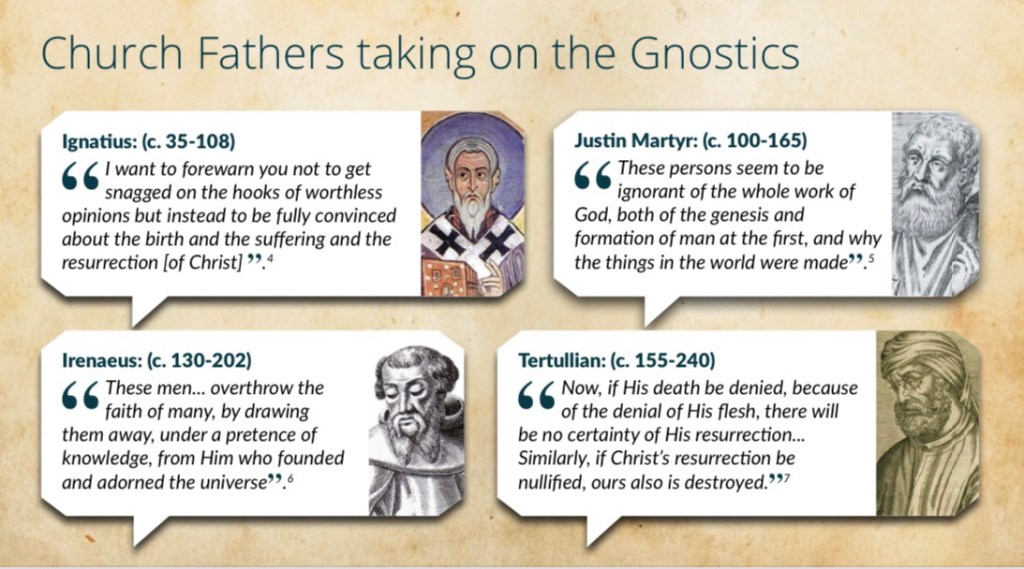


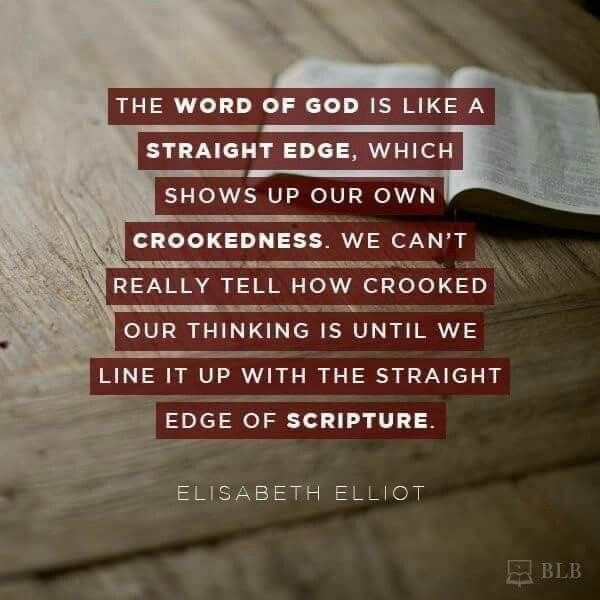






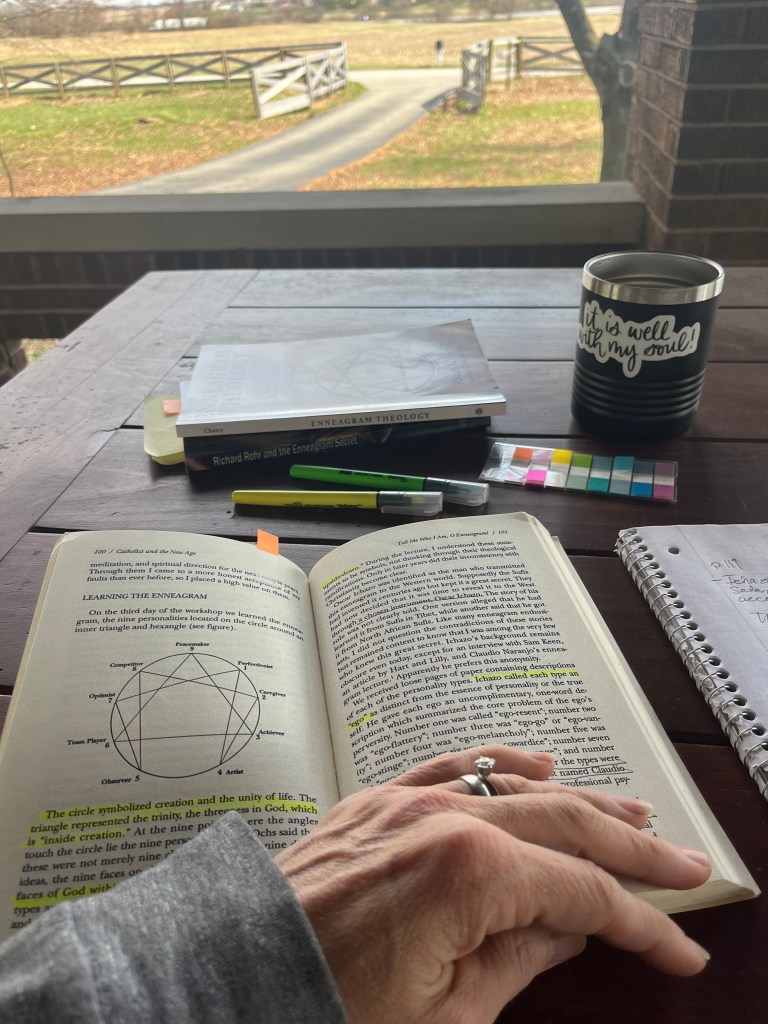

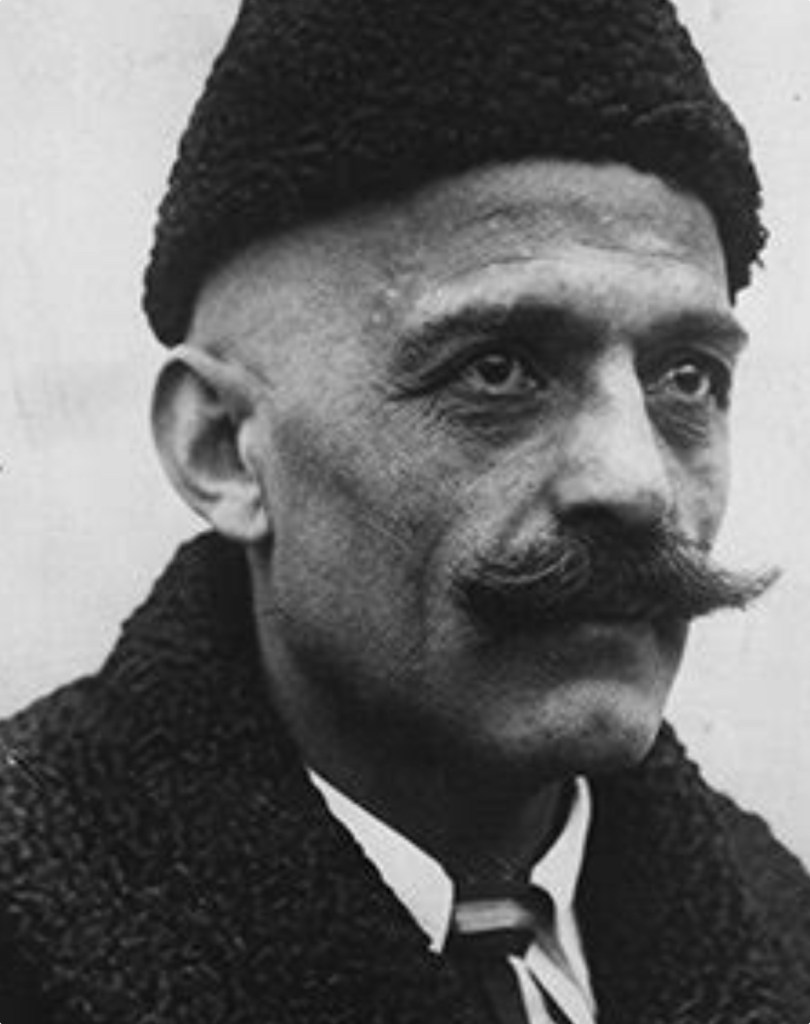
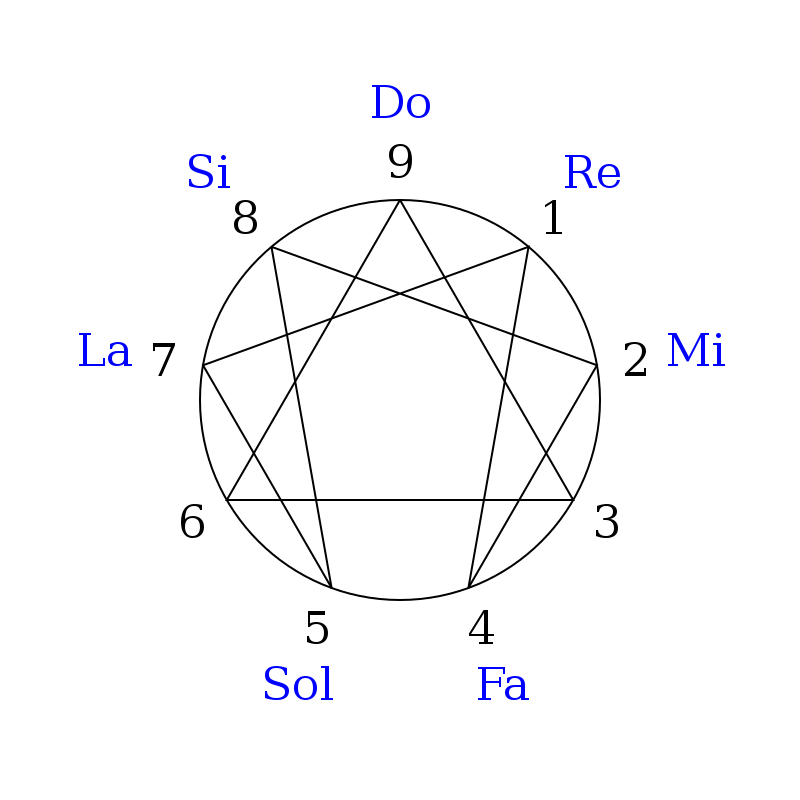
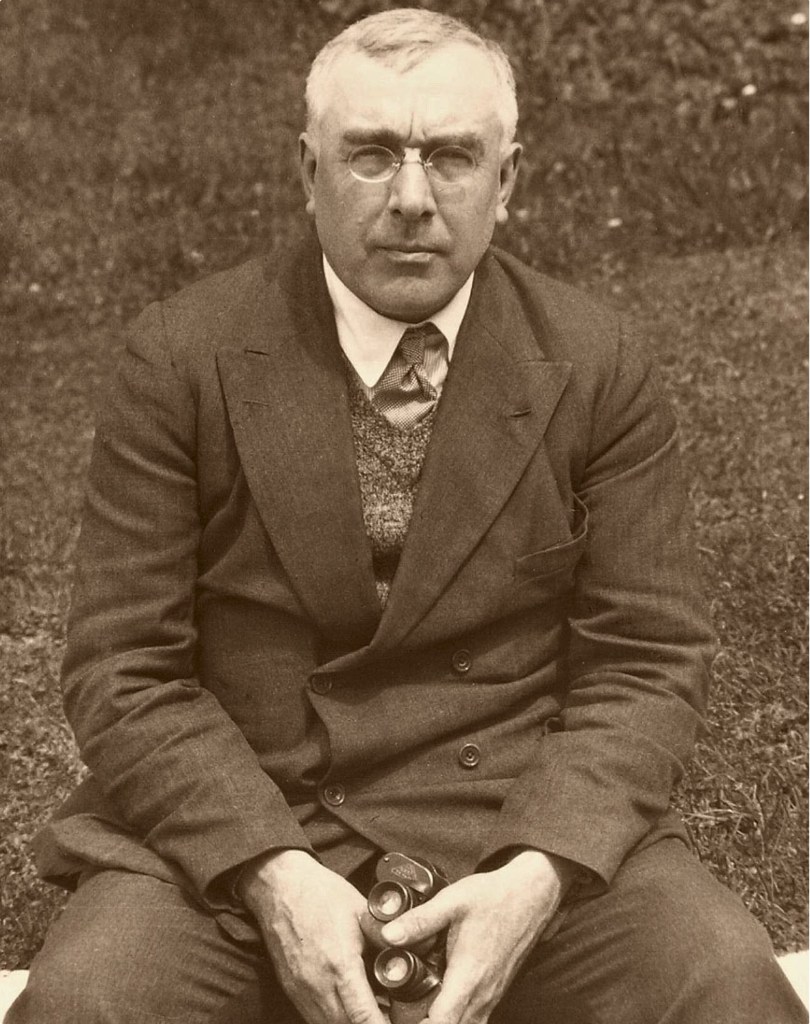
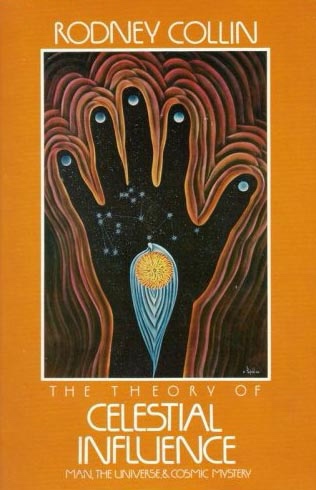



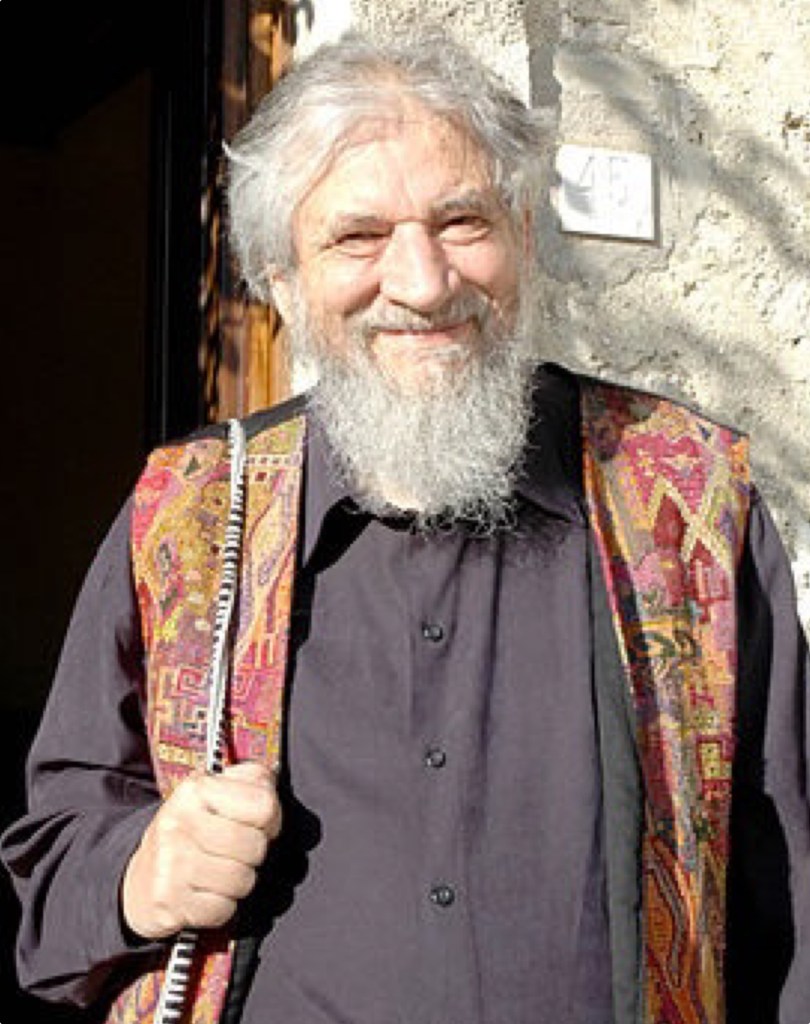


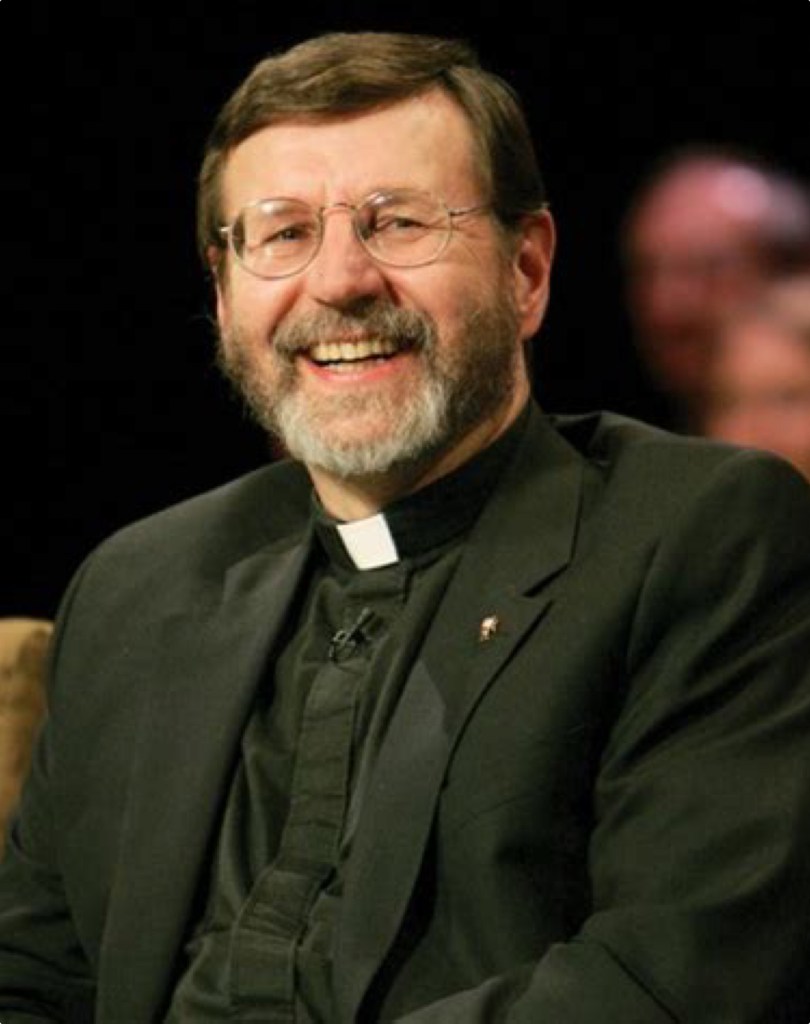
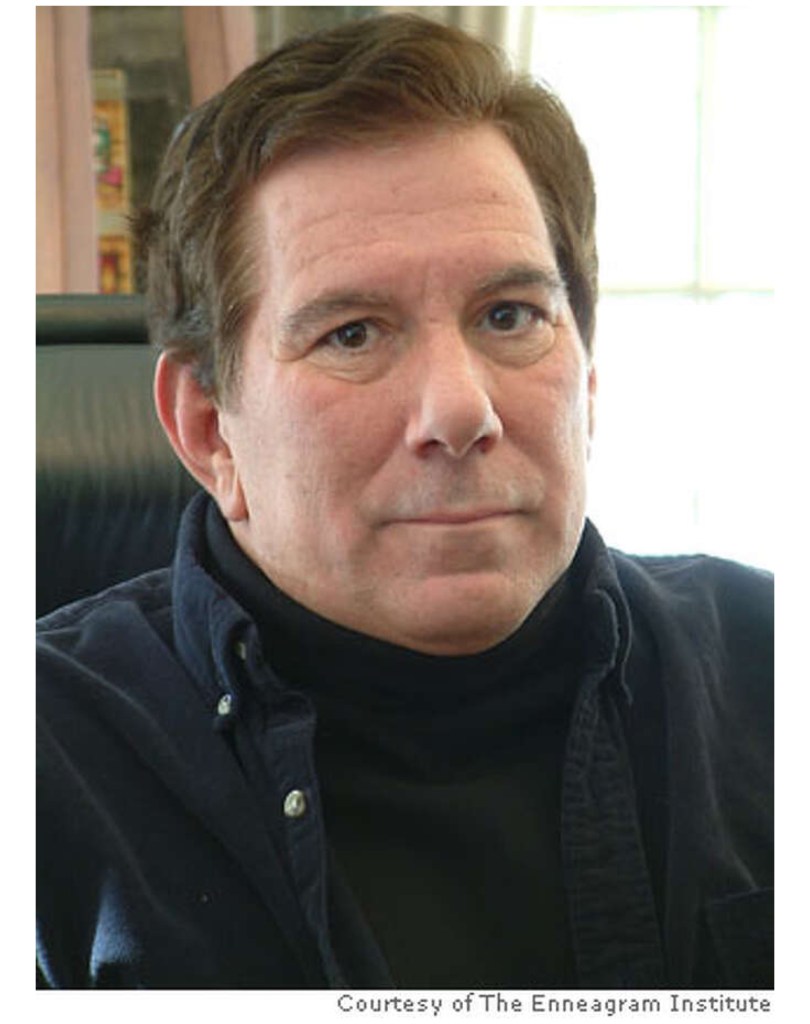
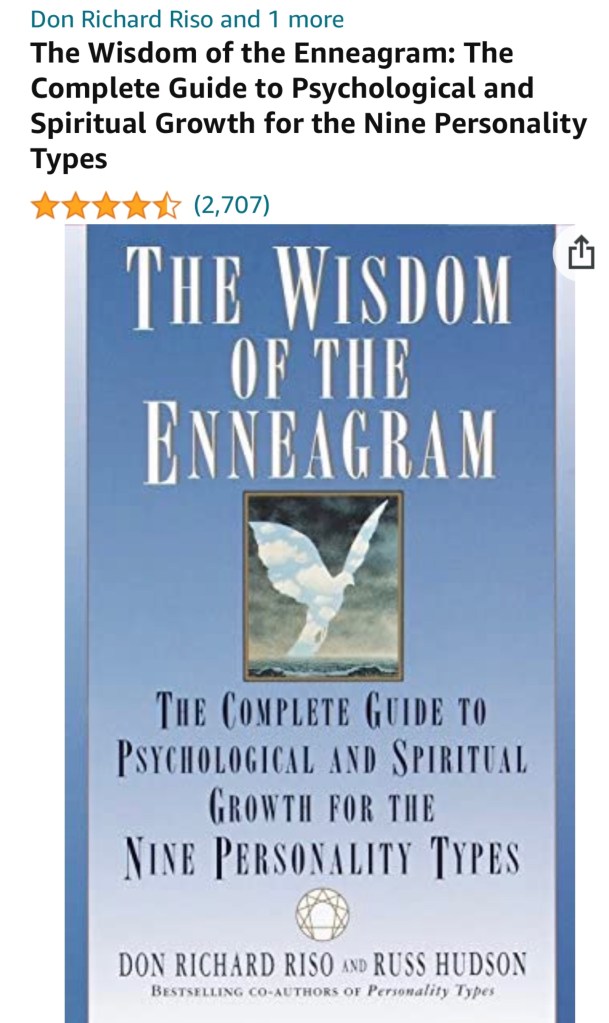


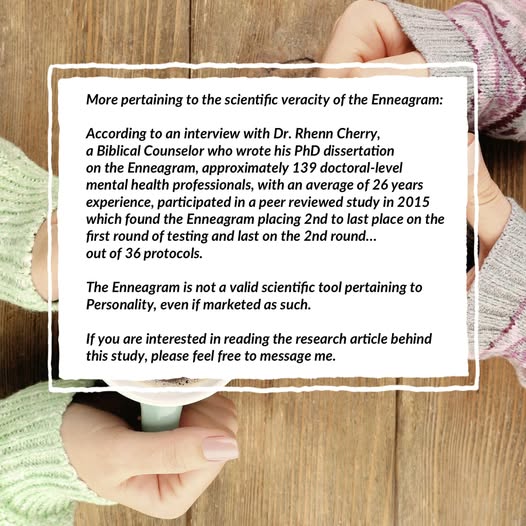

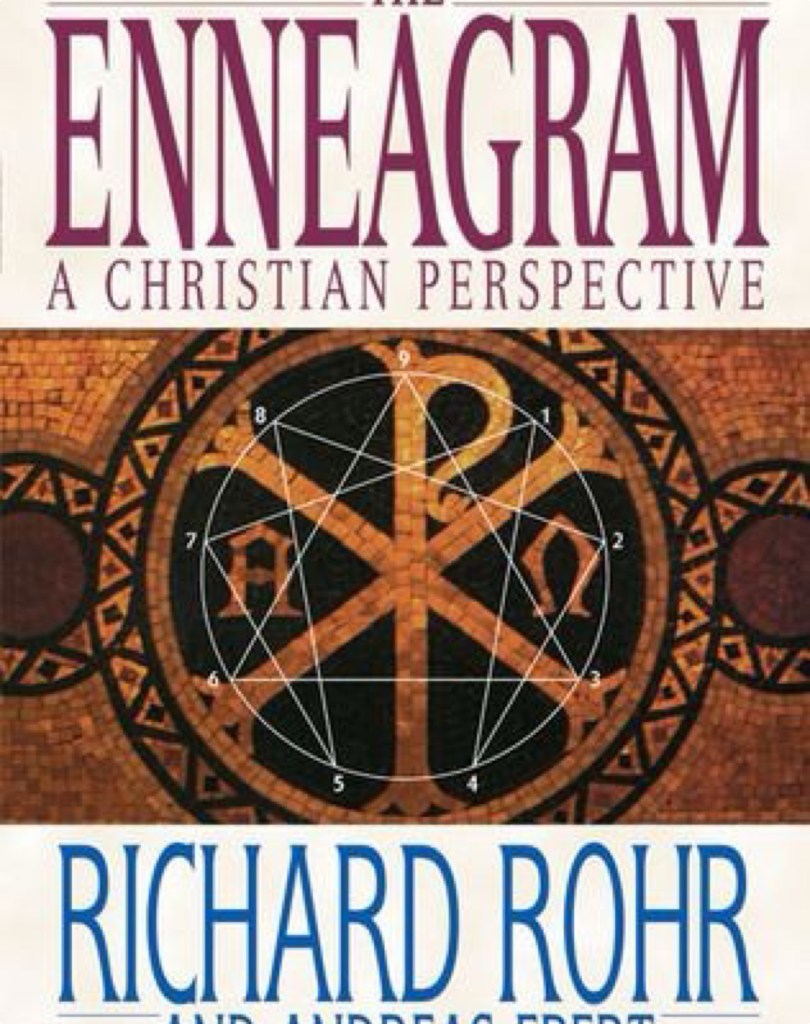


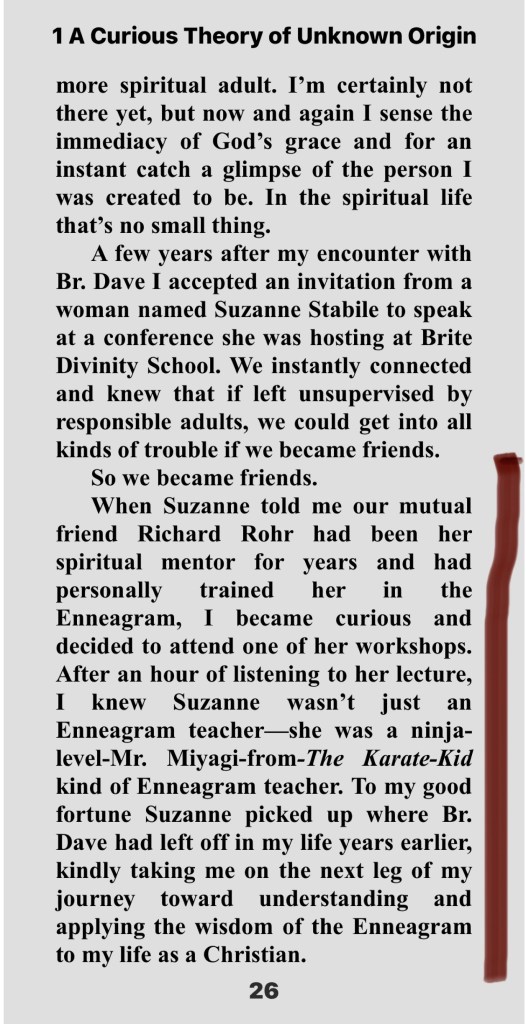





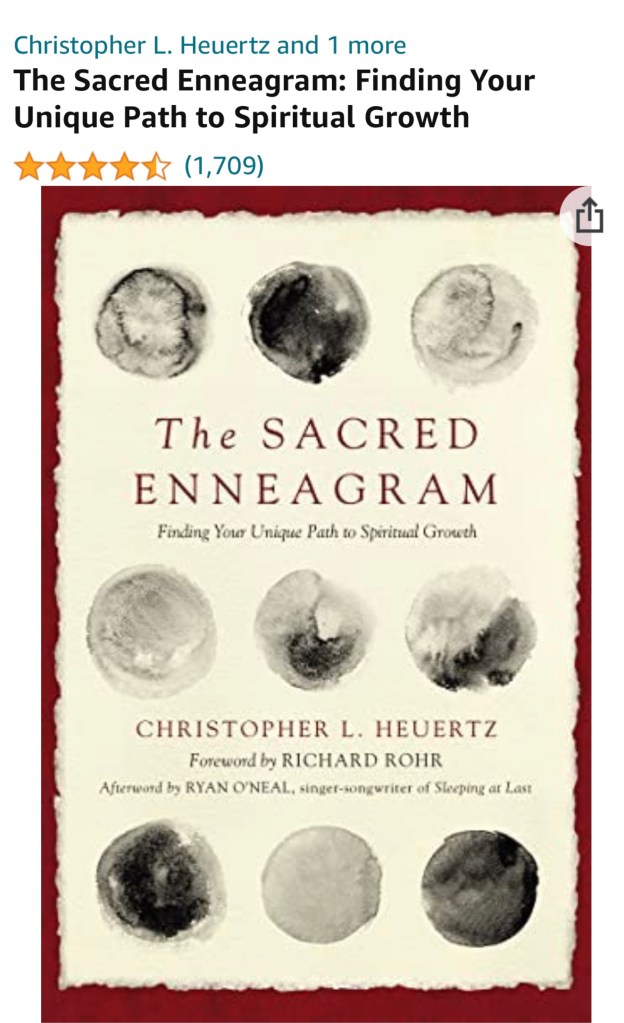

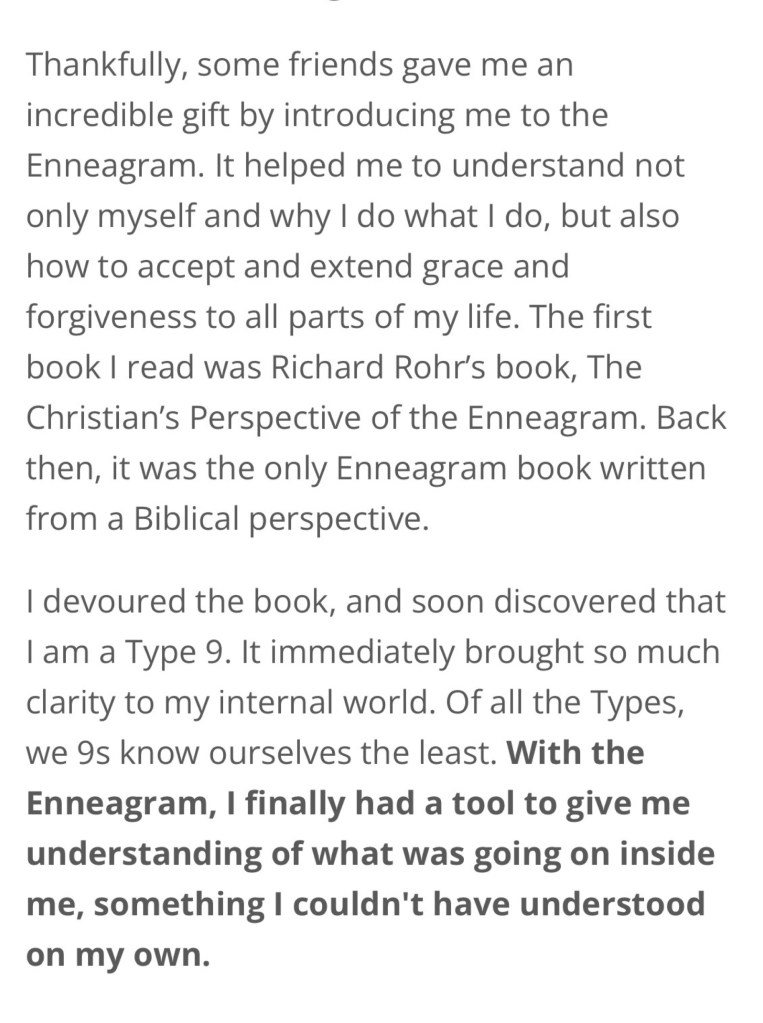
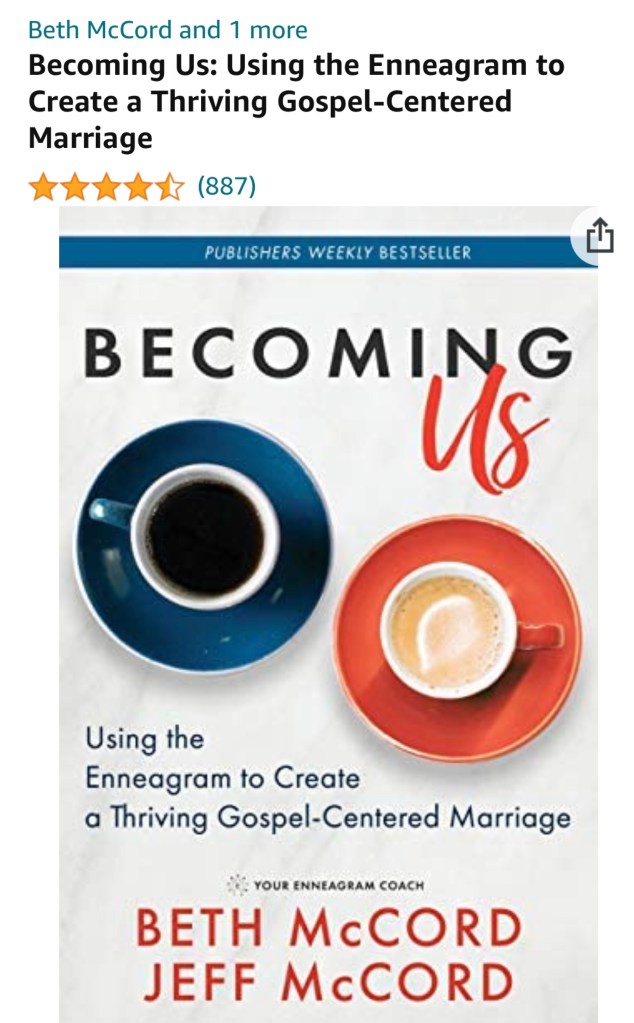



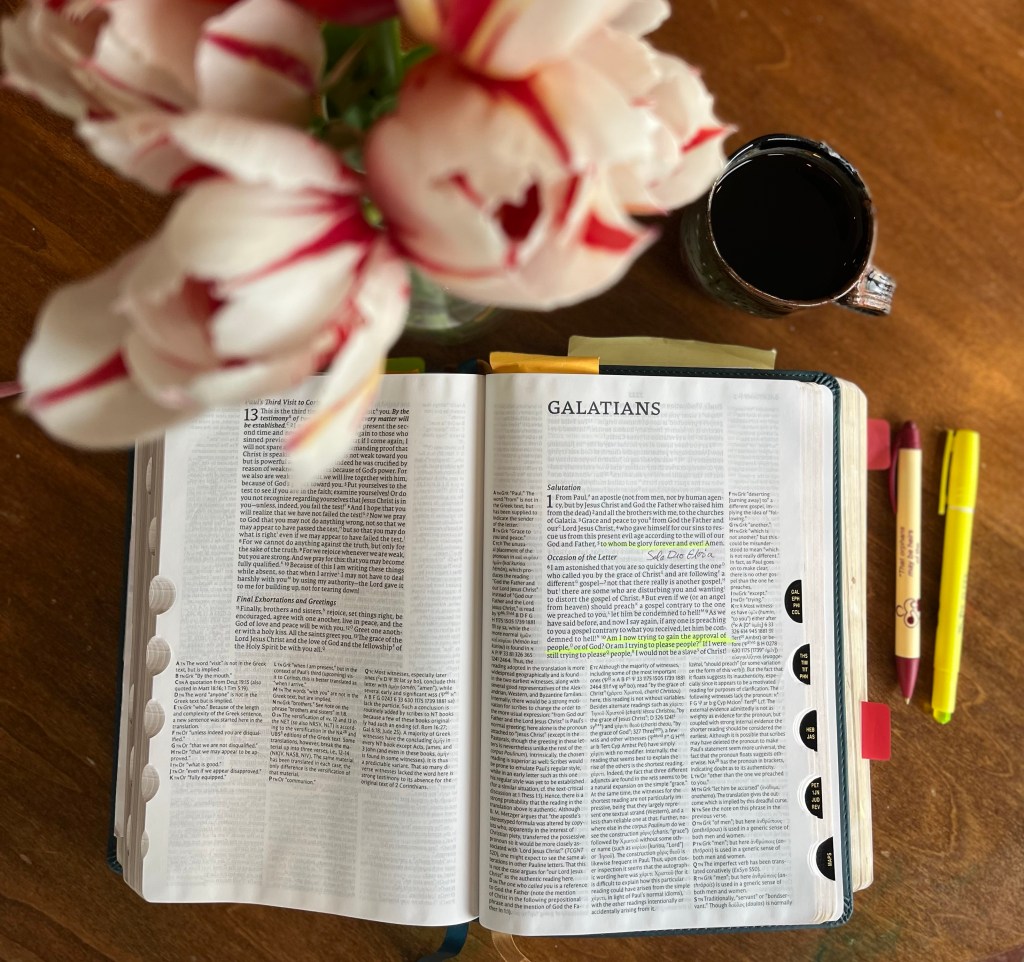










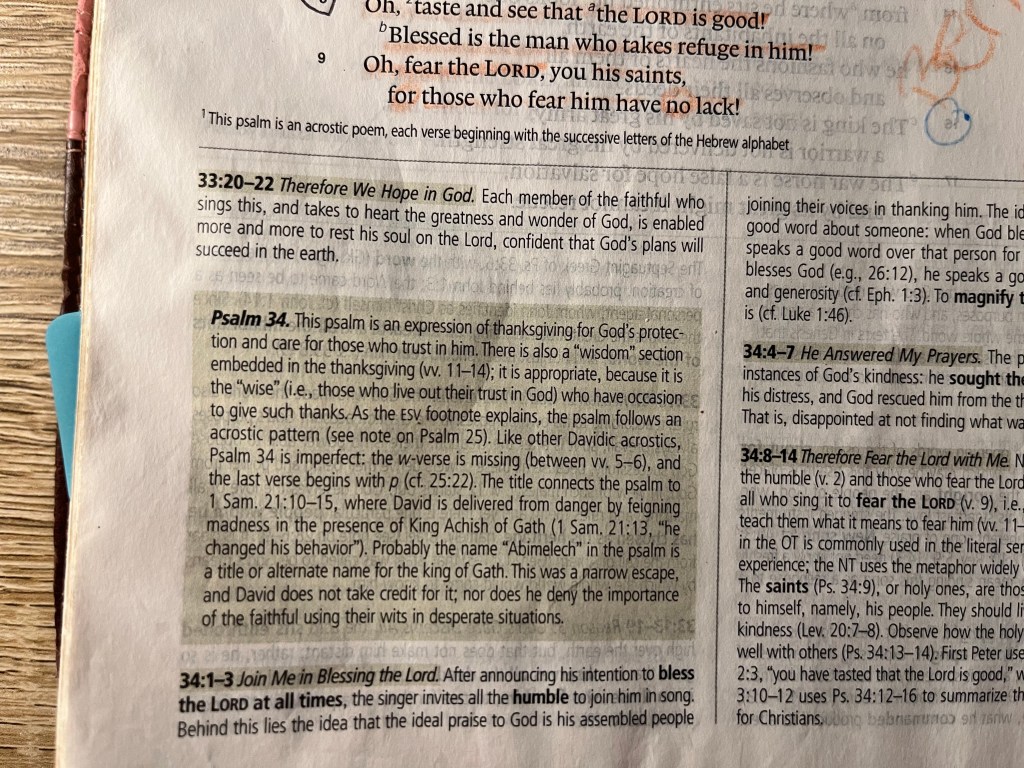





 Hold Fast Apologetics