What if the suffering and saving work of Jesus Christ were foretold centuries before His birth?
They were.
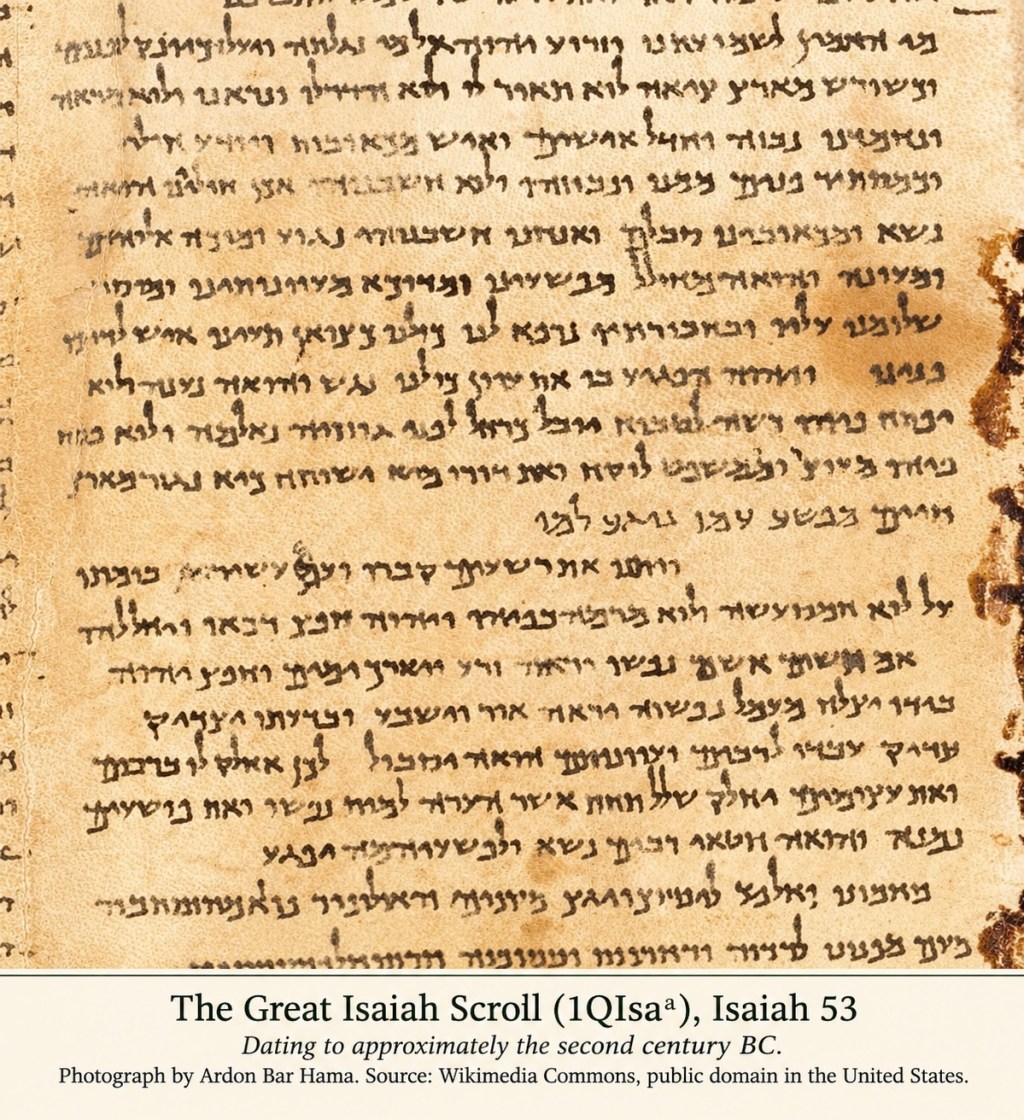
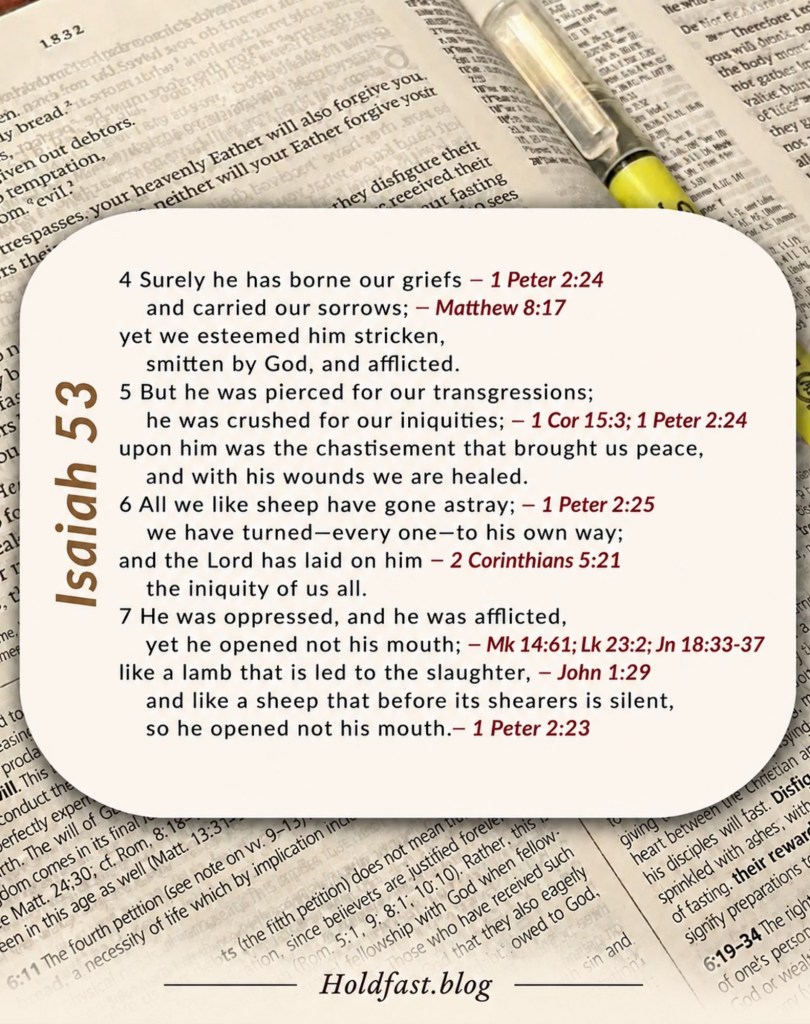
Approximately 700 years before the birth of Jesus, Isaiah wrote of a suffering Servant who would be rejected, bear the sins of others, suffer though innocent, and ultimately be exalted (Isaiah 52:13–53:12).
And this makes sense when we consider that God’s plan of redemption was established before the foundation of the world (Ephesians 1:3–10; 2 Timothy 1:9; 1 Peter 1:18–20).
God the Son came into the world, taking on a human nature without ceasing to be God (John 1:1–14). He came to represent humanity, bear the penalty for sin, reconcile sinners to God, and secure the redemption of both soul and body (Romans 5:18–19; 1 Peter 3:18; Romans 8:23).
And why did He come? Because of God’s love.
First John 4:9–10 tells us that God demonstrated His love by sending His Son into the world so that we might live through Him. Christ came as the propitiation for our sins.
As Paul reminds us in 1 Corinthians 15:3–8, Christ died for our sins according to the Scriptures, was buried, rose again on the third day, and appeared to eyewitnesses.
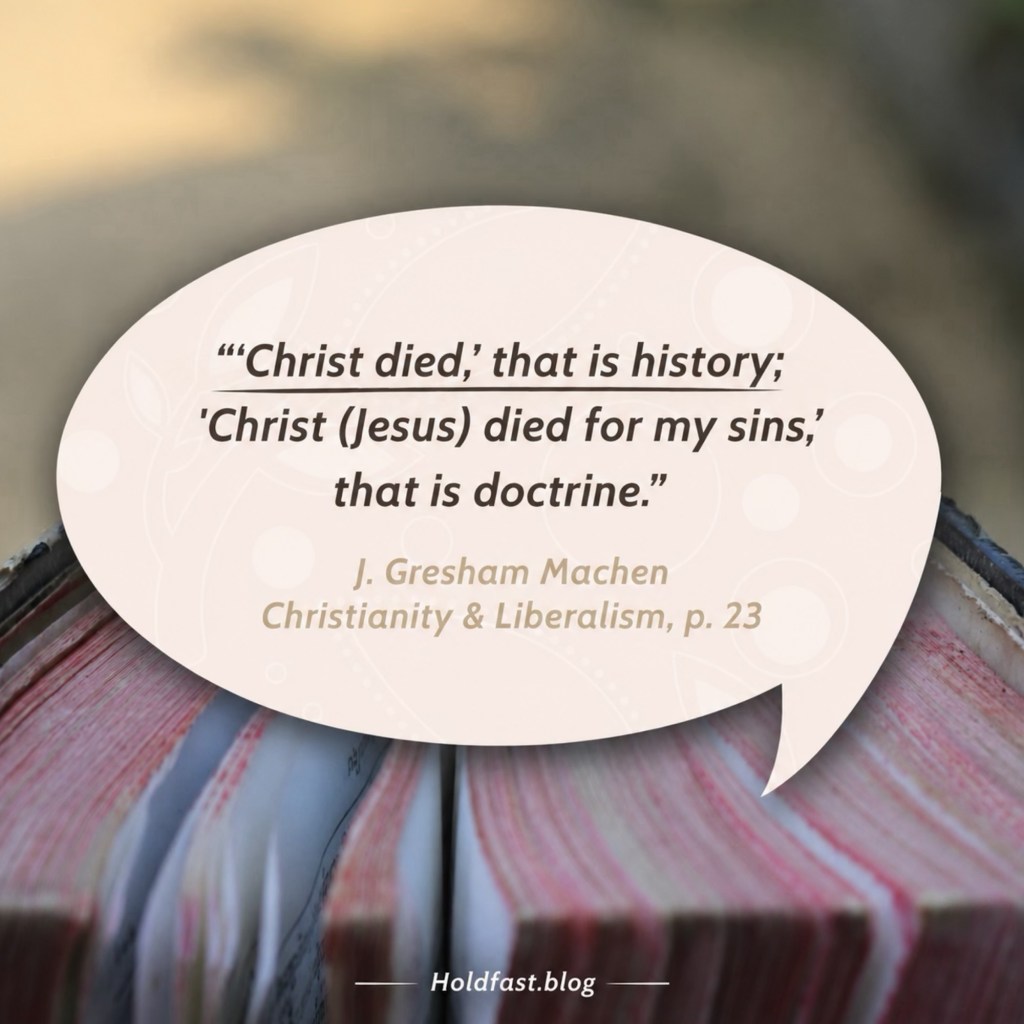
J. Gresham Machen expressed the importance of both the historical event and its meaning:
“Christ died”—that is history; “Christ died for our sins”—that is doctrine.
— J. Gresham Machen, Christianity and Liberalism (1923), Chapter 2, “Doctrine” (p. 23 in some editions).
Isaiah 53 tells us not only what the suffering Servant would endure, but why.
Let’s examine the prophecy alongside the New Testament and see what Scripture says.
Bible Study: Isaiah 52:13–53:12
Instructions: Read Isaiah 52:13–53:12 in its entirety. Then examine the New Testament passages that directly quote Isaiah’s prophecy. Complete each question using the words of Scripture (ESV).
1. Isaiah 52:13–15 — The Servant Exalted
Read: Romans 15:20–21
Paul quotes Isaiah 52:15 while explaining his ministry of proclaiming Christ.
According to Romans 15:21, those who have never been __________ of Him will see, and those who have never __________ will understand.
2. Isaiah 53:1 — Who Has Believed?
Read: John 12:37–38; Romans 10:16
John and Paul both quote Isaiah 53:1.
According to John 12:38, who has __________ what he heard from us?
According to Romans 10:16, not everyone has __________ the gospel.
3. Isaiah 53:4 — He Bore Our Griefs
Read: Matthew 8:16–17
Matthew quotes Isaiah while describing Jesus healing the sick.
He took our __________ and bore our __________.
4. Isaiah 53:7–8 — The Lamb Led to Slaughter
Read: Acts 8:26–35
The Ethiopian official was reading Isaiah’s prophecy concerning the suffering Servant.
According to Acts 8:32, like a __________ He was led to the slaughter.
Beginning with this Scripture, Philip told the Ethiopian the good news about __________.
5. Isaiah 53:9 — The Sinless Servant
Read: 1 Peter 2:21–22
Peter quotes Isaiah 53:9 when describing Christ’s innocence.
He committed no __________, neither was __________ found in His mouth.
6. Isaiah 53:12 — Numbered with Transgressors
Read: Luke 22:37
Jesus directly quotes Isaiah 53:12 and applies it to Himself.
He was numbered with the __________.
Jesus declared that this Scripture must be __________ in Him.
Bringing the Scriptures Together
Read: 1 Corinthians 15:3–8; 1 John 4:9–10
1. According to 1 Corinthians 15:3–4, what happened to Christ in accordance with the Scriptures?
2. According to 1 John 4:9–10, how was God’s love made manifest among us?
3. According to Acts 8:34–35, whom did Philip proclaim when explaining Isaiah’s prophecy?
4. According to Isaiah 53:5–6, why did the Servant suffer?
Jesus’s Acknowledgment
Read Luke 24:44–48 (ESV)
After His resurrection, Jesus reminded His disciples that everything written about Him in the Law of Moses, the Prophets, and the Psalms must be fulfilled.
He then opened their minds to understand the Scriptures.
According to Jesus, what had the Scriptures foretold?
- The Christ would __________.
- He would __________ from the dead on the third day.
- __________ for the forgiveness of sins would be proclaimed in His name to all nations.
And what did Jesus tell His disciples in verse 48?
“You are __________ of these things.”
The Good News: Why Jesus Came
As we’ve seen in Isaiah 53, the suffering and saving work of Jesus Christ was no accident. It was God’s plan from eternity past (1 Peter 1:18–20; Ephesians 1:3–10).
Man is not God (Genesis 1). Nor can man become God (Isaiah 44:6). But God the Son became man (John 1:1–14; Philippians 2:5–8). Let that sink in!
Jesus came down from heaven in the most humble of ways—as a baby. He took on a fully human nature, yet never stopped being fully God.
Jesus came as the second Adam (1 Corinthians 15:45–49). He was tempted as we are, yet without sin (Hebrews 4:15). Where Adam failed, Jesus obeyed. He lived a sinless life, fulfilling the righteous demands of God’s law (Matthew 5:17; Romans 5:18–19).
The Judge of every soul willingly bore judgment for our sins (Isaiah 53:5–6; Romans 3:25–26). The Good Shepherd laid down His life for His sheep (John 10:11). The Author of life defeated death (Acts 3:15; 1 Corinthians 15:20–22).
He took upon Himself the penalty our sins deserved so that we might be reconciled to God (2 Corinthians 5:21; 1 Peter 3:18).
All of this was planned. It was Jesus’ mission!
Friends, this good news is not a myth. It took place in real time and space. Jesus truly lived, died, was buried, and rose again. The apostle Paul points to eyewitnesses of the risen Christ in 1 Corinthians 15:3–8.
And it has tremendous purpose—our salvation!
What God has done for sinners through Jesus Christ is the greatest demonstration of love (1 John 4:9–10; Romans 5:8). We did not deserve it, nor can we earn it. Salvation is God’s gift of grace, received through faith in Jesus Christ (Ephesians 2:1–9).
But the good news doesn’t end with the forgiveness of sins. Scripture promises the resurrection of our bodies and everlasting life with God (Romans 8:23; 1 Corinthians 15:42–49; Revelation 21:1–4).
Further Study & Sources
Blue Letter Bible — Isaiah 53
Scripture, Hebrew study tools, and commentaries.
D. A. Carson — For the Love of God, Volume 2
June 21 reading on Isaiah 52:13–53:12.
D. A. Carson — Motivation for Ministry
God’s eternal redemptive purpose.
R. C. Sproul — The Meaning of the Cross
The meaning and purpose of Christ’s atonement.
Peter W. Stoner — Science Speaks, Chapter 3
Stoner estimated the probability of one person fulfilling eight selected messianic prophecies by chance at 1 in 10¹⁷. His calculations are an apologetic illustration based on estimated probabilities, not experimentally established measurements.
J. Gresham Machen — Christianity and Liberalism, Chapter 2
The relationship between the historical gospel and Christian doctrine.
The Great Isaiah Scroll — Israel Museum
Ancient manuscript evidence for the text of Isaiah before the birth of Christ.
Explore the Digital Dead Sea Scrolls
Holdfast.blog

