Hold Fast Apologetics

What Does Scripture Say?

  • Is Rohr Correct about Propitiation?
    1 Corinthians 15:3-6 is an early creed of the church. Scholars, Christian and atheist alike, agree that this creed was sung within just weeks or months of the crucifixion (AD 30 or 33). This historical data alone, debunks Rohr’s claims pertaining to the atonement.

    Per his own words, Richard Rohr promotes the view that penal subustitutionary atonement is merely a “theory.” Rohr claims that “the early church had never heard” of penal substitutionary atonement. [1]

    Is Rohr accurate when he advocates that the early church did not view Jesus’s crucifixion as atonement for sin? Is it merely a theory invented after the Reformation (as Rohr surmises).

    Christian theologian and author J. Gresham Machen wrote the following:

    “And this Bible doctrine [atonement] is not intricate or subtle. In the contrary, though it involves mysteries, it is itself so simple that a child can understand it. ‘We deserved eternal death, but the Lord Jesus, because He loved us, died instead of us on the cross’ – surely there is nothing so very intricate about that. It is not the Bible doctrine of the atonement which is difficult to understand – what are really incomprehensible are the elaborate modern efforts to get rid of the Bible doctrine in the interests of human pride.”
    📙Christianity & Liberalism, p. 100.

    What speaks the loudest on this topic, however, are the Scriptures. The earliest eyewitness accounts were documented within only 20-30 years of Jesus’s earthly ministry, death around 33AD, and subsequent bodily resurrection. This is incredible news when referring to ancient documents! For example, the first written copy of Caesar’s Gaelic Wars had a time gap of ~950 years! [2] These historical accounts provide evidence that the early church viewed Jesus’s atonement as foundational to Christianity.

    “For I (Paul) delivered to you as of first importance what I also received: that Christ died for our sins in accordance with the Scriptures, that he was buried, that he was raised on the third day in accordance with the Scriptures,” 1 Corinthians 15:3-4 📕

    And if Paul’s testimony wasn’t enough, Jesus said the following: “For this is my blood of the covenant, which is poured out for many for the forgiveness of sins.” Matthew 26:28 📕

    Compelling evidence that the earliest followers of Jesus viewed his death as a payment for our sins is found in first Corinthians 15. Paul penned a creed (teaching) within first Corinthians 15 which had been sung and taught by the followers of Jesus just days or months after his bodily resurrection. To say that the early church was unaware of Jesus’s atonement is misrepresenting both history and Christianity.

    “‘Christ died’ — that is history; ‘Christ died for my sins’ — that is doctrine. Without these two elements, joined in an absolutely indissoluble union, there is no Christianity.”

    J. Gresham Machen. “Christianity & Liberalism.” page 23.📙

    Examples of Scripture Pertaining to Jesus’s Atonement

    “He himself bore our sins in his body on the tree, that we might die to sin and live to righteousness. By his wounds you have been healed.” 1 Peter 2:24

    “He is the propitiation for our sins, and not for ours only but also for the sins of the whole world.” 1 John 2:2

    “He entered once for all into the holy places, not by means of the blood of goats and calves but by means of his own blood, thus securing an eternal redemption.” Hebrews 9:12

    “Indeed, under the law almost everything is purified with blood, and without the shedding of blood there is no forgiveness of sins.” Hebrews 9:22

    “But he was pierced for our transgressions; he was crushed for our iniquities; upon him was the chastisement that brought us peace, and with his wounds we are healed.” Isaiah 53:5

    “For Christ also suffered once for sins, the righteous for the unrighteous, that he might bring us to God, being put to death in the flesh but made alive in the spirit,” 1 Peter 3:15

    “For our sake he made him to be sin who knew no sin, so that in him we might become the righteousness of God.” 2 Corinthians 5:21

    “For while we were still weak, at the right time Christ died for the ungodly. For one will scarcely die for a righteous person—though perhaps for a good person one would dare even to die— but God shows his love for us in that while we were still sinners, Christ died for us. Since, therefore, we have now been justified by his blood, much more shall we be saved by him from the wrath of God. 10 For if while we were enemies we were reconciled to God by the death of his Son, much more, now that we are reconciled, shall we be saved by his life. 11 More than that, we also rejoice in God through our Lord Jesus Christ, through whom we have now received reconciliation.” Romans 5:6-11

    “In this is love, not that we have loved God but that he loved us and sent his Son to be the propitiation for our sins.” 1 John 4:10

    “So Jesus also suffered outside the gate in order to sanctify the people through his own blood.” Hebrews 13:12

    “For this is my blood of the covenant, which is poured out for many for the forgiveness of sins.” – Jesus (Matthew 26:38)

    “Whom God put forward as a propitiation by his blood, to be received by faith. This was to show God’s righteousness, because in his divine forbearance he had passed over former sins.” Romans 3:25

    Citations
    1. The Universal Christ, p.140.
    2. The Biographical Test Updated, by Dr. Clay Jones: https://tinyurl.com/3sh2m243
    Additional Resources

    ✏️ Penal Substitution in the Early Church by Brian Arnold

    🎞️ Gavin Ortland explains why PSA is Biblical, Ancient, Integrative, and Trinitarian

    🎞️ The Real History of Penal Substitution by Mike Winger

  • 20 minutes

    Design points to a Designer.

    As humans, our design demonstrates that a good and personal Designer exists (Romans 1). Our ability to communicate and to reason, our desire to steward and lead, our longing for relationship and intimacy (love), as well as our understanding that “right and wrong” is not an illusion (morality). Each of these show that God is real.

    Sadly, our hearts often tend to live as though the Creator-creation distinction is temporary, or we remove the Creator altogether. This is why God’s Word is so important! Scripture reminds us that we are neither divine nor are we trash to be discarded and forgotten. Yes, we are valued and loved by our Creator! But we are not Him. Nor are we accidents.

    The following 20m video my Christian Apologist David Wood unpacks what it means to be made in the image of God, and how our design, combined with humanity’s Fall, both point to the the best news possible: God’s Gospel. Friends, I hope this news encourages you immensely!

    📕 Genesis 1: https://www.biblegateway.com/passage/?search=Genesis+1&version=ESV

  • “12 Points That Show Christianity is True” by Dr. Norman Geisler:

    1. Truth about reality is knowable.
    2. Opposites cannot both be true.
    3. It is true that a theistic God exists.
    4. Since God exists, miracles are possible.
    5. Miracles can be used to confirm a messsge from God.
    6. The New Testament is historically reliable.
    7. The New Testament documents Jesus’s claims to be God.
    8. Jesus proved to be God.
    9. Therefore Jesus is God.
    10. Since Jesus is God, whatever he teaches is true.
    11. Jesus taught that Scripture is the word of God.
    12. Therefore, the Bible is the word of God, and anything opposed to it is false.

    📙For a bookmark of these points, click here.

  • “The heavens declare the glory of God, and the sky above proclaims his handiwork.” Psalm 19:1

    (King David;~1010 BC)📕

    When we gaze upon a beautiful sunrise, a newborn baby, a painting, and/or consider the finely engineered design of our DNA, it’s more than reasonable to conclude that these intricate “somethings” could not have come from nothing.

    The fact that they exist demonstrates that they had a beginning. And the reality that they had a starting point makes us aware of a cause outside of themselves, which brought them (intentionally) into existence. [1]

    Design is evidence of a Designer. The universe, and everyting in it, showcases a timeless, powerful, transcendent, personal, and good Designer (Ge 1:1; Ro 1:20; Col 1:16). [2]

    And because God exists, miracles are possible. Given that God created the universe and everything in it – walking on water, changing water into wine, and resurrecting highly probable. It’s like asking Micheal Jordan to dribble a basketball. [3]

    And while we reflect God’s design, it’s incredibly important to remember that we are not the Designer. There is only one God, and we are not Him. This fact should steer our minds upward, not inward (Pr 3:5-6; Jn 3; Col 3).🙏🏼📕

    “I lift up my eyes to the hills.
    From where does my help come?
    My help comes from the LORD,
    who made heaven and earth.”
    Psalm 121:1-2

    [1] “Why The Information In Our DNA Points To The Existence Of God,” J. Warner Wallace:

    [2] ESV Study Bible

    [3] Dr. Norman Geisler’s 12 Points

    🎞️Who is Jesus? (4m)

    ✏️The Kalam Cosmological Argument

  • Friends, we wouldn’t go to Hell because we don’t choose Jesus.

    We go to Hell because we are sinners.

    Sin separates us from a Holy God. And since God is good (Mk 12), God is perfectly just. We would deserve Hell.

    In The Story of Reality by Greg Koukl, Koukl makes this point by illustrating that people go to the Hospital because they have a illness. Yes, medical intervention can help us, but our possible demise would be connected to our illness.

    Humanity rebelled and therefore is sinful (Ge 2; Ro 3:23; Ro 7). Our sinful nature is our demise. Our standard of holiness isn’t the person next door, nor is it Stalin. Our standard of rightness is God alone.

    We chose rebellion. We followed evil. And we created the grave.

    We are in need of a Savior.

    And our Savior isn’t ourselves. It’s not a personality trait, nor is it attending church. While neither of those things are necessarily bad, they can’t save us.

    God’s gift was and is Himself (Jn 3; Ro 8; 1 Co 15; Eph 2; 2 Cor 5:21). Jesus paid the price for our sin, on our behalf, and made a way back into fellowship with God. He defeated the grave!!

    We should thank Him for this precious gift, daily (1 Thes 5:16-18)!

  • 7 minutes with Wes Huff

    “Why does this man speak like that? He (Jesus) is blaspheming! Who can forgive sins but God alone?” Mark 2:7📕

    Mark is thought by numerous scholars to be the earliest of the four gospel accounts recorded with “internal and external data pointing to Rome as the place of composition around the mid-to-late 50’s.”(1)

    With Jesus’s crucifixion occurring around A.D. 30 or 33, the documentation provided by Mark is approximately 20 years later, which is astounding when referring to ancient documents! For example, the first written copy of Caesar’s Gaelic Wars had a time gap of ~950 years.(2)

    Based upon this information, we would expect the earliest eyewitness report (Peter’s given to Mark) to solidly address Jesus’s identity as the long-awaited Messiah: God the Son, incarnate. And as you’ll witness in the 7m clip by Wes Huff (Christian Apologist from Canada), Jesus’s divinity is boldly on display in Mark!

    The acronym which Wes mentions is provided by Robert Bowman and J. Ed Komoszewski from their book, Putting Jesus in his Place: The Case for the Deity of Christ.

    H – Jesus shares the honors due to God.
    A – Jesus shares the attributes of God.
    N – Jesus shares the names of God.
    D – Jesus shares and the deeds that God does.
    S – Jesus shares the seat of God’s throne.

    Friends, #Jesus demonstrated in real time and space who He was (and still is). God’s love came down and put upon Himself a human nature to fulfill His promise: rescuing humanity (Ge 3:15; Jn 2:12; 3:26). This is news we should rejoice in daily!

    “Relating to Jesus as God is also crucial to the message we take to the rest of the world. We must know whom we represent if we are to represent him faithfully. Our Christian walk, witness, and worship all must reflect a sound understanding of the identity of our Lord Jesus Christ.”(3)

    1. ESV Study Bible
    2. The Biographical Test Updated, by Dr. Clay Jones
    3. Putting Jesus in His Place: The Case for the Deity of Christ (p.20-23)

  • What seems inspirational may not necessarily be “inspired.”

    Through the trials I’ve encountered in life, God has helped me to understand that I 💯need His help to discern what is actually “good” and “right.” For my opinions of what seems helpful could be misleading and possibly, short-sighted.

    For example, if you or I wanted to place a “floating shelf” upon a wall at home, we would not eyeball where we place the fasteners. That would be following our own understanding of what is level, not seeking what truly is.

    Making sure the shelf is level is a real safety concern, and therefore we grab the essential tools to ensure it’s stable and secure…level…on the wall.

    The same goes for our thoughts and experiences. How do we know what is inspiring us is just us doing what we think is right?

    “Discernment is not knowing the difference between right and wrong. It is knowing the difference between right and almost right.” —C.H. Spurgeon

    Like with placing the shelf on the wall, we need a straightedge to guava if our thoughts and experiences are truly “level.” For if we are honest, we can all agree that we have been personally convinced of perceived helpfulness as truth…later suffering the heartbreak of that “shelf” falling down.

    Elisabeth Elliot puts it this way:

    “The Word of God is like a straight edge, which shows up our own crookedness. We can’t really tell how crooked our thinking is until we line it up with the straight edge of Scripture.”

    To know if something is actually inspired, I/we need to go to the 66 books compiled over 1,600 years, written by 40+ people in three different languages (Hebrew, Greek, and Aramaic), on three different continents, (1) which has one consistent thread throughout- the faithful plan of God to save His people.

    We need God’s word (the Bible). Remember, the same Holy Spirit who helped the writers of the Bible (2 Peter 1:20-22) will never contradict Himself. He is our straightedge on what is inspired…versus what is merely inspirational.

    Voddie Baucham’s “Why you can the Bible:” https://tinyurl.com/5n8z2d5c

  • “Having correct or helpful information does not justify disobedience to God.”

    Marcia Montenegro

    (Source: https://reasonsforjesus.com/should-people-trust-in-psychic-readings/).

    In my humble opinion, this quote by Marcia succinctly demonstrates possibly the most prominent reason why the #Enneagram is an idol in so many lives, today: perceived helpfulness (#pragmatism).

    We all battle the temptation to lean into our own understanding. Instead of slowing down to ask God for help, we stubbornly take things into our own hands and attempt to control our situations. Our compass? Most often what leads us are our fickle and ever-changing emotions. They never lead us astray, correct? (*sarcasm)

    It’s incredibly important to remember that pragmatism doesn’t necessarily come-at-you with a sign that says, “Avoid this.” Instead, the war that is waged upon your mind comes concealed as something seemingly “good” and useful in that moment. A temporary fix, perhaps.

    But if any teaching or message encourages you to replace reading your Bible with others books or “practices”, or demeans the Old Testament as unnecessary and irrelevant, take that as a red flag to stop and test that message alongside Scripture immediately.

    Instead of seeking wisdom, identity, and guidance from personality descriptions, psychic readings, tarot cards, or emotions, stop and pray! Open your Bible and read at least one whole chapter or book. What we need most are God’s words.

    “Trust in the Lord with all your heart,
    and do not lean on your own understanding.
    In all your ways acknowledge him,
    and he will make straight your paths.”

    • Proverbs 3:5-6
  • Be Bereans: John Mark Comer

    “Now these Jews were more noble than those in Thessalonica; they received the word with all eagerness, examining the Scriptures daily to see if these things were so.”

    Acts 17:11

    Friends, no matter how popular the author or inspirational the message, it’s imperative that we readily test every message being taught about Jesus (in books, through podcasts, or at conferences) alongside the Bible. Especially when an author endorses the theology of Richard Rohr (Acts 17:11; 1 Thes 5:21)!

    With this in view, we need to be willing to respectfully and responsibility examine books which are flooding the church doors. Even if our dear friends are excited about them.

    Remember— even Peter needed corrected by Paul when Peter was adding to the grace of the cross (as documented in Galatians 2). Ladies, if Peter needed corrected, it’s highly likely that you and I will need correction at points in our walks, too.

    John Mark Comer

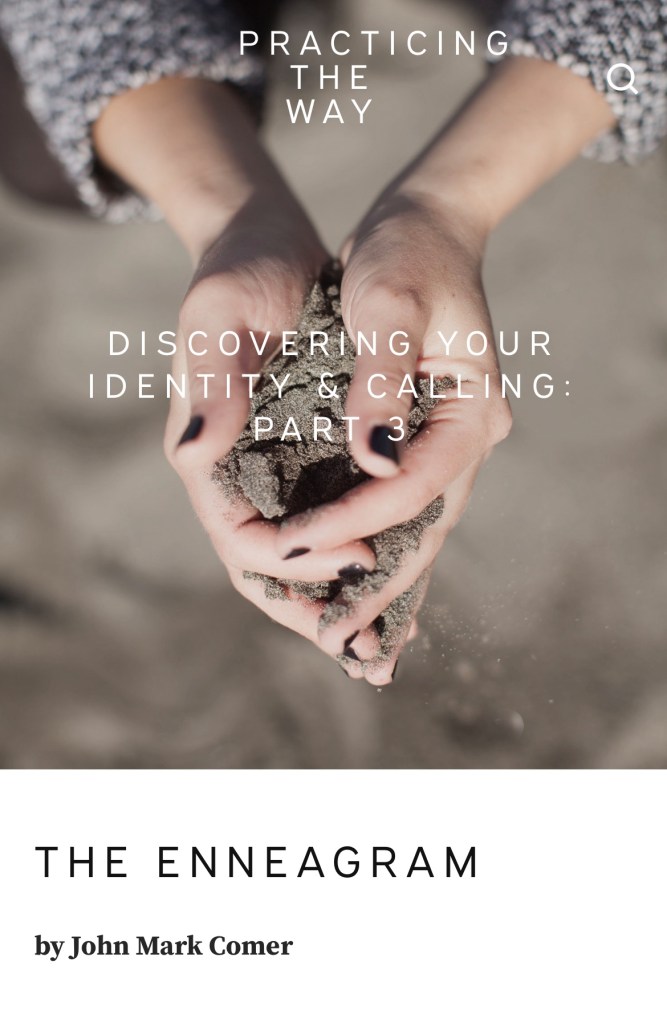
    John Mark Comer’s books are a wonderful example of why popularity does not necessarily mean biblical. Comer has not only been a guest on Ian Cron’s Enneagram podcast, but he also endorses the Enneagram via his Practicing the way website.

    Even more concerning than promoting a pseudoscientific tool designed within New Age Spiritualism (Enneagram), Comer overtly endorses Richard Rohr.🚩 Seminary professor and respected author Dr. Douglas Groothuis describes Richard Rohr as “a heretic in the robes of a Franciscan priest. To be more specific, he is a wolf in sheep’s clothing, a false teacher, and a deceiver (see Matthew 7:15–19; Acts 20:29–31). Basing his teaching primarily on eastern mysticism rather than biblical Christianity.”(1)

    But don’t take Dr. Groothuis’s word for it, read Rohr’s firsthand! Here is a quote by Friar Rohr from an interview on August 3, 2019 via the Another Name for Everything with Richard Rohr podcast:

    “Jesus was objectively Christ from his birth in Bethlehem, his conception in Nazareth, just like you and I are objectively Christ.” (2)

    Succinctly stated, Richard Rohr teaches a very Jesus and a different gospel (2 Cor 11:4; 1 John 4:1-1). Richard Rohr preaches that “Jesus and Christ are not exactly the same.” (3) Rohr asserts that Christ entered the material world through the “Big Bang,” bringing a divine DNA into all materials things. (4) According to Rohr, all material things share the same Christ. The human Jesus, included. For more quotes by Richard Rohr (sources included), please refer to this printable chart. This evidence should compel us to take JMC’s endorsement of Rohr’s very seriously!

    Rohr’s definition of sin on Comer’s webpage.

    “I urge you, brothers and sisters, to watch out for those who cause divisions and put obstacles in your way that are contrary to the teaching you have learned. Keep away from them.” Romans 16:17

    I am astonished that you are so quickly deserting him who called you in the grace of Christ and are turning to a different gospel— not that there is another one, but there are some who trouble you and want to distort the gospel of Christ. But even if we or an angel from heaven should preach to you a gospel contrary to the one we preached to you, let him be accursed. As we have said before, so now I say again: If anyone is preaching to you a gospel contrary to the one you received, let him be accursed.”
    Galatians 1:6-9

    When we read Comer’s teaching about sin, we also notice the words “Shadow Side” attached. Friends, this terminology (Shadow Side) was developed by Swiss Psychiatrist Carl Jung (1875-1961), a colleague of Sigmund Freud. In his article entitled, “The Big Question: Are You a Oneist or a Twoist?,” Dr. Peter Jones describes Jung as the Father of both Neo-Gnosticism and the New Age. (5) Seminary professor and respected author Douglas Groothuis, Ph.D. adds that “a careful consideration of the sources and nature of Jungian thought reveals a world view utterly and inexorably alien to biblical faith.” (6) Friends, Carl Jung’s perspective of sin is not biblical (Christian), and therefore should be rejected.

    As I continued to read Comer’s website further, another concern jumped forward. Under his Practicing the Way “free resources” a statement under “Crafting a Rule of Life” which is a fitting works-based thesis for the entire resource:

    “Transformation is possible, but it’s not inevitable.” – JMC

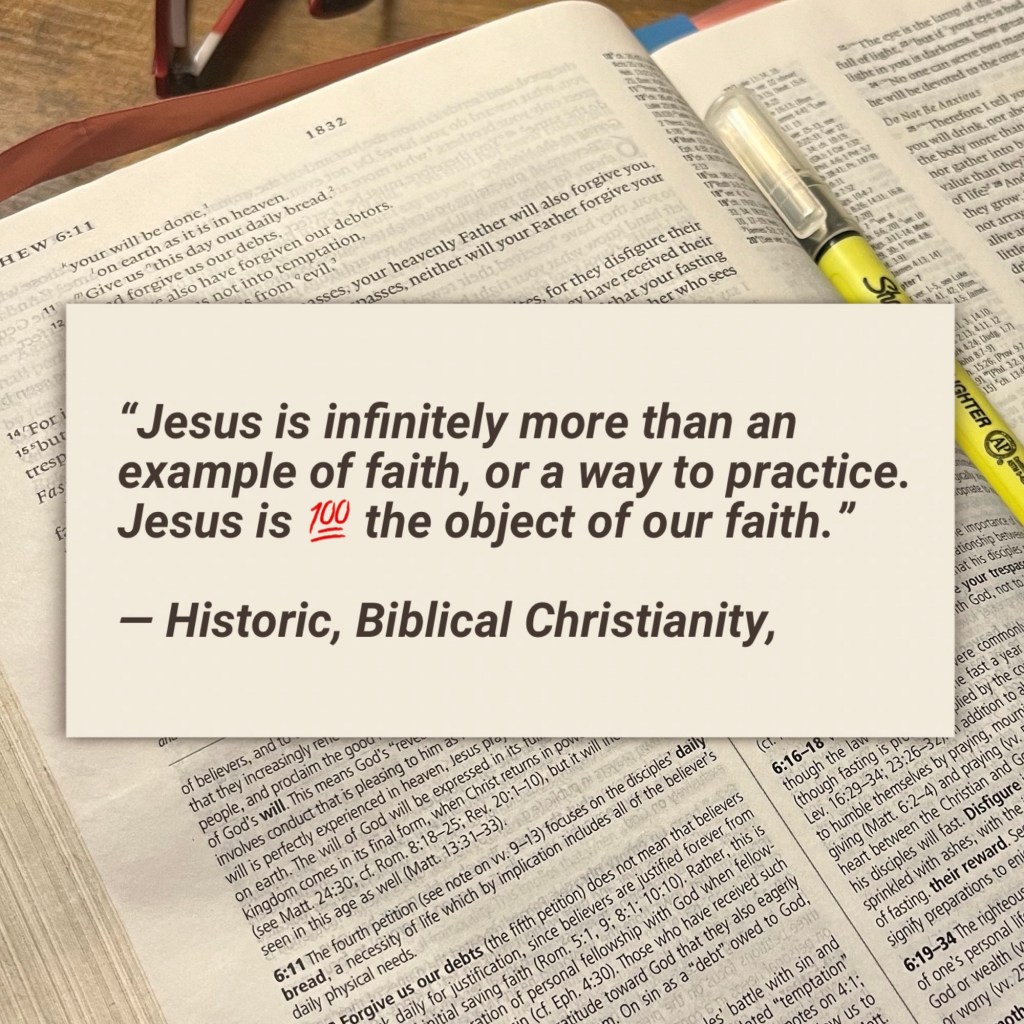
    Friends, the last I checked God’s Word, God is the only one who both sanctifies and transforms us. It’s a promise. And God always keeps His word. Richard Rohr believes that Jesus is a mere model of faith (8), not the object of our faith. (9) Rohr’s perspective of Jesus is therefore opposed to historic (biblical) Christianity. Given Comer’s admiration for Rohr, and his apparent belief that transformation is works-based, we need to be very careful not to promote John Mark Comer’s teaching at this time.

    *It is also important to note that I have written to Comer regarding the Richard Rohr research Comer asking for his stance on Rohr (through his church in Los Angeles, Facebook, as well as through the Practicing the Way website. So far, there has been no response from Comer…but let’s keep praying!

    “And I am sure of this, that he who began a good work in you will bring it to completion at the day of Jesus Christ.”

    Philippians 1:6

    “Now may the God of peace himself sanctify you completely, and may your whole spirit and soul and body be kept blameless at the coming of our Lord Jesus Christ.”

    1 Thessalonians 5:23

    For more information pertaining to Richard Rohr and those influenced by his theology, please follow Marcia Montenegro and Christian Answers for the New Age.

    Infographic: Meridith Black
    1. Groothuis, Douglas. 2021. “A Heretic’s Christ, a False Salvation: A Review of The Universal Christ: How a Forgotten Reality Can Change Everything We See, Hope for, and Believe Richard Rohr.” Christian Research Institute.
    2. Center for Action and Contemplation. 2019. “Jesus, Incarnation, and The Christ Resurrection.” cac.org. https://cac.org/podcasts/1-jesus-incarnation-and-the-christ-resurrection/.
    3. “Who Is Christ? — Center for Action and Contemplation.” Center for Action and Contemplation, 2 December 2018, https://cac.org/daily-meditations/who-is-christ-2018-12-02/. Accessed 19 November 2024.
    4. “Divine DNA — Center for Action and Contemplation.” Center for Action and Contemplation, 5 November 2017, https://cac.org/daily-meditations/divine-dna-2017-11-05/. Accessed 19 November 2024.
    5. “Lesson 2: The Big Question: Are You a Oneist or a Twoist? | Biblical Worldview II: Seeing a World of Difference.” n.d. Blue Letter Bible Institute. Accessed November 19, 2024. https://study.bible/lesson/575.
    6. Groothuis, Douglas, and Jordan Peterson. 2023. “The hidden dangers of carl jung.” Douglas Groothuis. https://www.douglasgroothuis.com/post/the-hidden-dangers-of-carl-jung.
    7. https://www.filteritthroughabraincell.com/podcasts/filter-it-through-a-brain-cell/episodes/2147693235
    8. 7. “Hidden with Christ in God — Center for Action and Contemplation.” 2017. Center for Action and Contemplation. https://cac.org/daily-meditations/hidden-with-christ-in-god-2017-08-20/
    9. . “Jesus’ Invitation: Follow Me — Center for Action and Contemplation.” Center for Action and Contemplation, 18 October 2016, https://cac.org/daily-meditations/jesus-invitation-follow-2016-10-18/. Accessed 19 November 2024.

    ✏️Article by Marcia Montenegro pertaining to JMC

  • Enneagram: Is It Christian?
    56 minutes

    ✔️Is it Christian?

    The Enneagram was created by George I. Gurdjieff in 1916 for the purpose of gleaning knowledge from the Cosmos as well as for creating “sacred dances” (using an occult number wrapped around the shape: 142587).

    Divination is the act of seeking information from any spiritual sources other than God, which is prohibited by God (Deut 18; Galatians 5). And therefore, this man-made tool is not spiritually neutral. Nor is it “redeemable.”

    Does God redeem Diviners? Yes!
    But not the act of divination.

    ✔️Is it ancient?

    The shape (1916; Gurdjieff) and it’s accompanying “types” (1969-1971; Claudio Naranjo) are not ancient. However, the worldview behind its formation is incredibly ancient (Panentheism mixed with Gnosticism).

    It needs to be shared that neither Panentheism nor Gnosticism are compatible with Christianity. In fact, both John and Paul were countering Gnosticism in the 1st century (John 1; Colossians 2).

    As Marcia has wisely shared in other interviews, “The Enneagram is not like meat sacrificed to idols. The Enneagram is the idol itself.”

    For a comprehensive overview of the important details shared above, please check-out Don & Joy Veinot’s and Marcia Montenegro’s book, Richard Rohr and the Enneagram Secret! It’s an essential resource pertaining to Enneagram research!

    Lastly, Midwest Christian Outreach has both produced and compiled an incredible playlist of educational videos anyone can watch while walking on a treadmill, making dinner, folding laundry dry, or flying on a plane. If reading isn’t your preferred way of gleaning information, these videos are invaluable!

    More Articles:

    ✏️ Does Richard Rohr’s theology align with historic, biblical Christianity?

    ✏️ Richard Rohr theology Google Document (printable)

    ✏️ The Enneagram Examined Scientifically

  • “The bigger question is, ‘Why does the Enneagram seem so wonderful to some people if it’s not actually accurate?’”

    Dr. Jay Medenwaldt

    Preface: This post is not an endorsement of the #Enneagram, but is instead highlighting Dr. Medenwaldt’s important work. This clip is a must watch (12m)!

    Per the TEDx video description:

    “The Enneagram is common in society as a tool to better understand ourselves and others. Many people use it to determine compatibility or learn more about their personality type. However, this test can sometimes do more harm than help to our personal lives. It allows people to make instant judgments about people they just met or justify dislike of certain personality types.

    This talk shows the psychology of the Enneagram, and how stories surrounding the it can reduce people to a number, and perpetuate harmful ideas that lead to negative consequences among family, friends, and society as a whole.

    Dr. Jay Medenwaldt is currently an assistant professor of psychology at Northwestern College, IA. He served in the Air Force as a behavioral scientist for nine years before earning a PhD in social psychology and an MDiv in apologetics, ethics, and biblical studies. His research and ministry work focus on how psychological factors affect religious beliefs. His forthcoming book examines the enneagram through the lens of science and Christian theology.

    This talk was given at a TEDx event using the TED conference format but independently organized by a local community.”

    12 minutes
  • 53 Minutes (5)

    Friends, the hope God provides is real. So real that we can gaze at the historical reality of the cross (AD 30 or 33) and daily consider the significance of the empty tomb.

    And while the library of documents we call the Bible (66 books written over 1,500yrs by 40+ people from different regions) are reliable resources, many hearts are astounded to consider that information also exists about Jesus outside of the Bible! (1)

    A few examples of these non-Christian, historical sources are Flavius Josephus (Jewish historian), Suetonius (Roman historian), the Talmud (a text of Rabbinic Judaism), and Cornelius Tacitus (Roman historian and senator). And what do they show us?

    ✔️Jesus was a real man, ✔️he was crucified on a Roman cross, and ✔️produced an empty tomb. Not to mention ✔️had numerous followers who were martyred for what they earnestly believed. These facts are undisputed by the vast majority of modern day scholars (non-Christian, included).

    To add, Dr. Craig Hazen from Biola explains that other worldviews and religions acknowledge Jesus’s existence: “In Hinduism, Jesus emerges in some Hindus’ minds as one of the greatest teachers ever to walk the earth. In Buddhism, if not an incarnation of the Buddha, Jesus certainly is a great Bodhisattva who leads people to the precipice of enlightenment. In Islam, Jesus is a greater prophet than Mohammad, was born of a virgin, is remembered as a miracle worker, and holds the scales of justice at the end of time.” (2)

    As Cold Case Detective and Apologist J Warner Wallace explains, “Jesus doesn’t matter because He influenced the world. Jesus influenced the world because He matters…Jesus is who He said he was: God incarnate.“ (3)

    You might not need to do research, or desire extra evidence, but maybe your son or daughter might have questions. Or, possibly your neighbor. Questions are good! Please welcome them. Not having answers readily available doesn’t mean they don’t exist. (4)

    This video featuring Drs Gary Habermas (Liberty University), Darrell Bock (Dallas Theological Seminary), and Mikel Del Rosario (Moody Bible) will encourage you immensely! (5)

    “He is risen, Indeed!” (Luke 24:34)♥️

    Resources

    (1) Dr. Mikel Del Rosario: https://apologeticsguy.com/2013/03/good-friday-jesus-myth/

    Zeitgeist debunked: https://youtu.be/30AunYXtYDg?si=pJmHZjkr_8B5ubCo

    Archeology: https://youtu.be/kXpOLh2vNNM?si=P0VnD76nF2f9mVLH

    (2) Dr. Craig Hazen: https://youtu.be/_BS6k_ZBJ9U?si=mE2ABySl1ydEMJH8

    (3) Person of Interest: Why Jesus Still Matters in a World that Rejects the Bible https://a.co/d/6MzKi8x

    (4) Women in Apologetics (WIA) Resources: https://womeninapologetics.com/recommended-resources/

    (5) The Table Podcast with Habermas, Bock, and Del Rosario: https://tinyurl.com/nh9hhcx2

    #GoodFriday #Resurrection #Jesus