A former Speech and Language Pathologist for nearly 20 years, I began educating our 3 children full-time in 2015 and have cherished every gifted moment (even the challenges). But what is interwoven into all aspects of daily life (as a wife, via motherhood, teaching, friendship, fitness, etc.) is Christian Apologetics (1 Peter 3:15)… which is why this blog exists.
“Pragmatism and Sola Scriptura must stand in opposition as each claims to be the key to determining truth. As Christians we need to decide if we are going to depend upon Scripture as the absolute standard of truth or if we will determine truth by consequences.”
Pragmatism, a philosophy developed by Charles Sanders Pierce in 1870, champions the premise that truth is proved by whether or not the idea in question works. Basically, if something works and is found useful to you…then it’s true. It advocates a way to find meaning apart from God’s Word, and relies upon the material world for guidance.
Spurgeon puts it this way, ‘Whatever a man depends upon, whatever rules his mind, whatever governs his affections, whatever is the chief object of his delight, is his god.’ When we place our reliance upon anything or anyone, we give it or them authority! And to what or whom we assign authority, we obey! Friends, Pragmatism is most certainly a concern for all of us!”
Pragmatism has always been a struggle for humanity. The mission statement of our former life was often a Pragmatic one. Doing “whatever works” frequently advocates the easy road. It’s tangible, seemingly controllable, and most often, immediate. Choosing “whatever seems right” provides our impatient hearts a semblance (temporary) relief, and the impression of practicality. For this reason, we often make the common mistake of conflating “helpfulness” as “goodness,” for what seems to be good then most be gym God— true. However, what we forget in these moments is that we are allowing subjective experience to be our standard, not Scripture.
“Let the word of Christ dwell in you richly, teaching and admonishing one another in all wisdom, singing psalms and hymns and spiritual songs, with thankfulness in your hearts to God.”
Colossians 3:16
Let’s talk about Peter’s battle with pragmatism for a moment.
When Jesus was telling His disciples what was to happen to Him in Jerusalem, Peter “rebuked” Jesus and pleaded for another way forward. Peter was examining Jesus’s plan through Peter’s own lens of human understanding, and did not find it immediately helpful (it seems).
“From that time Jesus began to show his disciples that he must go to Jerusalem and suffer many things from the elders and chief priests and scribes, and be killed, and on the third day be raised. And Peter took him aside and began to rebuke him, saying, “Far be it from you, Lord! This shall never happen to you.” But he turned and said to Peter, “Get behind me, Satan! You are a hindrance to me. For you are not setting your mind on the things of God, but on the things of man.””
Matthew 16:21-23
How often do we lean upon our own understanding as Peter did: Setting our minds upon the things of man instead of things of God (reading His Word)?
Truth put on human skin (Philippians 2), was crucified upon a cross, and then rose bodily three days later (1 Cor 15). It was the work Jesus came to accomplish. Peter just needed to trust Jesus’s character, even though he didn’t understand the plan. As Spurgeon once encouraged, “When you cannot trace His hand, trust His heart.”
Gals, we are witnessing Spiritual Pragmatism all around us today—in our homes, as well as within many of our churches. What should we do? Two things: 1) Pray to God often, and 2) get into His Word, daily. We need to prayerfully discern whose voice is guiding us…The voice of culture? The voice of practicality? The voice of worldly comfort and self-reliance? Or Scripture?
Keep trusting!
His,
Mer
Resources
“Stop not comparing yourself with others who call themselves Christians. Compare yourself to the Scripture.”
Paul Washer
A powerful 60 minutes with Voddie Baucham.
68 minutes with Dr. Chris Berg and Melissa Dougherty
90-minute debate between Pastor Todd Wilson and Marcia Montenegro, moderated by Justin Brierley. This discussion provides an eye-opening perspective of spiritual pragmatism.
80 minutes w/ Dr. Kevin Lewis and Pastor Costi Hinn.
“The Word of God I think of as a straight edge, which shows up our own crookedness. We can’t really tell how crooked our thinking is until we line it up with the straight edge of Scripture.”
Elisabeth Elliot
1 Kings 18:21 “And Elijah came near to all the people and said, “How long will you go limping between two different opinions? If the Lord is God, follow him; but if Baal, then follow him.” And the people did not answer him a word.”
Proverbs 3:5-6 “Trust in the Lord with all your heart, and do not lean on your own understanding. In all your ways acknowledge Him, and He will make straight your paths. Be not wise in your own eyes; fear the Lord, and turn away from evil.”
John 15:5 “…for apart from Me (Jesus), you can do nothing.”
Matthew 6:33 “But seek first the kingdom of God and his righteousness, and all these things will be added to you.”
Proverbs 1:7 “The fear of the Lord is the beginning of knowledge; fools despise wisdom and instruction”
Colossians 3:2 “Set your minds on things that are above, not on things that are on earth.
Revelation 3:2 “Wake up, and strengthen what remains and is about to die, for I have not found your works complete in the sight of my God.”
Revelation 3:2-6 “Wake up, and strengthen what remains and is about to die, for I have not found your works complete in the sight of my God. Remember, then, what you received and heard. Keep it, and repent. If you will not wake up, I will come like a thief, and you will not know at what hour I will come against you. Yet you have still a few names in Sardis, people who have not soiled their garments, and they will walk with me in white, for they are worthy. The one who conquers will be clothed thus in white garments, and I will never blot his name out of the book of life. I will confess his name before my Father and before his angels. He who has an ear, let him hear what the Spirit says to the churches.’”
1 Corinthians 2:2-5 “For I decided to know nothing among you except Jesus Christ and him crucified. And I was with you in weakness and in fear and much trembling, and my speech and my message were not in plausible words of wisdom, but in demonstration of the Spirit and of power, so that your faith might not rest in the wisdom of men but in the power of God.”
Matthew 16:23 “But he turned and said to Peter, “Get behind me, Satan! You are a hindrance to me. For you are not setting your mind on the things of God, but on the things of man.”
Isaiah 55:8-9 “For my thoughts are not your thoughts, neither are your ways my ways, declares the Lord. For as the heavens are higher than the earth, so are my ways higher than your ways and my thoughts than your thoughts.”
Galatians 1:6-10 “I am astonished that you are so quickly deserting him who called you in the grace of Christ and are turning to a different gospel— not that there is another one, but there are some who trouble you and want to distort the gospel of Christ. But even if we or an angel from heaven should preach to you a gospel contrary to the one we preached to you, let him be accursed. As we have said before, so now I say again: If anyone is preaching to you a gospel contrary to the one you received, let him be accursed. For am I now seeking the approval of man, or of God? Or am I trying to please man? If I were still trying to please man, I would not be a servant of Christ.”
2 Timothy 4:1-8 “I charge you in the presence of God and of Christ Jesus, who is to judge the living and the dead, and by his appearing and his kingdom: preach the word; be ready in season and out of season; reprove, rebuke, and exhort, with complete patience and teaching. For the time is coming when people will not endure sound teaching, but having itching ears they will accumulate for themselves teachers to suit their own passions, and will turn away from listening to the truth and wander off into myths. As for you, always be sober-minded, endure suffering, do the work of an evangelist, fulfill your ministry. For I am already being poured out as a drink offering, and the time of my departure has come. I have fought the good fight, I have finished the race, I have kept the faith. Henceforth there is laid up for me the crown of righteousness, which the Lord, the righteous judge, will award to me on that day, and not only to me but also to all who have loved his appearing.”
Matthew 7:13-14 ““Enter by the narrow gate. For the gate is wide and the way is easy that leads to destruction, and those who enter by it are many. For the gate is narrow and the way is hard that leads to life, and those who find it are few.”
Matthew 6:25-33 “Therefore I tell you, do not be anxious about your life, what you will eat or what you will drink, nor about your body, what you will put on. Is not life more than food, and the body more than clothing? Look at the birds of the air: they neither sow nor reap nor gather into barns, and yet your heavenly Father feeds them. Are you not of more value than they? And which of you by being anxious can add a single hour to his span of life?And why are you anxious about clothing? Consider the lilies of the field, how they grow: they neither toil nor spin, yet I tell you, even Solomon in all his glory was not arrayed like one of these. But if God so clothes the grass of the field, which today is alive and tomorrow is thrown into the oven, will he not much more clothe you, O you of little faith? Therefore do not be anxious, saying, ‘What shall we eat?’ or ‘What shall we drink?’ or ‘What shall we wear?’ For the Gentiles seek after all these things, and your heavenly Father knows that you need them all. But seek first the kingdom of God and his righteousness, and all these things will be added to you.”
Psalm 92:5 “How great are your works, O Lord! Your thoughts are very deep!”
Proverbs 14:12 and 16:25 “There is a way that seems right to a man, but its end is the way to death.”
Jeremiah 17:9 “The heart is deceitful above all things, and desperately sick; who can understand it?”
Psalm 9:16 “The Lord has made himself known; he has executed judgment; the wicked are snared in the work of their own hands.”
James 1:5-6 “If any of you lacks wisdom, let him ask God, who gives generously to all without reproach, and it will be given him. But let him ask in faith, with no doubting, for the one who doubts is like a wave of the sea that is driven and tossed by the wind.”
Jeremiah 17:7-8 “Blessed is the man who trusts in the Lord, whose trust is the Lord. He is like a tree planted by water, that sends out its roots by the stream, and does not fear when heat comes, for its leaves remain green, and is not anxious in the year of drought, for it does not cease to bear fruit.”
1 Corinthians 15:58 “Therefore, my beloved brothers, be steadfast, immovable, always abounding in the workof theLord, knowing that in the Lord your labor is not in vain.”
Colossians 1:10 “so as to walk in a manner worthy of the Lord, fully pleasing to him: bearing fruit in every good work and increasing in the knowledge of God
Colossians 3:23 “Whatever you do, work heartily, as for the Lord and not for men,
Psalm 139:23-24 “Search me, O God, and know my heart! Try me and know my thoughts! And see if there be any grievous way in me, and lead me in the way everlasting”
Isaiah 40:28-31 “Have you not known? Have you not heard? The Lord is the everlasting God, the Creator of the ends of the earth. He does not faint or grow weary; his understanding is unsearchable. He gives power to the faint, and to him who has no might he increases strength. Even youths shall faint and be weary, and young men shall fall exhausted; but they who wait for the Lord shall renew their strength; they shall mount up with wings like eagles; they shall run and not be weary; they shall walk and not faint.”
Psalm 46:10 “Be still, and know that I am God.”
James 4:8 “Draw near to God, and he will draw near to you. Cleanse your hands, you sinners, and purify your hearts, you double-minded.”
2 Peter 2:1-3 “But false prophets also arose among the people, just as there will be false teachers among you, who will secretly bring in destructive heresies, even denying the Master who bought them, bringing upon themselves swift destruction. And many will follow their sensuality, and because of them the way of truth will be blasphemed. And in their greed they will exploit you with false words. Their condemnation from long ago is not idle, and their destruction is not asleep.”
2 Corinthians 11:3-4 “But I am afraid that as the serpent deceived Eve by his cunning, your thoughts will be led astray from a sincere and pure devotion to Christ. For if someone comes and proclaims another Jesus than the one we proclaimed, or if you receive a different spirit from the one you received, or if you accept a different gospel from the one you accepted, you put up with it readily enough.”
1 Peter 3:15
“but in your hearts honor Christ the Lord as holy, always being prepared to make a defense to anyone who asks you for a reason for the hope that is in you; yet do it with gentleness and respect,”
1 Peter 3:15
Jesus
6 minutes
18 minutes w/ Nabeel Qureshi
44 minutes w/ Mikel Del Rosario
The Gospel
20 minutes
70 minutes
Trust God’s Word
Per GotQuestions: “How we respond to God’s written Word and the Word made flesh has an eternal impact on us. Since God’s Word is truth, rejecting the Bible and rejecting Jesus is rejecting God Himself. Believing, cherishing, studying, and obeying God’s Word is the key to salvation, understanding God, and living abundantly (John 10:10). No matter what we may face in this world, we are sustained by the truth prayed over us in Jesus’ prayer: “Sanctify them by the truth; your word is truth” (John 17:17).”
Christians should view the Scriptures as Jesus views the Scriptures…as God’s authoritative word, true and unchanging (Mark 7:8-13; Matt. 26:54; Luke 4:21; John 7:38).
With this important fact in view on Valentine’s Day, Christians should always look to God’s Word (Bible) as our Dictionary in defining what love is, and from Whom it comes! Not Netflix!
Below is an impactful video by Mama Bear Apologetics I strongly encourage you all to watch…especially with your tween and teens!
“Reformation is a return to the sound doctrine of the Bible. Revival is the practice of that sound doctrine under the power of the Holy Spirit.”
Francis Schaeffer
Friends, we can know…without a doubt…that the Holy Spirit, who helped the 40+ writers of the 66 books (written over 1600 years on 3 different continents, in 3 different languages) will never contradict Scripture. He will instead remind us of God’s words. With this in view, any other attempt (pragmatism) at a revival falls far short.
“All Scripture is breathed out by God and profitable for teaching, for reproof, for correction, and for training in righteousness,” —2 Timothy 3:16 📕
“For we did not follow cleverly devised myths when we made known to you the power and coming of our Lord Jesus Christ, but we were eyewitnesses of his majesty. 17 For when he received honor and glory from God the Father, and the voice was borne to him by the Majestic Glory, ‘This is my beloved Son, with whom I am well pleased,’ 18 we ourselves heard this very voice borne from heaven, for we were with him on the holy mountain. 19 And we have the prophetic word more fully confirmed, to which you will do well to pay attention as to a lamp shining in a dark place, until the day dawns and the morning star rises in your hearts, 20 knowing this first of all, that no prophecy of Scripture comes from someone’s own interpretation. 21 For no prophecy was ever produced by the will of man, but men spoke from God as they were carried along by the Holy Spirit.” —2 Peter 1:16-21📕
This side-by-side chart was compiled with the genuine prayer that it might be a helpful resource for anyone wanting to know how Richard Rohr’s theology and anthropology compare with Christianity. In order to accomplish this important task, Friar Rohr’s own words needed to be shared here. Quotes from Rohr’s books, devotionals, and interviews (along with their sources) are organized next to corresponding commentary by Christian theologians and examined by Scripture.
This task was needed due to Rohr’s salient impact through popular enneagram enthusiasts— Cron, Stabile, Heuertz, McCord, and Comer. The influence Rohr has had through the Enneagram has reached the YouVersion Bible app, which features a Bible plan for one of Rohr’s books.
“One cannot disconnect the Enneagram from Richard Rohr, which is why it is essential to know his beliefs, especially since the writers of the two main books in use among evangelicals are his students and have taught at his Center for Action and Contemplation.”
Don and Joy Veinot & Montenegro (Richard Rohr and the Enneagram Secret)📙
Friends, secondary teachings can be discussed respectfully over multiple cups of coffee or tea; however, the essential teachings of Christianity are not malleable. It’s both responsible and loving to test whether Rohr’s usage of Christian terminology matches the definitions provided within the Scriptures (Acts 17:11; 20:28).
“To him (Jesus), what Scripture says, God says.” John Wenham (Christ and the Bible)
“But test everything; hold fast what is good.” 1 Thessalonians 5:21
Richard Rohr’s Theology vs Biblical Christianity
Angels
Rohr says:
“If we want to take the notion of angels, demons, and the principalities and powers seriously, we will have to go back to the biblical understanding of spirits in all its profundity and apply it freshly to our situation today.” (5)
“When Paul talks about the ‘devil,’ he uses words like ‘powers,’ ‘principalities,’ and ‘thrones’ (see Ephesians 6:12). These are almost certainly his pre-modern words for what we would now call corporations, institutions, nation-states, and organizations that demand our full allegiance and thus become, in many ways, idolatrous—not just ‘too big to fail,’ but even too big to be criticized. Suddenly, the medieval notion of devils comes very close to home.” (6)
Christian perspective:
Got Questions Ministries provides us a biblical perspective of Angels:
“Angels are personal spiritual beings who have intelligence, emotions, and will. This is true of both the good and evil angels (demons). Angels possess intelligence (Matthew 8:29; 2 Corinthians 11:3; 1 Peter 1:12), show emotion (Luke 2:13; James 2:19; Revelation 12:17), and exercise will (Luke 8:28-31; 2 Timothy 2:26; Jude 6). Angels are spirit beings (Hebrews 1:14) without true physical bodies. Although they do not have physical bodies, they are still personalities and occasionally take on physical bodies.” (10)
Scripture says:
“For he will command his angels concerning you to guard you in all your ways.” Psalm 91:11
“And the angels who did not stay within their own position of authority, but left their proper dwelling, he has kept in eternal chains under gloomy darkness until the judgment of the great day—” Jude 1:6
“Above him stood the seraphim. Each had six wings: with two he covered his face, and with two he covered his feet, and with two he flew.” Isaiah 6:2
“Do you think that I cannot appeal to my Father, and he will at once send me more than twelve legions of angels?” Matthew 26:53
Bible
Rohr says:
Veinot and Montenegro– “Rohr views the Bible as a collection of books that merely record the authors’ experience of God or convery who they thought God was. The Bible is not viewed as God’s revelation. Rohr states, ‘Just as the Bible takes us through many stages of consciousness and history, it takes us individually a long time to move beyond our need to be dualistic, judgmental, accusatory, fearful, blaming, egocentric, and earning – and to see as Jesus sees.’” (7)
Rohr claims: “The Bhagavad Gita is a part of the Perennial Tradition. It’s not Jewish, it’s not Christian, but it’s inspired.” (8)
Jonah in the fish is more about symbolism, than an actual event. (9)
“I’m highly formed by things like spiral dynamics and evolutionary consciousness and developmental psychology and I look at the Bible and I clearly see that there are writings that represent very primitive levels of consciousness that’s not to say they’re uninspired but they reflect a pretty violent dualistic punitive wrathful notion of God.” (108)
“I see the Bible as charting that growth and that change so it is inspired but I guess this sounds radical to an evangelical but I can’t say that every lie in the bible is equally inspired there’s clearly a growth in our understanding of who God is.” (108)
Christian perspective:
In his article, “Why I don’t Flow with Richard Rohr,” a review about Rohr’s book, Divine Dance, Professor Dr. Fred Sanders, explains that Rohr views Scripture as a “morally polluted text with false statements in it.” (4)
Pastor Voddie Baucham explains that “the Bible is a reliable collection of historical documents written by eyewitnesses, during the lifetime of other eyewitnesses…who report supernatural events that took place in fulfillment of specific prophecies,…and claim their writings are divine rather than human in origin.” (2)
Christian apologist Wes Huff:
“What we call the Bible was put together over 1600 years, on 3 continents, by close to 40 different authors, in 3 different languages. Some of its writers were kings, others teachers, shepherds and fishermen. The early Christians inherited the Jewish Scriptures (what we call the Old Testament) a collection composed of the same 39 books we have in the first portion of our Bibles.
Contrary to what many believe or have heard, the New Testament books were not chosen or voted on, but instead, were recognized as the writings closest to the community surrounding Jesus. What we actually have is a direct connection to the life and teaching of Jesus. Jesus’ disciples mentored others, who we call the Apostolic Fathers, who then comment on what books did or didn’t have a history going back to the words and teachings of Jesus.” (3)
Per Dr. Gary Habermas, Jesus the Scriptures as God’s word to us – authoritative and true. (11)
“To him [Jesus], what Scripture says, God says.” – John Wenham (109)
“All Scripture is breathed out (inspired) by God and profitable for teaching, for reproof, for correction, and for training in righteousness, that the man of God may be complete, equipped for every good work.” 2 Timothy 3:16-17
“Heaven and earth will pass away, but my words will not pass away.” – Jesus (Matthew 24:35)
“The grass withers, the flower fades, but the word of our God will stand forever.” Isaiah 40:8
“Whoever believes in me, as the Scripture has said, ‘Out of his heart will flow rivers of living water.’” John 7:38
“For whatever was written in former days was written for our instruction, that through endurance and through the encouragement of the Scriptures we might have hope.” Romans 15:4
“I [Jesus] do not ask for these only, but also for those who will believe in me through their word,” John 17:20
“For no prophecy was ever produced by the will of man, but men spoke from God as they were carried along by the Holy Spirit.” 2 Peter 1:21
Christ
Rohr says:
“Long before Jesus’s personal incarnation, Christ was deeply embedded in all things – as all things! The Christ Mystery is the New Testament’s attempt to name this visibility or see-ability that occurred on the first day.” (12)
“Deep within the cave of my heart, a depth that belongs to me alone, I recognize a fire that burns brilliantly and glows with warmth. Through that glowing fire I see the outline of a face, the face of Christ, but I also see my face, and then I begin to see Christ’s face as my face. Sometimes I cannot tell Christ’s face from my own face, and all at once I recognize a single face whose eyes are looking inward and outward.” (111)
“‘Christ’ is a word for the Primordial Template (Logos or Word) through whom ‘all things came into being, and not one thing had its being except through him’ (John 1:3). Seeing in this way has reframed, reenergized, and broadened my own religious belief, and I believe it could be Christianity’s unique contribution among the world religions.” (14)
“Christ was the Alpha point. Good biblical theology calls creation itself the birth of the Christ, the materialization of God. Whenever matter and spirit coincide, you have the Christ Mystery, which is a phrase the Apostle Paul introduces.” (17)
Christian perspective:
The NASB Hebrew-Greek Study Bible defines “Christ” of “Messiah” (Acts 2:36). In the Greek, Christ is written as “Christos” (5547) which means “Anointed, primarily to the high priesthood.” (16)
Dr. Michael A. Rydelnik delivers a biblical definition of “Christ” on pages 31 & 32 of the Moody Handbook of Messianic Prophecy: “The Messiah is described in the Bible beginning with the word, ‘Messiah’ or ‘Anointed One,’ and then in a variety of other ways. All of the following provide a portrait of the future messianic figure. The Messiah is the eschatological, royal, Servant of the Lord, springing from the Davidic dynasty, who is consecrated by God to provide redemption from sin, bring deliverance for Israel, rule the world, and establish a kingdom of peace, justice, nad righteousness.” (15)
“And if those days had not been cut short, no human being would be saved. But for the sake of the elect those days will be cut short.Then if anyone says to you, ‘Look, here is the Christ!’ or ‘There he is!’ do not believe it. For false christs and false prophets will arise and perform great signs and wonders, so as to lead astray, if possible, even the elect.” Matthew 24:22-24
John the Baptist: “He confessed, and did not deny, but confessed, ‘I am not the Christ.’” John 1:20
“And the Word became flesh and dwelt among us, and we have seen his glory, glory as of the only Son from the Father, full of grace and truth.” John 1:14
“Because, if you confess with your mouth that Jesus is Lord and believe in your heart that God raised him from the dead, you will be saved.” Romans 10:9
Contemplative Prayer
Rohr says:
“We need contemplative practices to loosen our egoic attachment to certainty and retrain our minds to understand the wisdom of paradox.” (103)
“Contemplative prayer is largely just being present: holding the tension instead of even talking it through, offering the moment to God instead of fixing it by words and ideas, loving reality as it is instead of understanding it fully. In our daily lives, this prayer is most commonly articulated as a willingness to say, ‘I don’t know.’ We must not push the river, we must just trust that we are already in the river, and God is the certain flow and current.” (103)
“‘I must be ‘nothing’ in order to be open to all of reality and new reality. The Zen master calls this state ‘the face we had before we were born.’ Paul would call it who you are: ‘in Christ, hidden in God’ (Col. 3:3). I just say it is who you are before you did anything right or anything wrong, who you are before you thought about who you are. Our thinking doesn’t make it so. Thinking creates the ego self, the self of reputation, the insecure self. Contemplation recognizes the Godself, the Christself of abundance and security.” (104)
Seminary professor and author, Dr. Douglas Groothuis:
“The biggest danger to which one is exposed in the contemplative movement is a subtle erosion of the Creator/creature distinction toward a monistic or ‘synthesis of all things’ understanding. This has much in common with Eastern mysticism that basically teaches all is one and all is divine by nature.” (123)
“What is biblical prayer? Evangelical writer and teacher Kenneth Boa describes it as ‘personal communion and dialogue with the living God.’ This statement should be uncontroversial (if one means the God of the Bible), but supporters of CP would add that the deepest, most profound form of prayer is of the contemplative variety. To avoid confusion, ‘contemplative,’ used in this context, is not synonymous with awareness or concentration. Rohr defines contemplation as ‘an alternative consciousness that refuses to identify with or feed what are only passing shows.’ These “passing shows” are one’s thoughts.” (105)
“However, such a concept of contemplative prayer is challenged by our Lord himself. When Jesus taught his disciples what to do until his return, he instructed, ‘But keep on the alert at all times, praying that you may have strength to escape all these things that are about to take place, and to stand before the Son of Man’ (Luke 21:36).27 Mental passivity combined with an ‘open heart’ and the refusal to interact with thoughts appears incompatible with Jesus’ divine injunction…Additionally, when Jesus taught on prayer, he said not to ‘use meaningless repetition as the Gentiles do’ (Matt. 6:7; see also vss. 8–13). Repetition itself is not the problem, but meaningless repetition, which is specifically advocated by CP.” (105)
“The support lent to CP tends to be full of partial truths, much hermeneutical error, and the imprecise use of language. Contemplative prayer misrepresents key attributes of God. He is transcendent yet always personal; he is not reducible to mere impersonal forces or literal light, and he is certainly not a state without properties (as is the non-dualistic Hindu concept of Brahman). We know and communicate with this personal God through personal means, not through transcendence of personality. Thus, CP is at worst spiritually dangerous, and at best does not appear to serve any sanctifying purpose. Therefore, we have no good reason to engage in the practice. Still, we must continue to intelligently and prayerfully converse with fellow believers regarding this trend. Thinking Christians should not be silent about this error.” (105)
What am I to do? I will pray with my spirit, but I will pray with my mind also; I will sing praise with my spirit, but I will sing with my mind also.” 1 Corinthians 14:15
“Do not be anxious about anything, but in everything by prayer and supplication with thanksgiving let your requests be made known to God.” Philippians 4:6
“Praying at all times in the Spirit, with all prayer and supplication. To that end, keep alert with all perseverance, making supplication for all the saints,” Ephesians 6:18
“Pray then like this: “Our Father in heaven, hallowed be your name. Your kingdom come, your will be done, on earth as it is in heaven. Give us this day our daily bread, and forgive us our debts, as we also have forgiven our debtors. And lead us not into temptation, but deliver us from evil.” Matthew 6:9-13
“Is anyone among you suffering? Let him pray. Is anyone cheerful? Let him sing praise.” James 5:13
“If any of you lacks wisdom, let him ask God, who gives generously to all without reproach, and it will be given him.” James 1:5
“And when you pray, do not heap up empty phrases as the Gentiles do, for they think that they will be heard for their many words.” Matthew 6:7“Blessed is the man who walks not in the counsel of the wicked, nor stands in the way of sinners, nor sits in the seat of scoffers; but his delight is in the law of the Lord, and on his law he meditates day and night. He is like a tree planted by streams of water that yields its fruit in its season, and its leaf does not wither. In all that he does, he prospers. The wicked are not so, but are like chaff that the wind drives away. Therefore the wicked will not stand in the judgment, nor sinners in the congregation of the righteous;” Psalm 1:1-6
Crucifixion
Rohr says:
“The Divine Mind transforms all human suffering by identifying completely with the human predicament and standing in full solidarity with it from the beginning to end. This is the real meaning of crucifixion. The cross is not just a singular event. It’s a statement from God that reality has a cruciform pattern.” (18)
“Necessary suffering has been the shape of the universe.” (19)
“There is a cruciform shape to reality, it seems. Loss precedes all renewal; emptiness makes way for every new infilling; every transformation in the universe requires the surrendering of a previous ‘form.’” (20)
Christian perspective:
Dr. Michael McClymond unpacks Rohr’s teaching about Jesus’s Crucifixion: Per Rohr, Crucifixion is “something that happened to Jesus and should happen to us too. The biblical death-and-resurrection story teaches us that everyone has to let go of egoistic attachments (‘crucifixion’) so as to be reborn (‘resurrection’). Jesus’s death was ‘God’s great act of solidarity’ with humanity, and “not some bloody transaction ‘required’ by God’s offended justice in order to rectify the problem of human sin.’ Jesus’s death didn’t accomplish redemption. Instead, I am Jesus, you are Jesus, everyone is Jesus—that is where Rohr ends up.” (21)
Per Got Questions Ministries, “Crucifixion was invented and used by other people groups, but it was ‘perfected’ by the Romans as the ultimate execution by torture. The earliest historical record of crucifixion dates to c. 519 BC. The victim of crucifixion was first severely scourged or beaten, an ordeal that was life-threatening by itself. Then he was forced to carry the large wooden crossbeam to the site of the crucifixion. Bearing this load was not only extremely painful after the beating, but it added a measure of shame as the victim was carrying the instrument of his own torture and death. It was like digging one’s own grave.” (22)
Scripture says:
“Surely he has borne our griefs and carried our sorrows; yet we esteemed him stricken, smitten by God, and afflicted. But he was pierced for our transgressions; he was crushed for our iniquities; upon him was the chastisement that brought us peace, and with his wounds we are healed. All we like sheep have gone astray; we have turned—every one—to his own way; and the Lord has laid on him the iniquity of us all.” Isaiah 53:4-6
“For Christ also suffered once for sins, the righteous for the unrighteous, that he might bring us to God, being put to death in the flesh but made alive in the spirit,” 1 Peter 3:18
“And they clothed him in a purple cloak, and twisting together a crown of thorns, they put it on him. And they began to salute him, ‘Hail, King of the Jews!’ And they were striking his head with a reed and spitting on him and kneeling down in homage to him. And when they had mocked him, they stripped him of the purple cloak and put his own clothes on him. And they led him out to crucify him.” Mark 15:17-26
Devil
Rohr says:
Satan is a symbol or a concept (archetypal), not a literal being. “We need personification to take concepts and abstractions seriously.” (23)
“The word ‘devil,’ like ‘demon,’ is a personification of a power that is hard to name or describe because it’s so disguised and even idealized as good and necessary.” (24)
“Sanctified and legitimated violence— violence that is deemed necessary to control the angry flesh and the world run amuck”(24)
Satan is likened to when we operate in the New Age concept of the ego, and therefore operate in certainty/dualism and thereby scapegoat our own “blindness” to non-dual thinking upon others. (23)
“The ego, and also the corporate ego, is often personified in world Scriptures [sic] as the devil or Satan.” (25)
Christian perspective:
Wayne Grudem: “The name ‘Satan’ is a Hebrew word that means ‘adversary.’ The New Testament also uses the name ‘Satan,’ simply taking it over from the Old Testament.” (26)
Got Questions Ministries: “The Bible explicitly informs us of the existence of Satan. He is described as the enemy of man (Genesis 3:15), the father of lies (John 8:44b), and the accuser (Revelation 12:10), among other things. The very name ‘Satan’ means ‘adversary.’ Isaiah 14:12–17 explains that Satan was originally an angelic being, but he decided he wanted the honor and worship due only to God and was thrown out of heaven (also see Ezekiel 28:11–17).” (27)
Jesus was a real man who proved to be the promised Messiah/Christ. His claim to be God (God the Son) was also vindicated. And therefore, since Jesus spoke of the Devil as a real being, it would be wise to follow His lead (Mt 13:38-39; John 8:44, 12:31, 14:30, and more).
Scripture says:
“And no wonder, for even Satan disguises himself as an angel of light.” 2 Corinthians 11:14
“You are of your father the devil, and your will is to do your father’s desires. He was a murderer from the beginning, and does not stand in the truth, because there is no truth in him. When he lies, he speaks out of his own character, for he is a liar and the father of lies.” John 8:44
“And he said to them, ‘I saw Satan fall like lightning from heaven.’” Luke 10:18
“And the devil who had deceived them was thrown into the lake of fire and sulfur where the beast and the false prophet were, and they will be tormented day and night forever and ever.” Revelation 20:10
“‘How you are fallen from heaven, O Day Star, son of Dawn! How you are cut down to the ground, you who laid the nations low! You said in your heart, “I will ascend to heaven; above the stars of God I will set my throne on high; I will sit on the mount of assembly in the far reaches of the north; I will ascend above the heights of the clouds; I will make myself like the Most High.” But you are brought down to Sheol, to the far reaches of the pit.’” Isaiah 14:12-15
Dualism
Rohr says:
“Dualistic thinking, or the ‘egoic operating system,’ as my friend and colleague Cynthia Bourgeault calls it, is our way of reading reality from the position of our private and small self. ‘What’s in it for me?’ ‘How will I look if I do this?’ This is the ego’s preferred way of seeing reality.’” (28)
“The dualistic mind is essentially binary, either/or thinking. It knows by comparison, opposition, and differentiation.” (28)
Rohr claims that we are not able to either accept or understand how Jesus can be both divine and human with our dualistic minds. (29)
Christian perspective:
The Christian perspective is to renew our minds with the Holy Spirit’s help through reading God’s Word, not removing our minds (opening them up to any voice/thought which enters). We need to test what is coming into our minds to make sure those thoughts are good (2 Cor 10:5; 1 Thes 5:21; 1 John 4:1).
“Rohr commonly asserts that we need to move from a dual mindset (not making or discerning distinctions). Rohr accepts dualism for practical things like doing math or learning to drive, but he associates dualism with judgment and condemnation in a spiritual context. For Rohr, a change in consciousness is needed as a part of ‘Emerging’ (Progressive) Christianity.” (112)
“Rohr equates ‘dualistic thinking’ with division and strife…Therefore, he teaches we need to move to a new, ‘non-dual consciousness.’ One way this is to come about is through what Rohr terms ‘contemplation.’” (30)
Scripture says:
“Do not be conformed to this world, but be transformed by the renewal of your mind, that by testing you may discern what is the will of God, what is good and acceptable and perfect.” Romans 12:2
“We destroy arguments and every lofty opinion raised against the knowledge of God, and take every thought captive to obey Christ,” 2 Corinthians 10:5
“but test everything; hold fast what is good. 22 Abstain from every form of evil. 23 Now may the God of peace himself sanctify you completely, and may your whole spirit and soul and body be kept blameless at the coming of our Lord Jesus Christ. 24 He who calls you is faithful; he will surely do it.” 1 Thessalonians 5:21-24
Enneagram
Rohr says:
On page xvi of Ebert’s and Rohr’s book, The Enneagram: A Christian Perspective, Rohr shares this about the Enneagram:
“Andreas Ebert and I again offer the Enneagram as a very ancient Christian tool for the discernment of spirits, the struggle with our capital sin, our ‘false self,’ and the encounter with our True Self in God. Anything this powerful and this converting is sure to be fought and resisted by the egocentric self, and even by control-needy prelates.” (31)
On page xxi, Rohr continues, “It is no surprise me that the Enneagram is so distasteful to soft spirituality and even to individualistic spirituality.” (31)
1m40s “…how can it [Enneagram] be so true because scientifically we can’t prove it.” (106)
11m “Unless you tame your demons you will never know your angels…[The genius of the Enneagram], where it’s uniquely Christian, is we are going to make the devil work for God.” (106)
“The Enneagram’s root sins or passions can be seen as nine different ways of ‘missing the mark’ (hamartia), nine ways of being disconnected from God’s Presence—our essence—here and now. By viewing our Enneagram compulsions as reminders to return to presence, we can become aware of the Divine Presence in us and around us and we can share that love with a hurting world.” (107)
“In the Enneagram tradition, ‘sin’ is simply that which doesn’t work, i.e. self-defeating behavior. Our root capital sins can be understood as emergency solutions that we developed in early childhood as a way of coping with our environment. At the time, these coping mechanisms were necessary for survival. But the older we grow, the more they get in the way of living freely as our True Self.” (107)
“Teresa of Ávila said that the sinner is actually one who does not love himself or herself enough. We do not see or admire the whole self; so we split and try to love the good self and reject the bad self. But Jesus told us to let the weeds and the wheat grow together until the harvest, lest we destroy the wheat by trying to pull up the weeds (see Matthew 13:24-30). The Enneagram allows us to see and embrace our shadow, the part of us that most carries our shame. Only with some degree of non-dual consciousness can we hold imperfection and beauty together in what Merton called ‘a hidden wholeness.’” (107)
Christian perspective:
Is the Enneagram Christian? No.
The Enneagram was created by George I. Gurdjieff in 1916 for the purpose of gleaning knowledge from the Cosmos as well as for creating “sacred dances” (using an occult number wrapped around the shape: 142587).
Divination is the act of seeking information from any spiritual sources other than God, which is *prohibited* by God (Deut 18; Galatians 5). Therefore, this man-made tool is not spiritually neutral. Nor is it “redeemable.”
Does God redeem Diviners? Yes! But not the act of divination.
Is the Enneagram ancient? Possibly, but not likely.
The shape (1916; Gurdjieff) and its accompanying “types” (1969-1971; Claudio Naranjo) are not ancient. However, the worldview behind its formation is incredibly ancient (Panentheism mixed with Gnosticism). It needs to be shared that neither Panentheism nor Gnosticism are compatible with Christianity. In fact, both John and Paul were countering Gnosticism in the 1st century (John 1; Colossians 2). As Marcia has wisely shared in interviews, “The Enneagram is not like meat sacrificed to idols. The Enneagram is the idol itself.”
Rhenn Cherry (Enneagram Theology: Is It Christian, p.115): “The Enneagram journey to True Self is a diversion from recognizing the reality of man’s fallen nature and need for redemption, which is made possible only through the saving work of the incarnate and resurrected God-Man. Ultimately, the Enneagram journey of self-discovery makes the need for the Person and work of the biblical Christ Jesus of Nazareth, go away. Richard Rohr and the authors he mentored have offered adopters of the Enneagram a mislabeled (Christian) tool that misdiagnoses their problem (lack of self-knowledge) and proposes an amusing, misguided path (Enneagram) to a solution (True Self) that does not exist. The Enneagram is a proverbial road to nowhere that provides its own peculiar language and sense of inclusion for its travelers to amuse themselves along the way to a mythical destination.” (122)
Don & Joy Veinot and Marcia Montenegro (Richard Rohr and the Enneagram Secret; p. 81): “If Rohr’s teachings are true, we must abandon what the historic Christian church has taught and maintained since its inception. If they (Rohr’s teachings) are false, Richard Rohr must be exposed as a false teacher, and the occult ‘spiritual tool’ called the Enneagram must be abandoned. Today, as in the days of Elijah, the people must choose whom they will serve.”
Ancient Faith or New Age Deception (Marcia Montenegro): Don & Joy Veinot and Marcia Montenegro (Richard Rohr and the Enneagram Secret; p. 81): “If Rohr’s teachings are true, we must abandon what the historic Christian church has taught and maintained since its inception. If they (Rohr’s teachings) are false, Richard Rohr must be exposed as a false teacher, and the occult ‘spiritual tool’ called the Enneagram must be abandoned. Today, as in the days of Elijah, the people must choose whom they will serve.”
“When you come into the land that the Lord your God is giving you, you shall not learn to follow the abominable practices of those nations. There shall not be found among you anyone who burns his son or his daughter as an offering, anyone who practices divination or tells fortunes or interprets omens, or a sorcerer or a charmer or a medium or a necromancer or one who inquires of the dead, for whoever does these things is an abomination to the Lord. And because of these abominations the Lord your God is driving them out before you.” Deuteronomy 18:9-12
“And a number of those who had practiced magic arts brought their books together and burned them in the sight of all. And they counted the value of them and found fifty thousand pieces of silver.” Acts 19:19
*These magicians did not incorporate magic (syncretism) back into their lives. Nor did they call it “Gospel-Centered Magic.” They chose God and trusted His way.*
“For rebellion is as the sin of divination, and presumption is as iniquity and idolatry. Because you have rejected the word of the Lord, he has also rejected you from being king.” 1 Samuel 15:23
“Now the works of the flesh are evident: sexual immorality, impurity, sensuality,idolatry, sorcery, enmity, strife, jealousy, fits of anger, rivalries, dissensions, divisions,envy, drunkenness, orgies, and things like these. I warn you, as I warned you before, that those who do such things will not inherit the kingdom of God.” Galatians 5:19-21
“As we were going to the place of prayer, we were met by a slave girl who had a spirit of divination and brought her owners much gain by fortune-telling. She followed Paul and us, crying out, “These men are servants of the Most High God, who proclaim to you the way of salvation.” And this she kept doing for many days. Paul, having become greatly annoyed, turned and said to the spirit, ‘I command you in the name of Jesus Christ to come out of her.” And it came out that very hour.’” Acts 16:16-18
“See to it that no one takes you captive by philosophy and empty deceit, according to human tradition, according to the elemental spirits of the world, and not according to Christ. For in him the whole fullness of deity dwells bodily, and you have been filled in him, who is the head of all rule and authority.” Colossians 2:8-10
False Self (Ego/Small Self)
Rohr says:
“The false self only lies because it somehow is a lie.” (32)
“The false self lives in unconsciousness, and we do evil only when we are unconscious.” (32)
“Most people are not sinners; they are just ignorant.” (32)
“The false self is bogus more than bad; it pretends to be more than it is…It’s a costume.” (33)
“When you are connected to the Whole, you no longer need to protect or defend the part [False Self]. You are now connected to something inexhaustible.” (33) “If you do not let go of your false self at the right time and in the right way, you remain stuck, trapped, and addicted. Your false self is a social and mental construct to get you started on your life journey. It is a set of agreements between you and your parents, your family, your school chums, your partner or spouse, your culture, and your religion. It is your ‘container.’” (33)
“The false self, which we might also call the ‘small self,’ is merely your launching pad: your appearance, your education, your job, your money, your success, and so on. These are the trappings of ego that help you get through an ordinary day. They are what Bill Plotkin wisely calls your ‘survival dance,’ but they are not yet your “sacred dance.’” (33)
“Your false self is not bad or inherently deceitful. Your false self is actually quite good and necessary as far as it goes.”(33)
“Your False Self is your necessary warm-up act, the ego part of you that establishes your separate identity, especially in the first half of life. Basically it is your incomplete self trying to pass for your whole self.” (34)
Christian perspective:
Marcia Montenegro (Christian Answers for the New Age) & Don and Joy Veinot:
“The ‘false self’ is a concept used repeatedly by Rohr and forms a central purpose of the Enneagram: to uncover this ‘false self’ and realize or awaken to the ‘true self.’”(35)
In Chapter 6 of Richard Rohr and the Enneagram Secret, Veinot and Montenegro explain that Rohr views “The False Self [as] simply a substitute for our deeper and deepest truth.” Rohr’s usage of the false/true self concepts cannot be applied to Christianity, for Scripture teaches us that every human falls short of the glory of God (Romans 3:23).
McClymond: “For someone like ‘Rohr, Jesus may be a helpful figure, but he can’t be indispensable, because it’s quite possible to pass from the incomprehension of the ‘false self’ into the wisdom of the ‘true self’—without hearing the name of Jesus or believing in him. Rohr’s position thus amounts to a doctrine of self-salvation—and completely eclipses the historical reality of Jesus.” (21)
We should all acknowledge that people are often tempted to lie and deceive one another (ie, make false claims, hide shame, etc), but we do not possess a false self. Biblically, there is only one “self.” Instead of “false” or “true,” we are either “dead” (Eph 2) or “alive” (2 Cor 5:17).
Scripture says:
“But God shows his love for us in that while we were still sinners, Christ died for us.” Romans 5:8
“The Lord is not slow to fulfill his promise as some count slowness, but is patient toward you, not wishing that any should perish, but that all should reach repentance.” 2 Peter 3:9
“For by grace you have been saved through faith. And this is not your own doing; it is the gift of God, not a result of works, so that no one may boast.” Ephesians 2:8-9
“For if God did not spare angels when they sinned, but cast them into hell and committed them to chains of gloomy darkness to be kept until the judgment;if he did not spare the ancient world, but preserved Noah, a herald of righteousness, with seven others, when he brought a flood upon the world of the ungodly; if by turning the cities of Sodom and Gomorrah to ashes he condemned them to extinction, making them an example of what is going to happen to the ungodly; and if he rescued righteous Lot, greatly distressed by the sensual conduct of the wicked (for as that righteous man lived among them day after day, he was tormenting his righteous soul over their lawless deeds that he saw and heard); then the Lord knows how to rescue the godly from trials, and to keep the unrighteous under punishment until the day of judgment,and especially those who indulge in the lust of defiling passion and despise authority.” 2 Peter 2:4-10
“You are of your father the devil, and your will is to do your father’s desires. He was a murderer from the beginning, and does not stand in the truth, because there is no truth in him. When he lies, he speaks out of his own character, for he is a liar and the father of lies.” John 8:44
God
Rohr says:
“An active, life-giving flow, toward them, through them, and even as them, made the language of Trinity an honest description of what they knew was happening to them—every day, in every way. For a Trinitarian believer, God is a verb much more than a noun.” (40)
“God is dynamic—a verb rather than a static name.”(41) “God is never an object to be found or possessed as we find other objects, but the One who shares your own deepest subjectivity – or your ‘self.’ We normally called it our soul. Religion called it ‘the Divine Indwelling.’” (42)
“Everything you see, think, feel, and imagine is part of and never apart from the same Source. We call this Source by such names as God, Reality, Brahman, Allah, One, Krishna, the Absolute, and the Nondual. The list of names is long; the reality to which they all point is the same. —Rami Shapiro” (43)
“This Infinite Primal Source somehow poured itself into finite, visible forms, creating everything from rocks to water, plants, organisms, animals, and human beings. This self-disclosure of whomever you call God into physical creation was the first Incarnation (the general term for any enfleshment of spirit), long before the personal, second Incarnation that Christians believe happened with Jesus.” (44)
“Monotheism — whether Jewish, Christian, or Islamic — takes God to be separate from the created world in His being; He is transcendent, unchangeable, omnipotent, omnipresent, omniscient, and wholly good.
The cosmos possesses none of these qualities because it is contingent, finite, changeable, and marred by sin. Christianity affirms that despite this Creator/creation distinction, humans are made in God’s image and likeness (Genesis 1:26; 9:6; James 3:9) and that God Himself incarnated once-for-all in the person of Jesus, the Christ, to redeem fallen creatures (and the whole universe) through His perfect life, atoning death, and space-time resurrection (1 Corinthians 15:1-8). At his Second Advent, He will purge, judge, and redeem the world (Acts 1:8; Romans 8:18–23). Moreover, God is with us (Matthew 1:23) and in His followers (Colossians 1:27). But this hardly makes creatures one in essence with God, since creatures remain contingent and finite beings and can never become infinite as God is infinite.” (45)
Scripture says:
“For I the Lord do not change; therefore you, O children of Jacob, are not consumed.” Malachi 3:6
“There is none holy like the Lord: for there is none besides you; there is no rock like our God.” 1 Samuel 2:2
“Jesus Christ is the same yesterday and today and forever.” Hebrews 13:8
“He is the radiance of the glory of God and the exact imprint of his nature, and he upholds the universe by the word of his power. After making purification for sins, he sat down at the right hand of the Majesty on high,” Hebrews 1:3
“Every good gift and every perfect gift is from above, coming down from the Father of lights, with whom there is no variation or shadow due to change.” James 1:17
“For there is one God, and there is one mediator between God and men, the man Christ Jesus,” 1 Timothy 2:5
“God is not man, that he should lie, or a son of man, that he should change his mind. Has he said, and will he not do it? Or has he spoken, and will he not fulfill it?” Numbers 23:19
“Who alone has immortality, who dwells in unapproachable light, whom no one has ever seen or can see. To him be honor and eternal dominion.” 1 Timothy 6:16
Gospel
Rohr says:
“The foundational good news is that creation and humanity have structurally been in this (‘Trinitarian’) flow from the very beginning.” (36)
“To preach and know the gospel we must get the ‘who’ right! What is the self we are working with? Who are we? Where do we objectively abide? Where did we come from? Is our DNA divine or is it depraved?” (37) “Some will think that I am arrogantly talking about ‘personally divine’ and eagerly dismiss this way of talking about resurrection as heresy, arrogance, or pantheism. The Gospel is much more subtle than that. Jesus’ life and his risen body say instead that the discovery of our own divine DNA is the only, full, and final meaning of being human. The True Self is neither God nor human. The True Self is both at the same time, and both are a toral gift.” (38)
Christian perspective:
First and foremost, “Gospel” is the Greek word meaning “Good News.”
Per page 4 of R.C. Sproul’s booklet entitled, What is the Gospel, God is the author of the Gospel (Romans 1), He reveals it to us by His Word, with its authority and truth resting on God alone.
“The Gospel is called the ‘good news’ because it addresses the most serious problem that you and I have as human beings, and that problem is simply this: God is holy and He is just, and I’m not. And at the end of my life, I’m going to stand before a just and holy God, and I’ll be judged. And I’ll be judged either on the basis of my own righteousness – or lack of it – or the righteousness of another.
The good news of the Gospel is that Jesus lived a life of perfect righteousness, of perfect obedience to God, not for His own well being but for His people. He has done for me what I couldn’t possibly do for myself. But not only has He lived that life of perfect obedience, He offered Himself as a perfect sacrifice to satisfy the justice and the righteousness of God.” (39)Dr. Douglas Groothuis:
“Given Rohr’s emanational metaphysics based on the Perennial Tradition, it is no surprise that he distorts the gospel. If God loves the world by becoming it, then there is no sin to be atoned for through Christ’s substitutionary sacrifice on the cross. Rohr says we should contemplate this idea: ‘I have never been separate from God, nor can I be, except in my mind’. This cuts against the grain of the biblical understanding of the fall and sin and undermines the biblical account of salvation. I cite only Isaiah to refute Rohr: “Your iniquities have separated you from your God; your sins have hidden his face from you, so that he will not hear (Isaiah 59:2).’ (45)The Gospel | Paul Washer | HeartCry Missionary Society
Scripture says:
“Now I would remind you, brothers, of the gospel I preached to you, which you received, in which you stand, and by which you are being saved, if you hold fast to the word I preached to you—unless you believed in vain. For I delivered to you as of first importance what I also received: that Christ died for our sins in accordance with the Scriptures, that he was buried, that he was raised on the third day in accordance with the Scriptures,” 1 Corinthians 15:1-4
“And you were dead in the trespasses and sins in which you once walked, following the course of this world, following the prince of the power of the air, the spirit that is now at work in the sons of disobedience—among whom we all once lived in the passions of our flesh, carrying out the desires of the body and the mind, and were by nature children of wrath, like the rest of mankind. But God, being rich in mercy, because of the great love with which he loved us, even when we were dead in our trespasses, made us alive together with Christ—by grace you have been saved—and raised us up with him and seated us with him in the heavenly places in Christ Jesus, so that in the coming ages he might show the immeasurable riches of his grace in kindness toward us in Christ Jesus. For by grace you have been saved through faith. And this is not your own doing; it is the gift of God, not a result of works, so that no one may boast.” Ephesians 2:1-9
Holy Spirit
Rohr says:
“That’s the beginning of the flow, and that flow is so infinitely true that it becomes itself, and that’s called the Holy Spirit, which is shared with everything.” (46)
“Soul, consciousness, love, and the Holy Spirit can all be thought of as one and the same. Each of these point to something that is larger than the self, shared with God, and even eternal.” (47)
“The Spirit and consciousness, and love, are the same thing. You can use these three words interchangeably.” (48)
“Simply put, the Bible declares that the Holy Spirit is God. The Bible also tells us that the Holy Spirit is a divine person, a being with a mind, emotions, and a will.
We can know that the Holy Spirit is indeed a divine person because He possesses a mind, emotions, and a will. The Holy Spirit thinks and knows (1 Corinthians 2:10). The Holy Spirit can be grieved (Ephesians 4:30). The Spirit intercedes for us (Romans 8:26-27). He makes decisions according to His will (1 Corinthians 12:7-11). The Holy Spirit is God, the third Person of the Trinity. As God, the Holy Spirit can truly function as the Comforter and Counselor that Jesus promised He would be (John 14:16, 26; 15:26).” (49)
Scripture says:
“The Spirit of God has made me, and the breath of the Almighty gives me life.” Job 33:4
“But the Helper, the Holy Spirit, whom the Father will send in my name, he will teach you all things and bring to your remembrance all that I have said to you.” John 14:6
“Likewise the Spirit helps us in our weakness. For we do not know what to pray for as we ought, but the Spirit himself intercedes for us with groanings too deep for words.” Romans 8:26
“And Peter said to them, ‘Repent and be baptized every one of you in the name of Jesus Christ for the forgiveness of your sins, and you will receive the gift of the Holy Spirit.’” Acts 2:38
Image of God
Rohr says:
“Being made in the ‘image of God,’ says that our family of origin is divine. Our core is original blessing, not original sin. This says that our starting point is totally positive. As the first chapter of the Bible says, it is “very good” (1:31). We do have someplace good to go home to. When the beginning is right, the rest is made considerably easier.”(50)
“The Holy Spirit holds this divine image within every created thing, and becomes its “soul.” (51)
“Teresa [Ávila] says our soul refers to our God-given godly nature. Your God-given godly nature is the infinite reality of you. You’re worth all that God is worth. You are as precious as God is precious.” (51)
“Being made in the image of God makes humans valuable. If there’s no God, there’s no chance we’re made in His image. That means we’re the result of an impersonal process like evolution. Only if we’re made in God’s image can we be something different than every other living thing.
Being made in the image of God makes all humans equally valuable. If there’s no God, then we have no soul and we’re merely material objects. If we’re just physical, though, what one trait does every human share equally that would make sense of the idea that every human is of equal value? Nothing! Only if we’re made in God’s image is it possible.
Being made in the image of God gives value to those considered ‘less than’ valuable. If humans are not endowed with value by God, then what determines human worth? But if human worth is not determined by what they can do, but rather by who they are (image bearers of God), then the unborn, elderly, and disabled are as valuable as everyone else.” (52)
“So God created man in his own image, in the image of God he created him; male and female he created them.” Genesis 1:27
“Whoever sheds the blood of man, by man shall his blood be shed, for God made man in his own image.” Genesis 9:6
Incarnation
Rohr says: “When Christians hear the word ‘incarnation,’ most of us think about the birth of Jesus, who personally demonstrated God’s radical unity with humanity. But I want to suggest that the first Incarnation was the moment described in Genesis 1, when God joined in unity with the physical universe and became the light inside of everything. This, I believe, is why light is the subject of the first day of creation.” (53)
“God’s presence in the general word ‘flesh’ (John 1:14). John is speaking of the ubiquitous Christ we continue to encounter in other human beings, a mountain, a blade of grass, or a starling.” (53)
“I want to suggest that the first Incarnation was the moment described in Genesis 1, when God joined in unity with the physical universe and became the light inside of everything.” (113)
Christian perspective:
Dr. Douglas Groothuis– “The Incarnation happened but once — in the coming of the Lord Jesus Christ, who alone has all authority: “God placed all things under his feet and appointed him to be head over everything for the church” (Ephesians 1:22). That cannot be rightly affirmed by anyone else. To think otherwise is to mutilate Holy Scripture beyond recognition (2 Peter 3:16; Matthew 15:1–6). The Incarnation means that the eternal Word, without ceasing to be God, took on one true human nature in the person of Jesus, who was the one and only Christ or Messiah.” (45)
Scripture says:
“And the Word became flesh and dwelt among us, and we have seen his glory, glory as of the only Son from the Father, full of grace and truth.” John 1:14
“Great indeed, we confess, is the mystery of godliness: He was manifested in the flesh, vindicated by the Spirit, seen by angels, proclaimed among the nations, believed on in the world, taken up in glory.” 1 Timothy 3:16
“But when the fullness of time had come, God sent forth his Son, born of woman, born under the law,” Galatians 4:4
“For in him the whole fullness of deity dwells bodily,” Colossians 2:9
Jesus
Rohr says:
“Jesus is The Great Reconnector—by modeling his own objective connection with God and telling us to do the same.” (54)
“Jesus was objectively Christ from his birth in Bethlehem, his conception in Nazareth, just like you and I are objectively Christ.” (55)
“Jesus coming out of the world instead of coming into the world.” (55)
“Many Christians simply believe in a Supreme Being who made all things; that Supreme Being happens to be Jesus. He was the available God figure in Europe, so we pushed him into that position, while avoiding Jesus’ living message: that the human and the divine coexist in him. He is actually a ‘third something.’” (56)
“Is the universe itself eternal, or is the universe a creation in time as we know it—like Jesus himself?” (57)
“Christ is eternal; Jesus is born in time. Jesus without Christ invariably becomes a time-bound and culturally-bound religion that excludes much of humanity from Christ’s embrace. On the other end, Christ without Jesus would easily become an abstract metaphysics or a mere ideology without personal engagement. We must believe in Jesus and Christ.” (58)
“But instead of saying that God came into the world through Jesus, maybe it would be better to say that Jesus came out of an already Christ-soaked world. The second Incarnation flowered out of the first, out of God’s loving union with physical creation.” (114)
“In Christianity, we have made the mistake of limiting the Creator’s presence of just one human manifestation, Jesus.” (115)
“Rohr would have us believe that Jesus and the Christ are two separate entities. And for Rohr, Christ is the more important of the two. Thus, we need not submit to Jesus as Savior and Lord to go along with the divine throb and flow of an evolving universe. That would be too narrow-minded. God does not care if we ‘get this name right.’ However, Paul, an authority higher than Rohr, taught that at the “nameof Jesus every knee should bow…and every tongue acknowledges that Jesus Christ is Lord” (Philippians 2:9–10, emphasis added; see also Acts 4:12). Jesus’ rebuke to the Pharisees applies equally to Rohr: ‘Woe to you…because you have taken away the key to knowledge. You yourselves have not entered, and you have hindered those who were entering” (Luke 11:52).’” (45)
“Therefore God has highly exalted him and bestowed on him the name that is above every name, so that at the name of Jesus every knee should bow, in heaven and on earth and under the earth,” Philippians 2:9-10
“Beloved, do not believe every spirit, but test the spirits to see whether they are from God, for many false prophets have gone out into the world. By this you know the Spirit of God: every spirit that confesses that Jesus Christ has come in the flesh is from God, and every spirit that does not confess Jesus is not from God. This is the spirit of the antichrist, which you heard was coming and now is in the world already.” 1 John 4:1-3
“For to us a child is born, to us a son is given; and the government shall be upon his shoulder, and his name shall be called Wonderful Counselor, Mighty God, Everlasting Father, Prince of Peace.” Isaiah 9:6 Jesus said to them, “Truly, truly, I say to you, before Abraham was, I am.” John 8:58
“Yet for us there is one God, the Father, from whom are all things and for whom we exist, and one Lord, Jesus Christ, through whom are all things and through whom we exist.” 1 Corinthians 8:6
“He is the radiance of the glory of God and the exact imprint of his nature, and he upholds the universe by the word of his power. After making purification for sins, he sat down at the right hand of the Majesty on high,” Hebrews 1:3
“Waiting for our blessed hope, the appearing of the glory of our great God and Savior Jesus Christ,” Titus 2:13
“And now, Father, glorify me in your own presence with the glory that I had with you before the world existed.” John 17:5
Non Dualism
Rohr says:
“Nonduality is not a part of the innate vocabulary of the Christian spiritual tradition. It’s a ‘loan word’: a term imported from Eastern religions, which first became widely popular in the West during the second half of the twentieth century.” (59)
“Nonduality is sometimes described as non polarization or the capacity to be open, inclusive, and tolerant of paradox.” (59)
“By definition, all mystical experience is nondual: the classic descriptions of mystical experience inevitably feature that brief, overpowering sense of the boundaries dissolving and finding oneself at one with everything.” (59)
“Classically known as ‘the unitive state,’ the highest level of spiritual attainment.” (59)
Veinot and Montenegro: “For Rohr, contemplation is the method to bring one to the realization that he or she is already ‘in’ Christ, and to the non-dualistic understanding that all is ‘one’ with what he calls ‘Divine Reality” (seemingly, his term for God). Rohr is, therefore, a passionate advocate of contemplative practices, including Contemplative Prayer. This type of prayer is not normative prayer as found in Scripture, but rather, it is a certain method that is more akin to Eastern meditation techniques.” (30)
Dr. Groothuis distinguishes Christianity from nondualism here: “Pantheistic monism (nondualism), a worldview that has influenced the West largely through transcendental meditation and the New Age movement. As taught by Sankara (AD 788-820), non dualistic Hinduism claims that reality is ultimately one (monism). All apparent distinctions, dualities, and diversities are not real but illusory (maya) and due to our ignorance (avidya) of ultimate reality. This ultimate reality of great oneness or nonduality is called Brahman…
Monism cannot become merged with monotheism. Nondualism denies the duality of the Creator-creature distinction affirmed by Christianity. While Christianity teaches that the creation is not divine, non dualistic Hinduism teaches that there is nothing but divine, and the self itself is divine in essence.” (61)
Scripture says:
“Because they exchanged the truth about God for a lie and worshiped and served the creature rather than the Creator, who is blessed forever! Amen.” Romans 1:25
“Paul, an apostle—not from men nor through man, but through Jesus Christ and God the Father, who raised him from the dead—” Galatians 1:1
“Oh, the depth of the riches and wisdom and knowledge of God! How unsearchable are his judgments and how inscrutable his ways! “For who has known the mind of the Lord, or who has been his counselor?” “Or who has given a gift to him that he might be repaid?” For from him and through him and to him are all things. To him be glory forever. Amen.” Romans 11:33-36
“The God who made the world and everything in it, being Lord of heaven and earth, does not live in temples made by man, nor is he served by human hands, as though he needed anything, since he himself gives to all mankind life and breath and everything.” Acts 17:24-25
Panentheism
Rohr says:
“The divine dance isn’t a closed circle; we’re all invited in!” (62)
“I’m not saying that God is all things or that all things are God (pantheism). I am saying that each living thing reveals some aspect of God. God is greater than the whole of our universe, and as Creator inter-penetrates all created things (panentheism).” (63)
“When God manifests spirit through matter, then matter becomes a holy thing. The material world is the place where we can comfortably worship God just by walking on it, loving it, and respecting it. Everything visible, without exception, is the outpouring of God. What else could it really be?” (63)
“Panentheism: ‘Term coined by K. C. F. Krause (1781–1832) the view that God is in all things. This view also sees the world and God as mutually dependent for their fulfillment.’” (64)
“Panentheism: Meaning ‘all is in God,’ this view equates the universe with God (like pantheism) but allows God to have a separate identity distinct from the universe (unlike pantheism). In panentheism, everything that exists is contained within God, but God is separate from and greater than everything that exists.” (64)
Dr. Groothuis: “Rohr’s worldview is not monotheism, but rather pantheism (all is divine) or, perhaps, panentheism (all is in God’s being). He manipulates Scripture to teach this. For example, he refers to Colossians 3:11 as saying, “There is only Christ. He is everything and he is in everything.’ This is pantheism. But the actual biblical text says, ‘Here there is no Gentile or Jew, circumcised or uncircumcised, barbarian, Scythian, slave or free, but Christ is all, and is in all.’ It thus refers to the unity that all believers have in Christ, not their deity. No credible translation backs up Rohr’s mistranslation–misinterpretation. It is a classic case of reading into a text something that is not there at all (eisegesis).” (45)
Scripture says:
“For as the heavens are higher than the earth, so are my ways higher than your ways and my thoughts than your thoughts.” Isaiah 55:9“Oh, the depth of the riches and wisdom and knowledge of God! How unsearchable are his judgments and how inscrutable his ways!For who has known the mind of the Lord, or who has been his counselor?”Or who has given a gift to him that he might be repaid?”For from him and through him and to him are all things. To him be glory forever. Amen.” Romans 11:33-36“But, he said, ‘you cannot see my face, for man shall not see me and live.’” Exodus 33:20“Every good gift and every perfect gift is from above and comes down from the Father of lights, with whom is no variableness nor shadow of turning.” James 1:17
Perennialism
Rohr says:
“The things I teach come from a combination of inner and outer authority, drawn from ‘personal experience’ and a long lineage of the ‘perennial tradition’ as Aldous Huxley, Huston Smith, Ken Wilber, and many others have called it.” (65)
“The Perennial Tradition points to recurring themes and truths within all of the world’s religions. At their most mature level, religions cultivate in their followers a deeper union with God, with each other, and with reality—or what is.” (65)
“Perennial Tradition: 1.) There is a Divine Reality underneath and inherent in the world of things. 2.)There is in the human soul a natural capacity, similarity, and longing for this Divine Reality. 3.) The final goal of all existence is union with Divine Reality.”(66)
“Most of the Perennial Traditions have offered explanations, and they usually go something like this: Everything that exists in material form is the offspring of some Primal Source, which originally existed only as Spirit.” (113)
Enneagram enthusiast, Tyler Staton, cited information from one of Richard Rohr’s devotionals in Staton’s book “Praying Like Monks, Living Like Fools.” And while this is not a reason to abandon Staton, it certainly provides evidence that caution is needed– “13. See Richard Rohr, “Contemplation and Compassion: The Second Gaze,” in Contemplation in Action (New York: Crossroad, 2006), 15–16.”
Tyler Staton also shares a quote from Rohr via the Pattern Podcast which focused upon Lectio Divina. (124)
Christian perspective:
“Perennial Philosophy (or Perennial Tradition or Perennial Wisdom), is the belief that all religions share the same core truth, accessed by mysticism. In this view, our deepest self has always been connected to God, and in Christian Perennial Wisdom, is the Christ-self and is our True Self. As in the New Age and in many Eastern religions, one must have an awakening to gain a new perception of reality in order to realize these new truths about the self.” (67)
Jones writes, “As British playwright George Bernard Shaw said, ‘There is only one religion, though there are a hundred versions of it.’ What is this ‘one religion’? The expression that put everything together for me in the last few years of my research on paganism is the classical, coded term, ‘perennial philosophy’ (philosophia perennis), sometimes also called philosophia occulta or magia. The phrase was coined in the late 17th or early 18th century by mathematician and philosopher Gottfried Leibniz, 5 but the idea goes back into the mists of time. The term was made famous by Aldous Huxley, author of Brave New World. In his book The Perennial Philosophy, Huxley defines the term:
‘[The perennial philosophy recognizes] a divine Reality substantial to the world of things … and finds in the soul something similar to, or even identical with, divine Reality…Rudiments of the perennial philosophy may be found among the traditionary lore of primitive peoples in every region of the world, and in its fully developed forms it has a place in every one of the higher religions.’”
Dr. Jones continues: “The perennial philosophy goes by other names as well. Wiccans speak of the ‘Old Wisdom,’ encapsulated in the phrase, ‘as above, so below,’ a phrase one finds both in Freemasonry (‘Let that which is below be as that which is above’) and in ancient Gnosticism (as in the Gospel of Philip: ‘I came to make [the things below] like the things [above…]). It also recalls ancient Hermeticism, which has recently been revived by Rhonda Byrne in her bestselling book The Secret. In her introduction, Byrne speaks of the ‘Great Secret’ of past spirituality and cites the so-called Emerald Tablet from 3000 BC, on which is etched you guessed it ‘As above, so below.’ Such teaching is found in Sufism (Islamic mysticism), especially among modern Sufis, and was used by George Gurdjieff to create the Enneagram.” (112)
Scripture says:
“For the wrath of God is revealed from heaven against all ungodliness and unrighteousness of men, who by their unrighteousness suppress the truth.For what can be known about God is plain to them, because God has shown it to them. For his invisible attributes, namely, his eternal power and divine nature, have been clearly perceived, ever since the creation of the world, in the things that have been made. So they are without excuse. For although they knew God, they did not honor him as God or give thanks to him, but they became futile in their thinking, and their foolish hearts were darkened.Claiming to be wise, they became fools,and exchanged the glory of the immortal God for images resembling mortal man and birds and animals and creeping things.” Romans 1:18-23
“As you come to him, a living stone rejected by men but in the sight of God chosen and precious,” 1 Peter 2:4
“No one has ascended into heaven except he who descended from heaven, the Son of Man.” John 3:13
“Therefore God has highly exalted him and bestowed on him the name that is above every name,” Philippians 2:9
“For there is one God, and there is one mediator between God and men, the man Christ Jesus,” 1 Timothy 2:5
“Jesus said to him, “I am the way, and the truth, and the life. No one comes to the Father except through me.” John 14:6
“And there is salvation in no one else, for there is no other name under heaven given among men by which we must be saved.” Acts 4:12
“Do not think that I have come to abolish the Law or the Prophets; I have not come to abolish them but to fulfill them.” Matthew 5:17
“Then he said to them, ‘These are my words that I spoke to you while I was still with you, that everything written about me in the Law of Moses and the Prophets and the Psalms must be fulfilled.’ Then he opened their minds to understand the Scriptures, and said to them, ‘Thus it is written, that the Christ should suffer and on the third day rise from the dead, and that repentance for the forgiveness of sins should be proclaimed in his name to all nations, beginning from Jerusalem. You are witnesses of these things.’” Luke 24:44-48
Propitiation
Rohr says:
“[A] universal at-one-ment, instead of any notion of sacrifice, which implies an angry God who needs to be bought off.” (68)
“As long as we employ any retributive notion of God’s offended justice (required punishment for wrongdoing), we trade our distinctive Christian message for the cold, hard justice that has prevailed in many cultures throughout history. We offer no redemptive alternative, but actually sanctify the very ‘powers and principalities’ that Paul says unduly control the world (Ephesians 3:9-10; 6:12). We stay inside the small ‘myth of redemptive violence’—which might just be the dominant story line of history. I think the punishment model is buried deep in most peoples’ brain stem.” (117)
“The theory of substitutionary atonement has inoculated us against the true effects of the Gospel, causing us to largely ‘thank’ Jesus instead of honestly imitating him. At its worst, it has led us to see God as a cold, brutal figure who demands acts of violence before God can love creation.” (117)
“Surely one of the most counterproductive things Christians have done is add to those reasons by presenting “God the Father” as a tyrant, a sadist, a rage-aholic dad, or just an unreliable lover.” (121)
“In recent centuries one theory did take over. It was often referred to as the ‘penal substitutionary atonement theory,’ especially once it was developed after the Reformation…It is just a theory…They early church never heard of this [substitutionary atonement].” (121)
J. Gresham Machen: “‘Christ died’ – that is history; ‘Christ died for our sins’ – that is doctrine. Without these two elements, joined in an absolutely indissoluble union, there is no Christianity.” (119)
Rohr’s Christ is not Jesus. Rohr’s Christ did not die for our sins. Friar Rohr offers a message counter to Christianity.
Machen: “And this Bible doctrine [atonement] is not intricate or subtle. On the contrary, though it involves mysteries, it is itself so simple that a child can understand it. ‘We deserved eternal death, the Lord Jesus, because He loved us, died instead of us on the cross’ – surely there is nothing so very intricate about that. It is not the Bible doctrine of the atonement which is difficult to un- derstand – what are really incomprehensible are the elaborate modern efforts to get rid of the Bible doctrine in the interests of human pride.” (120)
“Through Christ’s atoning and penal sacrifice, those who have faith in Christ are washed clean from sin and receive His perfect righteousness (Ephesians 2:8; 2 Corinthians 5:21). This is called the great exchange, but it could be called the great transaction. And this transaction does lead to godly transformation.” Groothuis (62)Per Michael McClymond, Rohr “dismisses all biblical language of atonement — such as sacrifice, expiation, paying the price — as contextual “metaphors” that reflect a fallacious ‘transactional thinking.’” (21)
“Propitiation means ‘averting the wrath of God by the offering of a gift.’ It refers to the turning away of the wrath of God as the just judgment of our sin by God’s own provision of the sacrifice of Jesus Christ on the cross.” (69)
“Even though God is a God of infinite love, he does not show mercy at the expense of his justice, so propitiation is the way that the loving God shows us mercy justly.” (69)
“In other words, what God requires, God himself provides in Christ. And Christ willingly undertakes his work as propitiator (the one who offers the gift of propitiation) and propitiation (the gift of propitiation itself). He is, by his own choice and for our sake, priest and sacrifice, mediator, and gift.” (69)
Francis Schaeffer, from his book Escape from Reason: “Jesus died on the cross in substitution and as a propitiation in order to save men from their true guilt. We need to learn that, when we begin to tamper with the scriptural concept of true, moral guilt, whether it be psychological tampering, theological tampering or any other kind of tampering, our view of what Jesus did will no longer be scriptural. Christ died for a man who had true moral guilt because he had made a real and true choice.” (116)
Stephen J. Wellum, in chapter six of his book God the Son Incarnate: The Doctrine of Christ (Foundations of Evangelical Theology):
“Since therefore the children share in flesh and blood, he himself likewise partook of the same things, that through death he might destroy the one who has the power of death, that is, the devil, and deliver all those who through fear of death were subject to lifelong slavery. For surely it is not angels that he helps, but he helps the offspring of Abraham. Therefore, he had to be made like his brothers in every respect, so that he might become a merciful and faithful high priest in the service of God, to make propitiation for the sins of the people. For because he himself has suffered when tempted, he is able to help those who are being tempted.” (118)
Scripture says:
For I delivered to you as of first importance what I also received: that Christ died for our sins in accordance with the Scriptures, 4 that he was buried, that he was raised on the third day in accordance with the Scriptures, 5 and that he appeared to Cephas, then to the twelve. 6 Then he appeared to more than five hundred brothers at one time, most of whom are still alive, though some have fallen asleep.” 1 Corinthians 15:3-6*
“In this is love, not that we have loved God but that he loved us and sent his Son to be the propitiation for our sins. Beloved, if God so loved us, we also ought to love one another.” 1 John 4:1-3
“He is the propitiation for our sins, and not for ours only but also for the sins of the whole world.” 1 John 2:2
“Since, therefore, we have now been justified by his blood, much more shall we be saved by him from the wrath of God.” Romans 5:9
“For then he would have had to suffer repeatedly since the foundation of the world. But as it is, he has appeared once for all at the end of the ages to put away sin by the sacrifice of himself.”Hebrews 9:26
“The next day he saw Jesus coming toward him, and said, ‘Behold, the Lamb of God, who takes away the sin of the world!’” John 1:29
“Whom God put forward as a propitiation by his blood, to be received by faith. This was to show God’s righteousness, because in his divine forbearance he had passed over former sins. It was to show his righteousness at the present time, so that he might be just and the justifier of the one who has faith in Jesus.” Romans 3:25-26
Resurrection
Rohr says:
“Resurrection is saying that matter and spirit have been working together from the first moment of the big bang.” (70)
“Resurrection is not about a man returning to his body, nearly as much as a universal man leading us into a universal future – and doing that by making use of all the past and transforming it.” (71)
“Resurrection fits into this shift in point of view beautifully and necessarily. Jesus died. Christ arose. That’s precisely what the transformation is – Christ’s consciousness untied from a specific place and time.” (72)
“Resurrection is incarnation come to its logical and full conclusion.” (73)
Christian perspective:
Dr. Sean McDowell: “The historical fact of the resurrection is the very foundation for the Christian faith. It is not an optional article of faith—it is the faith! The resurrection of Jesus Christ and Christianity stand or fall together. One cannot be true without the other. Belief in the truth of Christianity is not merely faith in faith—ours or someone else’s—but rather faith in the risen Christ of history. Without the historical resurrection of Jesus, the Christian faith is a mere placebo. The resurrection has been the focus of the church since its inception.” (74)
“Jesus said to her, “I am the resurrection and the life. Whoever believes in me, though he die, yet shall he live,” John 11:25“And you killed the Author of life, whom God raised from the dead. To this we are witnesses.” Acts 3:15
“But if there is no resurrection of the dead, then not even Christ has been raised. 14 And if Christ has not been raised, then our preaching is in vain and your faith is in vain. 15 We are even found to be misrepresenting God, because we testified about God that he raised Christ, whom he did not raise if it is true that the dead are not raised. 16 For if the dead are not raised, not even Christ has been raised. 17 And if Christ has not been raised, your faith is futile and you are still in your sins.” 1 Corinthians 15:13-17
Salvation
Rohr says:
“Salvation is a gradual realization of who we are—and always have been—and will be eternally.” (75)
“We’re saved because we’re connected—not because we’re worthy.” (76) “In the human mind of Christ, every part of creation knows itself as (1) divinely conceived, (2) beloved of God, (3) crucified, and (4) finally reborn. He [Risen Christ] carries us across with him, assures us it is okay, and thus models the full journey and final direction of consciousness. That is my major thesis about how Jesus ‘saves us.’” (77)
Christian perspective:
Dr.Michael McClymond possets, “Rohr’s position amounts to a doctrine of self-salvation – and completely eclipses the historical reality of Jesus.” (21)
“Rohr advances that Salvation doesn’t come through Jesus. Instead, Rohr proposes that Jesus merely modeled Salvation by demonstrating solidarity with the marginalized and oppressed. Solidarity would then be the outward result of Rohr’s “True Self” at work. Is it true that Jesus showed compassion towards men, women, and children from all areas of life (widow, orphan, prostitute, rich, poor, etc)? Yes! This is true! However, Jesus’s compassion came from being God, the Son…Not an enlightened man. Nor did Jesus advocate that people follow their hearts. He encouraged them to take up their cross and follow Him (Matthew 16:24).” (21)
Salvation, as presented biblically, is one of immense mercy and grace, from God to humanity. Man cannot boast in his Salvation for it is given by God, through His saving work on our behalf (Eph 2; 1 Cor 15; 1 John 4).
Scripture says:
“And you were dead in the trespasses and sinsin which you once walked, following the course of this world, following the prince of the power of the air, the spirit that is now at work in the sons of disobedience—among whom we all once lived in the passions of our flesh, carrying out the desires of the body and the mind, and were by nature children of wrath, like the rest of mankind. But God, being rich in mercy, because of the great love with which he loved us, even when we were dead in our trespasses, made us alive together with Christ—by grace you have been saved—and raised us up with him and seated us with him in the heavenly places in Christ Jesus, so that in the coming ages he might show the immeasurable riches of his grace in kindness toward us in Christ Jesus.For by grace you have been saved through faith. And this is not your own doing; it is the gift of God, not a result of works, so that no one may boast.” Ephesians 2:1-9
“For I delivered to you as of first importance what I also received: that Christ died for our sins in accordance with the Scriptures, that he was buried, that he was raised on the third day in accordance with the Scriptures,” 1 Corinthians 15:3-4
“And I will pour out on the house of David and the inhabitants of Jerusalem a spirit of grace and pleas for mercy, so that, when they look on me, on him whom they have pierced, they shall mourn for him, as one mourns for an only child, and weep bitterly over him, as one weeps over a firstborn.” Zechariah 12:10
“Behold, he is coming with the clouds, and every eye will see him, even those who pierced him, and all tribes of the earth will wail on account of him. Even so. Amen.” Revelation 1:9
“So Christ, having been offered once to bear the sins of many, will appear a second time, not to deal with sin but to save those who are eagerly waiting for him.” Hebrews 9:28
“For the Lord himself will descend from heaven with a cry of command, with the voice of an archangel, and with the sound of the trumpet of God. And the dead in Christ will rise first. Then we who are alive, who are left, will be caught up together with them in the clouds to meet the Lord in the air, and so we will always be with the Lord.” 1 Thessalonians 4:16-17
Second Coming
Rohr says:
“This is why I (Richard) say we need to switch our thinking from ‘Jesus came to fulfill us’ to ‘we have come to fulfill Christ.’ We are a part of this ever-growing cosmic Christ that is coming to be in this one great big act of giving birth described in Romans 8:22.” (78)
“He’s unfolding. As you know, I think I say later in the book, for me, that’s the meaning of the second coming of Christ. There was the personal body in Jesus, now the unfolding mystery of the body of Christ is the second coming, and the second coming is nonstop.” (79)
“The second coming of Jesus Christ is the hope of believers that God is in control of all things, and is faithful to the promises and prophecies in His Word. In His first coming, Jesus Christ came to earth as a baby in a manger in Bethlehem, just as prophesied. Jesus fulfilled many of the prophecies of the Messiah during His birth, life, ministry, death, and resurrection. However, there are some prophecies regarding the Messiah that Jesus has not yet fulfilled. The second coming of Christ will be the return of Christ to fulfill these remaining prophecies. In His first coming, Jesus was the suffering Servant. In His second coming, Jesus will be the conquering King. In His first coming, Jesus arrived in the most humble of circumstances. In His second coming, Jesus will arrive with the armies of heaven at His side.” (80)
Scripture says:
“For all have sinned and fall short of the glory of God,” Romans 3:23
“If we say we have no sin, we deceive ourselves, and the truth is not in us. If we confess our sins, he is faithful and just to forgive us our sins and to cleanse us from all unrighteousness. If we say we have not sinned, we make him a liar, and his word is not in us.” 1 John 1:8-10
And he said, “What comes out of a person is what defiles him. For from within, out of the heart of man, come evil thoughts, sexual immorality, theft, murder, adultery, coveting, wickedness, deceit, sensuality, envy, slander, pride, foolishness. All these evil things come from within, and they defile a person.” Mark 7:20-23
“Behold, I was brought forth in iniquity, and in sin did my mother conceive me.” Psalm 51:5
“In this the love of God was made manifest among us, that God sent his only Son into the world, so that we might live through him.In this is love, not that we have loved God but that he loved us and sent his Son to be the propitiation for our sins.” 1 John 4:9-10
Sin
Rohr:
Per John Mark Comer’s website: “Richard Rohr defined sin this way: ‘Sins are fixations that prevent the energy of life, God’s love, from flowing freely. (They are) self-erected blockades that cut us off from God and hence from our own authentic potential.’” (source) “A chosen state of separation from God, not just moral purity.” (81)
“The great illusion that we must all overcome is that of separateness.”(82)
“Self-destructive illusion is that we are separate and alone.”(83)
“Sin is a mistake about who you are and whose you are.” (83)
Page 51 of Immortal Diamond: “Only the False Self can and will sin. The False Self lies because it is somehow a lie. It steals because it has allowed itself to be stolen. As Jesus said to those who were killing him, false selves ‘do not even know what they are doing (Luke 23:34).’”
Through Adam, the inherent inclination to sin entered the human race, and human beings became sinners by nature. When Adam sinned, his inner nature was transformed by his sin of rebellion, bringing to him spiritual death and depravity that would be passed on to all who came after him. We are sinners because we sin and we sin because we are sinners. This passed-on depravity is known as inherited sin. Just as we inherit physical characteristics from our parents, we inherit our sinful nature from Adam. King David lamented this condition of fallen human nature in Psalm 51:5: “Surely I was sinful at birth, sinful from the time my mother conceived me.”
Another type of sin is known as imputed sin. Imputed sin is the result of our having been credited with the guilt of Adam’s sin (Romans 5:18). To impute is ‘to take something that belongs to someone and credit it to another’s account,’ and imputed sin is Adam’s guilt attributed to or credited to us. All human beings are counted as having sinned in Adam and thus deserving the same punishment for sin as Adam. After Adam’s sin, everyone was subject to death, even before the Mosaic Law was given, because of imputed sin, which affects our standing before God.” (85)
Scripture says:
“For all have sinned and fall short of the glory of God,” Romans 3:23
“If we say we have no sin, we deceive ourselves, and the truth is not in us. If we confess our sins, he is faithful and just to forgive us our sins and to cleanse us from all unrighteousness. If we say we have not sinned, we make him a liar, and his word is not in us.” 1 John 1:8-10
And he said, “What comes out of a person is what defiles him. For from within, out of the heart of man, come evil thoughts, sexual immorality, theft, murder, adultery, coveting, wickedness, deceit, sensuality, envy, slander, pride, foolishness. All these evil things come from within, and they defile a person.” Mark 7:20-23
“Behold, I was brought forth in iniquity, and in sin did my mother conceive me.” Psalm 51:5
“In this the love of God was made manifest among us, that God sent his only Son into the world, so that we might live through him.In this is love, not that we have loved God but that he loved us and sent his Son to be the propitiation for our sins.” 1 John 4:9-10
Soul
Rohr says:
“The spiritual path should be about helping you learn where your true ground, your deepest truth, and your eternal life really are. Our common phrase for that is ‘finding your soul.’”(84)
“Teresa [Ávila] says our soul refers to our God-given godly nature. Your God-given godly nature is the infinite reality of you. You’re worth all that God is worth. You are as precious as God is precious.” (86)
“Our unique little bit of heaven was installed by the Manufacturer at its beginning! We are given a span of years to discover it, to choose it, and to live our own unique destiny to the full. The discovery of our own soul is frankly what we are here for.” (84)
“Your soul is who you are in God and who God is in you.” (84)
“The word ‘God’ simply doesn’t capture this infinite depth of my soul that stretches toward an endless horizon.” (87)
Christian perspective:
Per Biola Professor J.P. Moreland–
“[The Soul is] an immaterial thing that contains consciousness and animates the body…The human soul would be the only soul that’s made in the image of God, obviously, and it may be the only soul that can survive the death of the body.” (88)
Dr. Sean McDowell explains that humans are body AND soul. Here he provides three evidences for the soul:
1.) Free will. We have the capacity to make choices. 2.) Near Death Experiences. Medically dead individuals who are later revived and provide testimony of experiences after death.3.) Differences between the Mind and the Brain. There are parts of our mind or soul which cannot be explained in physical terms (i.e., thoughts, pain, etc.). (88)
“Behold, all souls are mine; the soul of the father as well as the soul of the son is mine: the soul who sins shall die.” Ezekiel 18:4
“You shall love the Lord your God with all your heart and with all your soul and with all your might.” Deuteronomy 6:5
“For what will it profit a man if he gains the whole world and forfeits his soul? Or what shall a man give in return for his soul?” Matthew 16:26
“And do not fear those who kill the body but cannot kill the soul. Rather fear him who can destroy both soul and body in hell.” Matthew 10:28“Why are you cast down, O my soul, and why are you in turmoil within me? Hope in God; for I shall again praise him, my salvation and my God.” Psalm 43:5
“Let us therefore strive to enter that rest, so that no one may fall by the same sort of disobedience. For the word of God is living and active, sharper than any two-edged sword, piercing to the division of soul and of spirit, of joints and of marrow, and discerning the thoughts and intentions of the heart. And no creature is hidden from his sight, but all are naked and exposed to the eyes of him to whom we must give account.” Hebrews 4:11-13
Transformation
Rohr says:
“conversion, change of consciousness, change of mind.” (90)
“Transformation is often more about unlearning than learning, which is why the religious traditions call it ‘conversion’ or ‘repentance.’” (102)
“Transformation is a process of letting go. The word ‘change’ normally refers to new beginnings. But transformation, the mystery we’re examining, more often happens not when something new begins but when something old falls apart. The pain of something old falling apart—chaos—invites the soul to listen at a deeper level. It invites and sometimes forces the soul to go to a new place because the old place is falling apart. The mystics use many words to describe this chaos: fire, darkness, death, emptiness, abandonment, trial, the Evil One.” (90)
Christian perspective:
Dr. Douglas Groothius— “By making a spurious concept of ‘the universal Christ’ more important that the historical Jesus Christ, Rohr detaches redemption from Jesus’ shed blood on the cross, which was given to redeem sinners (1 Jn 1:7; He 9:12, etc.). Christ’s work was indeed ‘transactional,’ and thank God it was. Through Christ’s atoning and penal sacrifice, those who have faith in Christ are washed clean from sin and receive His perfect righteousness (Eph 2:8; 2 Co 5:21). This is called the great exchange, but it could be called the great transaction. And this transaction does lead to godly transformation. Christ-followers are forgiven of their sins, justified, given the righteousness of Christ, born again, filled with the Holy Spirit, made agents of God’s unstoppable and eternal Kingdom, and given a new dynamic to worship God and serve their neighbor in the Holy Spirit’s power through plenteous good works (James 2:14–26; Ephesians 2:8–10; John 15:1–8). That is the real gospel. That is what turned the world upside down (Acts 17:6). That is what can turn the world upside down again. Rohr’s false religion will not.” (45)
Per ReasonsforJesus.com, “It should be noted that there is a huge difference between the Christian experience of being ‘born again’ and the experience of enlightenment, as described among New Agers. The born-again believer comes into a relationship with God (through the washing away of sin by the blood of Jesus) and by the Spirit of God entering into a person from without. The supposed enlightened person realizes that he or she is God by awakening an innate divine essence that is within all people.” (91)
Scripture says:
“so that no human being might boast in the presence of God. And because of him you are in Christ Jesus, who became to us wisdom from God, righteousness and sanctification and redemption, so that, as it is written, ‘Let the one who boasts, boast in the Lord.’” 1 Corinthians 1:29-31
“I appeal to you therefore, brothers, by the mercies of God, to present your bodies as a living sacrifice, holy and acceptable to God, which is your spiritual worship.Do not be conformed to this world, but be transformed by the renewal of your mind, that by testing you may discern what is the will of God, what is good and acceptable and perfect.” Romans 12:1-2
“Create in me a clean heart, O God, and renew a right spirit within me. Cast me not away from your presence, and take not your Holy Spirit from me. Restore to me the joy of your salvation, and uphold me with a willing spirit.” Psalm 51:10-11
“If we confess our sins, he is faithful and just to forgive us our sins and to cleanse us from all unrighteousness.” 1 John 1:9
“From now on, therefore, we regard no one according to the flesh. Even though we once regarded Christ according to the flesh, we regard him thus no longer.Therefore, if anyone is in Christ, he is a new creation. The old has passed away; behold, the new has come. All this is from God, who through Christ reconciled us to himself and gave us the ministry of reconciliation;” 2 Corinthians 5:16-18
“And I am sure of this, that he who began a good work in you will bring it to completion at the day of Jesus Christ.” Philippians 1:6
Trinity
Rohr says:
“Creation must then be seen as ‘the fourth person of the Blessed Trinity.’” (62)
“The Trinity encapsulates a paradigm of change and transformation based on an ancient principle known as the Law of Three—or ternary metaphysics.” (93)
“Instead, I think their [Christian mystics] primal experience of God, as an active, life-giving flow, toward them, through them, and even as them, made the language of Trinity an honest description of what they knew was happening to them—every day, in every way. For a Trinitarian believer, God is a verb much more than a noun.” (94)
“A Relational Flow was their [Saints/Mystics] deepest identity and the very structure of their soul…They also employed metaphors like wind, fire, flowing water, and descending dove—exactly as Jesus himself had done.” (94)
“It took the Christian community three centuries to clarify what he was talking about. Although they coined the word Trinity (which is not found in the Bible), it was then largely shelved and ignored, as most Christians emphasized external practices, rituals, moral behavior, social prayer, and belonging systems, rather than an inner experience of God.” (94)
Dr. James White: “Within the one being that is God, there exists eternally three coequal and coeternal persons, namely, the Father, the Son, and the Holy Spirit.” (95)
Dr. Douglas Groothuis: “There is but one infinite-personal God (Deut 6:4; Ja 2:19), who exists eternally and co-equally in three persons as Father, Son, and Holy Spirit (Mt 28:19). This is a three-in-one relationship. The Second Person of the Trinity is referred to as the Word (Greek: Logos) who ‘was with God and was God’ and who ‘created all things’ (Jn 1:1–3). This Word took on a human nature in space-time history as Jesus of Nazareth (Jn 1:14). Rohr says that the Greek means that the Word became human nature and that this applies to all humans (5). This is absurd, since the context speaks of the individual Jesus uniquely coming into the world (John 1:1–18). Rohr wants to take what only Christ, the God–man, possesses and extend it to humanity. That is to confuse the creation with the Creator (Ro 1:25). That is no small error.” (45)
Fred Sanders: [Rohr] “tends toward the subversion and replacement of the Christian doctrine of the triune God. It’s a theological Trojan horse designed to bring a hostile metaphysic into the heart of the church.” (4)
Scripture says:
And John bore witness: “I saw the Spirit descend from heaven like a dove, and it remained on him.I myself did not know him, but he who sent me to baptize with water said to me, ‘He on whom you see the Spirit descend and remain, this is he who baptizes with the Holy Spirit.’ And I have seen and have borne witness that this is the Son of God.” John 1:32-34
Go therefore and make disciples of all nations, baptizing them in the name of the Father and of the Son and of the Holy Spirit,” Matthew 28:19
“Yet for us there is one God, the Father, from whom are all things and for whom we exist, and one Lord, Jesus Christ, through whom are all things and through whom we exist.” 1 Corinthians 8:6
“In the beginning was the Word, and the Word was with God, and the Word was God.” John 1:1
And the Holy Spirit descended on him in bodily form, like a dove; and a voice came from heaven, “You are my beloved Son; with you I am well pleased.” Luke 3:22
“And the Word became flesh and dwelt among us, and we have seen his glory, glory as of the only Son from the Father, full of grace and truth.” John 1:14
True Self
Rohr says:
Within the Opening Credits of Rohr’s book, Immortal Diamond, Rohr states that the True Self is hidden behind the Ego/False Self/Small Self (life experiences, culture, etc.).
“Our True Self is that part of us that knows who we are and whose we are, although largely unconsciously.” (96)
A few sentences later, Rohr helps his readers understand that he is NOT representing historic Christianity: Rohr shares that “The clarification and rediscovery of the True Self lays a solid foundation—and a clear initial goal—for all religion. We cannot build any serious spiritual house if we do not first find something solid and foundational to build on—inside our self! ‘Like knows like’ is the principle. God-in-us already knows, loves, and serves God in everything else.” (96)
Marcia Montenegro (Christian Answers for the New Age), Don Veinot, and Joy Veinot approach the topic of the True/False Self thoroughly in Chapter 6 of their book, Richard Rohr and the Enneagram Secret—
“Rather than finding an ‘Authentic Self,’ the Scriptures teach Christians to yield to God’s Word and the Holy Spirit and ‘to be conformed to the image of His Son’ through the power of the Holy Spirit (Acts 5:29; Hebrews 5:9; Romans 8:29). If anything, it is the opposite of and in opposition to the idea found in the Enneagram’s ‘True Self.’ The ‘new self’ is ‘hidden with Christ’ (Colossians 3:3), not a ‘pure essence’ or ‘authentic self’ unearthed via the Enneagram. It is a supernatural work resulting from salvation by faith in the true Jesus Christ.”
GotQuestions gives an example of how Rohr’s usage of “True Self” aligns more with Hinduism then with Christianity: “Inside everything, including the human soul, there is a reality that is not maya, which is called atman, sometimes translated as “true self” or “inner self.” The atman is eternal and is itself the core essence of each individual, the personality. Hinduism teaches that where the atman or true self resides, there is God. The atman provides humans with their consciousness and gives them divine qualities. According to Hinduism, “The Supreme Lord is situated in everyone’s heart . . . and is directing the wanderings of all living entities, who are seated as on a machine, made of the material energy” (Bhagavad Gita, 18.61).” (101)
Scripture says:
“Worthy are you, our Lord and God, to receive glory and honor and power, for you created all things, and by your will they existed and were created.” Revelation 4:11
“Therefore, if anyone is in Christ, he is a new creation. The old has passed away; behold, the new has come.” 2 Corinthians 5:17
“Do not lie to one another, seeing that you have put off the old self with its practices and have put on the new self, which is being renewed in knowledge after the image of its creator.” Colossians 3:9-10
“For we are his workmanship, created in Christ Jesus for good works, which God prepared beforehand, that we should walk in them.” Ephesians 2:10
“And I will give them one heart, and a new spirit I will put within them. I will remove the heart of stone from their flesh and give them a heart of flesh, that they may walk in my statutes and keep my rules and obey them. And they shall be my people, and I will be their God.” Ezekiel 11:9-10
(This demonstrates God is a personal and volitional, with a designed plan to change humanity at another point in time. Pointing to the Gospel).
“To put off your old self, which belongs to your former manner of life and is corrupt through deceitful desires, and to be renewed in the spirit of your minds, and to put on the new self, created after the likeness of God in true righteousness and holiness.” Ephesians 4:22-24
Until Christian leaders discover for themselves the riches of Scripture and the insights of holy men and women of the past, the spiritually hungry people of our time may pick up The Universal Christ at the library or bookstore, and suppose that this is a book of Christian spirituality. They’ll take home this lump of stone in place of bread. Shepherds and teachers, give heed.” – Seminary Professor Michael McClymond (21)
“Pay careful attention to yourselves and to all the flock, in which the Holy Spirit has made you overseers, to care for the church of God, which he obtained with his own blood.” Acts 20:28
12. Rohr, Richard. 2021. The Universal Christ: How a Forgotten Reality Can Change Everything We See, Hope For, and Believe. N.p.: Crown Publishing Group.
15. Rydelnik, Michael, and Edwin Blum, eds. 2019. The Moody Handbook of Messianic Prophecy: Studies and Expositions of the Messiah in the Old Testament. N.p.: Moody Publishers.
16. Zodhiates, Dr S., and Warren P. Baker, eds. 2014. The Hebrew-Greek Key Word Study Bible: Nasb-77 Edition, Burgundy Genuine Indexed. N.p.: A M G Publishers.
18. Rohr, Richard. 2021. The Universal Christ: How a Forgotten Reality Can Change Everything We See, Hope For, and Believe. N.p.: Crown Publishing Group. Page 147.
112. Jones, Peter. 2015. The Other Worldview: Exposing Christianity’s Greatest Threat. N.p.: Faithlife Corporation; Chapter 4.
113.Rohr, Richard. 2021. The Universal Christ: How a Forgotten Reality Can Change Everything We See, Hope For, and Believe. N.p.: Crown Publishing Group. Page 12-13.
114..Rohr, Richard. 2021. The Universal Christ: How a Forgotten Reality Can Change Everything We See, Hope For, and Believe. N.p.: Crown Publishing Group. Page 15.
115. Rohr, Richard. 2021. The Universal Christ: How a Forgotten Reality Can Change Everything We See, Hope For, and Believe. N.p.: Crown Publishing Group. Page 17.
116. Schaeffer, Francis A. 2006. Escape from Reason. N.p.: InterVarsity Press. Page 33.
118. Wellum, Stephen J. 2016. God the Son Incarnate: The Doctrine of Christ. Edited by John S. Feinberg. N.p.: Crossway.
119. Machen, J. G. 2023. Christianity and Liberalism. N.p.: Ligonier Ministries. Page 23.
120. Machen, J. G. 2023. Christianity and Liberalism. N.p.: Ligonier Ministries. Page 100.
121.Rohr, Richard. 2021. The Universal Christ: How a Forgotten Reality Can Change Everything We See, Hope For, and Believe. N.p.: Crown Publishing Group. Page 139-140.
Going to Church doesn’t help God (He doesn’t need anything), it helps you! Most of all— it helps others!
Gathering with other believers at church provides an opportunity to be an encouragement to another brother and/or sister! You might not feel as if it’s possible to be an encouragement to someone else, but God can work in and through you to “stir one another to love and good works.” He can do it!
Sister, this is *not* a legalistic endeavor…for the Bible does not promote a legalistic religion (worldview/way of living). “We are saved by grace alone, through faith alone, in Christ alone, as revealed in Scripture alone, to the glory of God alone” (see Ephesians 2) [1]. It’s God’s work on our behalf that we celebrate (not our work on His behalf). Every single day is an opportunity to celebrate…especially as a family on Sundays.
Simply stated, God’s Word commands that we gather…that is what’s best for us.
Seeking-out the #truth is searching for the facts (vs. blindly submitting to “the feels”).
For example, we don’t walk across the street without looking both ways. Even if we don’t feel like it. Apathy in that moment would be irresponsible and reckless.
Our lives literally depend upon choosing to investigate what is objectively true — is there #evidence that a car is coming? Or, is it true that the road is verifiably safe for crossing?
Truth corresponds to what is real. Our opinions (subjective) can’t change it, nor erase it. We need to make sure we understand the importance of this fact.
As documented by one of his disciples (John 14:6), Jesus asserted that He was/is “The truth, the way and the life.” He didn’t say that he was one experience or preference of reality…He stated that He was “THE truth.”
Therefore, if #Jesus rose bodily from the dead in AD 30 or 33 (validating his claims to be the promised Messiah), evidence would exist to support His claim. Why wouldn’t we look into this event more intently?
Checking-out the veracity of Jesus’s resurrection should be a priority for all of us! If it did not happen— Jesus’s claims were false. If it did happen— Jesus’s claims matter immensely! Ignoring this #reality would be reckless!
“The central claim of Christianity is a stubborn historical fact, which was open to empirical investigation and knowable by ordinary means of historical verification.” — Nancy Pearcey; Finding Truth, p. 35
“The story is not so much about God’s wonderful plan for your life as much as it is about your life for God’s wonderful plan. God’s purposes are central, not ours.”
Greg Koukl (The Story of Reality, p.44)
When we read the historical records of the Israelite people, we witness the steadfast tendency of men and women choosing to do what is right in their own eyes (Judges 11:25; Prov 12:15, 14:12).
And if any of us (you and I) thinks we would have handled those trials “better” than the Israelites, we are even more foolish. The Israelite people were witnesses of God’s power, love, and judgement. And yet, despite seeing incredible miracles, their hearts continued to follow what seemed right to them.
In Judges chapter one, we read how God lead Joshua and the Israelites into the Promised Land, only to discover that the tribes of Benjamin, Manasseh, Ephraim, Zebulun, and others did not “drive out the inhabitants” of their respective regions. From a Twenty-first century perspective, not “driving-out” groups of people from an area sounds merciful and right. However, God was not judging the Canaanites based upon their ethnicity but upon their worship.
The Canaanites were born out of the genealogy of Noah’s grandson, Canaan. The Canaanite people were known to be idolatrous and wicked (Leviticus 18), and therefore God did not want the Israelites to adapt to the Canaanite way of life.
God was protecting His people for their good, and according to His purposes. However, per the ESV Study Bible (p. 435), “The land of Canaan was all inspiring to the Israelites… to recently freed slave people, accustomed to the hardships of life in the wilderness, the cosmopolitanism and material wealth of the late-bronze-age Canaan, with its larger urban centers, could not have failed to impress.”
Their eyes saw what appeared to be prosperity . It looked good to them. And when something looks to be “good,” it’s often immediately equated with “right.” Today weight fall this “Pragmatism.”
Therefore, pragmatism…not God’s word, led the Israelites into the land of Canaan.
“The Israelites were apparently satisfied with a comfortable home and a productive land and we’re not jealous to achieve God‘s full purpose for their life in the land.” (ESV Study Bible, p. 440)
Friends, every moment of every day we need to ask God to help our hearts to desire His purposes. We need to ask ourselves, “Who am I serving?” am I more concerned with my glory? Am I focusing upon my own abilities/personality? Or am I trusting God with the purposes he has for my life.
We need his help to remember (as Greg Koukl said in his book story of reality) that God doesn’t exist for our purposes, but we exist for God’s purposes.
“ All servants of God‘s purposes, for his people have their flaws; the question is whether God should choose to allow those flaws to bear their bitter fruit. Even in these circumstances, God is working out his plan; he is not thwarted, even by human failure.”
“Biblical faith isn’t a blind faith that operates without any reason to believe— rather, it looks at the evidence. In fact that is one of the reasons the apostles of Jesus recorded many of the miraculous signs performed by Jesus: ‘These [signs] are written down so that you may continue to believe that Jesus is the Messiah’ (John 20:31).” Dr. Sean McDowell
Per historian Justo L. Gonzalez, “The early Christians did not believe that they were following a new religion (worldview). They were Jews, and their main difference with the rest of Judaism was that they were convinced that the Messiah (Christ) had come, whereas other Jews continued awaiting his advent.” (p. 41) [1]
Early Christians believed that Jesus had fulfilled the prophecies pertaining to the Messiah from the Old Testament scriptures. The works Jesus had performed and the worship he had received, made it clear to these early Christians— that Jesus was God incarnate (Ps 22; Isaiah 9:6; 53).
“The book of the genealogy of Jesus Christ, the son of David, the son of Abraham.” Matthew 1:1 📕
“Therefore the Lord himself will give you a sign. Behold, the virgin shall conceive and bear a son, and shall call his name Immanuel.” Isaiah 7:14 📕
“Do not think that I (Jesus) have come to abolish the Law or the Prophets; I have not come to abolish them but to fulfill them. For truly, I say to you, until heaven and earth pass away, not an iota, not a dot, will pass from the Law until all is accomplished.” Matthew 5:17-18📕
Initially, the Romans viewed early Christians as a variant sect of Judaism. That is until people from outside of Judaism became followers of Jesus as well. The title “Christian” was given to them by authorities in Antioch as a way to designate them as a group (Acts 11:26; 1 Pe 4:16).
These early Christians were not following a mythological tale — Jesus was a real man who was crucified on a Roman cross. Nor were they staking their lives, literally, on wishful-thinking. They witnessed Jesus back-up his claims to be God incarnate and were willing to die for what they saw (Mk 2; Jn 5:17-18, 8:28; 1 Pe 3:15-16).
Written by Paul approximately 10 years before he was beheaded by Nero:
“For I delivered to you as of first importance what I also received: that Christ died for our sins in accordance with the Scriptures, that he was buried, that he was raised on the third day in accordance with the Scriptures, and that he appeared to Cephas, then to the twelve. Then he appeared to more than five hundred brothers at one time, most of whom are still alive, though some have fallen asleep.” 1 Corinthians 15:3-6📕
And even if someone were to ignore the eyewitness accounts recorded within the New Testament, regarding Jesus and the early church, there would still exist a “robust description of Jesus and his followers from ancient, non-Christian voices (ninety-two historical figures).” [3]
The Story of Christianity, Vol. 1: The Early Church to the Dawn of the Reformation https://a.co/d/cJrFWCm
Friends, it’s not unkind to test quotes and claims. It’s what we are supposed to do (Acts 17:11; 1 Thessalonians 5:21; 1 John 4:1-4). We just need to be gracious and respectful in the process of testing claims.
By reading the original source documents and then putting those teachings alongside the Scriptures for testing, you will grow in discerning truth from lies (as Spurgeon said, “Right from almost right”).
I also highly recommend Christian Answers for the New Age for up-to-date research regarding how New Age Spirituality is entering so many churches today.
Live in God’s Word (Bible), Sisters! ♥️
True Self:
— You are enough — You are divine — You do not need Scripture — You do not need saved by Jesus (he was merely an example) — You are just as much God as God
Christianity:
✔️You are not enough (Isaiah 59:7; Romans 7) ✔️Only God is God (1 Cor 8:6) ✔️We need saved from ourselves (Genesis 3:15; Romans 3:23; 1 Corinthians 15) ✔️God’s Gospel is a free gift (Ephesians 2)
More pertaining to the scientific veracity of the Enneagram:
According to an interview with Dr. Rhenn Cherry, a Biblical Counselor who wrote his PhD dissertation on the Enneagram, approximately 139 doctoral-level mental health professionals, with an average of 26 years experience, participated in a peer reviewed study in 2015 which found the Enneagram placing 2nd to last place on the first round of testing and last on the 2nd round…out of 36 protocols.
The Enneagram is not a valid scientific tool pertaining to Personality, even if marketed as such.
Ladies, did you realize that Satan, “The Father of Lies,” (John 8:44) is well-versed regarding scripture?
He sure is!
This is extremely important to understand! For quoting the Bible doesn’tnecessarily equate to correctness nor to worshipping God.
According to a recent 2022 poll by Arizona Christian University, only 37% of professing Christian pastors hold to a biblical worldview. Therefore, the tendency towards eisegesis, interpreting the Bible through the lens of “preference” vs accuracy, is highly probable.
One profound example of Satan twisting scripture was when Jesus was fasting the wilderness for 40 days and 40 nights. (Matthew 4) After the fast, Jesus was hungry…Satan then approached Him and arrogantly questioned Jesus’s identity as God’s own Son. Mind-blowing, haughtiness! Satan continued to tempt Jesus…How?? By quoting scripture. He spoke words you and I would read in the Bible and hear at church. But Satan’s motives were to utilize those verses in ways that would benefit his own agenda (ie “eisegesis”)…and he perpetuates this scheme still, today.
We demolish arguments and every pretension that sets itself up against the knowledge of God, and we take captive every thought to make it obedient to Christ.
2 Cor 10:5
The Father of Lies takes what is Biblical and twists it. His irreverence is intentional and his deception, crafty. One of his the most salient schemes is placing the focus upon ourselves, instead of upon God. Satan wants us out of God’s Word, off of our knees, and isolated – out of community and obsessed with “Self.” Nevertheless, despite his continuing efforts to alter our understanding of Truth, He can’t change Truth. God’s one and only Son is Truth. (John 14:6) And God’s Word is Truth. For this reason, we need to test the spirits by measuring every teaching against God’s Word alone. We shouldn’t rely solely upon a teaching we hear from a stage or a podcast, but we genuinely need to get into the Word for ourselves, and pray for God to lead.
“Submit yourselves therefore to God. Resist the devil, and he will flee from you.”
James 4:7
Be encouraged, Ladies! Jesus endured temptation without sin. Jesus wasn’t deceived by Satan’s lies, but instead succeeded where Adam and Eve had failed. He later took our sin upon Himself… cancelling our debt… nailing it to the cross. And Because of what He has done for us, we can now approach the Throne of Grace through Him.
It is with Jesus’s help, that we can test every message carefully: in prayer and by His Word. We can also grow in Christ within a Gospel-Driven community... knowing that God will work through our brothers and sisters in Christ as to lovingly correct us when needed. Gals, no matter what may come, lean-into prayer… soak-up His Word… and “be a Berean.” Test what you hear. God’s got you. ♥️🙏🏼
Let the word of Christ dwell in you richly, teaching and admonishing one another in all wisdom, singing psalms and hymns and spiritual songs, with thankfulness in your hearts to God.
Col 3:16
Praying with and for you,
Mer
3 minutes with Mike Winger
Referenced Scripture
John 14:6 “Jesus said to him, “I am the way, and the truth, and the life. No one comes to the Father except through me.”
John 1:1,14 “In the beginning was the Word, and the Word was with God, and the Word was God…And the Word became flesh and dwelt among us, and we have seen his glory, glory as of the only Son from the Father, full of grace and truth.”
1 Thessalonians 5:16-18 “pray without ceasing, give thanks in all circumstances; for this is the will of God in Christ Jesus for you.”
1 John 4:1 “Beloved, do not believe every spirit, but test the spirits to see whether they are from God, because many false prophets have gone out into the world.”
Ephesians 6:12 “For we do not wrestle against flesh and blood, but against the rulers, against the authorities, against the cosmic powers over this present darkness, against the spiritual forces of evil in the heavenly places.”
Hebrews 4:14-16 “Since then we have a great high priest who has passed through the heavens, Jesus, the Son of God, let us hold fast our confession. For we do not have a high priest who is unable to sympathize with our weaknesses, but one who in every respect has been tempted as we are, yet without sin. Let us then with confidence draw near to the throne of grace, that we may receive mercy and find grace to help in time of need.”
Genesis 3:1-7 “Now the serpent was more crafty than any other beast of the field that the Lord God had made. He said to the woman, “Did God actually say, ‘You shall not eat of any tree in the garden’?” 2 And the woman said to the serpent, “We may eat of the fruit of the trees in the garden, 3 but God said, ‘You shall not eat of the fruit of the tree that is in the midst of the garden, neither shall you touch it, lest you die.’” 4 But the serpent said to the woman, “You will not surely die. 5 For God knows that when you eat of it your eyes will be opened, and you will be like God, knowing good and evil.” 6 So when the woman saw that the tree was good for food, and that it was a delight to the eyes, and that the tree was to be desired to make one wise, she took of its fruit and ate, and she also gave some to her husband who was with her, and he ate. 7 Then the eyes of both were opened, and they knew that they were naked.”
Matthew 6:33 “But seek first the kingdom of God and his righteousness, and all these things will be added to you.”
Colossians 3:16 “Let the word of Christ dwell in you richly, teaching and admonishing one another in all wisdom, singing psalms and hymns and spiritual songs, with thankfulness in your hearts to God.”
John 16:13 “When the Spirit of truth comes, he will guide you into all the truth, for he will not speak on his own authority, but whatever he hears he will speak, and he will declare to you the things that are to come.”
Hebrews 4:12 “For the word of God is living and active, sharper than any two-edged sword, piercing to the division of soul and of spirit, of joints and of marrow, and discerning the thoughts and intentions of the heart.”
Acts 16:16-18 “As we were going to the place of prayer, we were met by a slave girl who had a spirit of divination and brought her owners much gain by fortune-telling. She followed Paul and us, crying out, “These men are servants of the Most High God, who proclaim to you the way of salvation.” And this she kept doing for many days. Paul, having become greatly annoyed, turned and said to the spirit, “I command you in the name of Jesus Christ to come out of her.” And it came out that very hour.”
Hebrews 10:24-25 “And let us consider how to stir up one another to love and good works, not neglecting to meet together, as is the habit of some, but encouraging one another, and all the more as you see the Day drawing near.”
2 Timothy 2:16-17 “All Scripture is breathed out by God and profitable for teaching, for reproof, for correction, and for training in righteousness, that the man of God may be complete, equipped for every good work.”
1 Peter 5:8 “Be sober-minded; be watchful. Your adversary the devil prowls around like a roaring lion, seeking someone to devour.”
2 Corinthians 11:13-15 “For such men are false apostles, deceitful workmen, disguising themselves as apostles of Christ. And no wonder, for even Satan disguises himself as an angel of light. So it is no surprise if his servants, also, disguise themselves as servants of righteousness. Their end will correspond to their deeds.”
2 Peter 2:1-3 “But false prophets also arose among the people, just as there will be false teachers among you, who will secretly bring in destructive heresies, even denying the Master who bought them, bringing upon themselves swift destruction. And many will follow their sensuality, and because of them the way of truth will be blasphemed. And in their greed they will exploit you with false words. Their condemnation from long ago is not idle, and their destruction is not asleep.”
Matthew 7:15-20 “Beware of false prophets, who come to you in sheep’s clothing but inwardly are ravenous wolves. 16 You will recognize them by their fruits. Are grapes gathered from thornbushes, or figs from thistles?17 So, every healthy tree bears good fruit, but the diseased tree bears bad fruit. 18 A healthy tree cannot bear bad fruit, nor can a diseased tree bear good fruit. 19 Every tree that does not bear good fruit is cut down and thrown into the fire. 20 Thus you will recognize them by their fruits.”
2 Timothy 4:3-4 “For the time is coming when people will not endure sound teaching, but having itching ears they will accumulate for themselves teachers to suit their own passions, 4 and will turn away from listening to the truth and wander off into myths.”
Colossians 2:8 “See to it that no one takes you captive by philosophy and empty deceit, according to human tradition, according to the elemental spirits of the world, and not according to Christ.”
Jude 1:4 “For certain people have crept in unnoticed who long ago were designated for this condemnation, ungodly people, who pervert the grace of our God into sensuality and deny our only Master and Lord, Jesus Christ.”
Romans 16:17-18 “I appeal to you, brothers, to watch out for those who cause divisions and create obstacles contrary to the doctrine that you have been taught; avoid them. For such persons do not serve our Lord Christ, but their own appetites, and by smooth talk and flattery they deceive the hearts of the naive.”
Ephesians 4:14 “So that we may no longer be children, tossed to and fro by the waves and carried about by every wind of doctrine, by human cunning, by craftiness in deceitful schemes.”
1 Corinthians 1:18-25 “18 For the word of the cross is folly to those who are perishing, but to us who are being saved it is the power of God. 19 For it is written,
“I will destroy the wisdom of the wise, and the discernment of the discerning I will thwart.”
20 Where is the one who is wise? Where is the scribe? Where is the debater of this age? Has not God made foolish the wisdom of the world? 21 For since, in the wisdom of God, the world did not know God through wisdom, it pleased God through the folly of what we preach[b] to save those who believe.22 For Jews demand signs and Greeks seek wisdom, 23 but we preach Christ crucified, a stumbling block to Jews and folly to Gentiles,24 but to those who are called, both Jews and Greeks, Christ the power of God and the wisdom of God. 25 For the foolishness of God is wiser than men, and the weakness of God is stronger than men.”
1 Corinthians 6:11 “And such were some of you. But you were washed, you were sanctified, you were justified in the name of the Lord Jesus Christ and by the Spirit of our God.”
1 Corinthians 8:1 “Now concerning food offered to idols: we know that “all of us possess knowledge.” This “knowledge” puffs up, but love builds up.
1 Corinthians 8:5-6 “For although there may be so-called gods in heaven or on earth—as indeed there are many “gods” and many “lords”— yet for us there is one God, the Father, from whom are all things and for whom we exist, and one Lord, Jesus Christ, through whom are all things and through whom we exist.”
1 Corinthians 10:13-14 “No temptation has overtaken you that is not common to man. God is faithful, and he will not let you be tempted beyond your ability, but with the temptation he will also provide the way of escape, that you may be able to endure it. Therefore, my beloved, flee from idolatry.”
Romans 12:2 “Do not be conformed to this world, but be transformed by the renewal of your mind, that by testing you may discern what is the will of God, what is good and acceptable and perfect”
2 Corinthians 4:1-3 “Therefore, having this ministry by the mercy of God, we do not lose heart. But we have renounced disgraceful, underhanded ways. We refuse to practice cunning or to tamper with God’s word, but by the open statement of the truth we would commend ourselves to everyone’s conscience in the sight of God. And even if our gospel is veiled, it is veiled to those who are perishing.”
James 1:17 “Every good gift and every perfect gift is from above, coming down from the Father of lights, with whom there is no variation or shadow due to change.”
“There is therefore now no condemnation for those who are in Christ Jesus.”
Romans 8:1
Today we are told that “guilt” and “shame” are toxic thoughts which need to be replaced with positive thoughts.
However, is this biblical?
And, why do we often feel guilty?
First, we need to revisit the definition of Guilty.
Per Merriam-Webster, Guilt refers to “having committed a breach of conduct especially violating law and involving a penalty.”
When we sin, we sin against God alone (Psalm 51).
For it’s God’s ways we are trampling when we do our own thing. And God’s way is good, just, wise, and loving. When we go our own way and do our own thing we not only hurt ourselves, but we hurt and others along as well. Even if we don’t readily witness the effects.
Simply stated, feeling guilt reminds us that we are guilty.
And with guilt often comes shame.
But please know that shame shows us that our conscious acknowledges that wrong exists. That is a good thing! We don’t want our conscious to be numbed to when we wrong God and people.
For if we don’t acknowledge our wrong, we then tend to stealthily justify it and/or bury it under a heap of blaming others.
We blame for our pain…and then we hide behind a myriad of distractions (scrolling on social media, doing “good deeds,” etc.).
But our guilt remains hidden. Notice I said, “hidden” instead of “resolved.”
Sisters, both guilt and shame are the result of the sin. Yep— I said sin.
And the only cure for the guilt which is caused by our sin is to be acquitted of that violation (all of them).
Therefore, the only one who can do such a thing (acquit) is the One whose laws we violated — God alone.
We need to weep over our sin heartily. All the while rejoicing over the cross!! Almost like Ebenezer Scrooge’s joy resulting from the forgiveness he was given on Christmas morning!
We need to recall and celebrate God’s goodness, justice, and love which are clearly seen in what He has done for us!
God, our Creator and Judge, came down and took our place in that courtroom. He paid the debt we owed, on our behalf. This is what we need to remember when guilt comes into our hearts and minds — God’s Gospel!
“Rejoice in the Lord always: and again I say, Rejoice!” Philippians 4:4


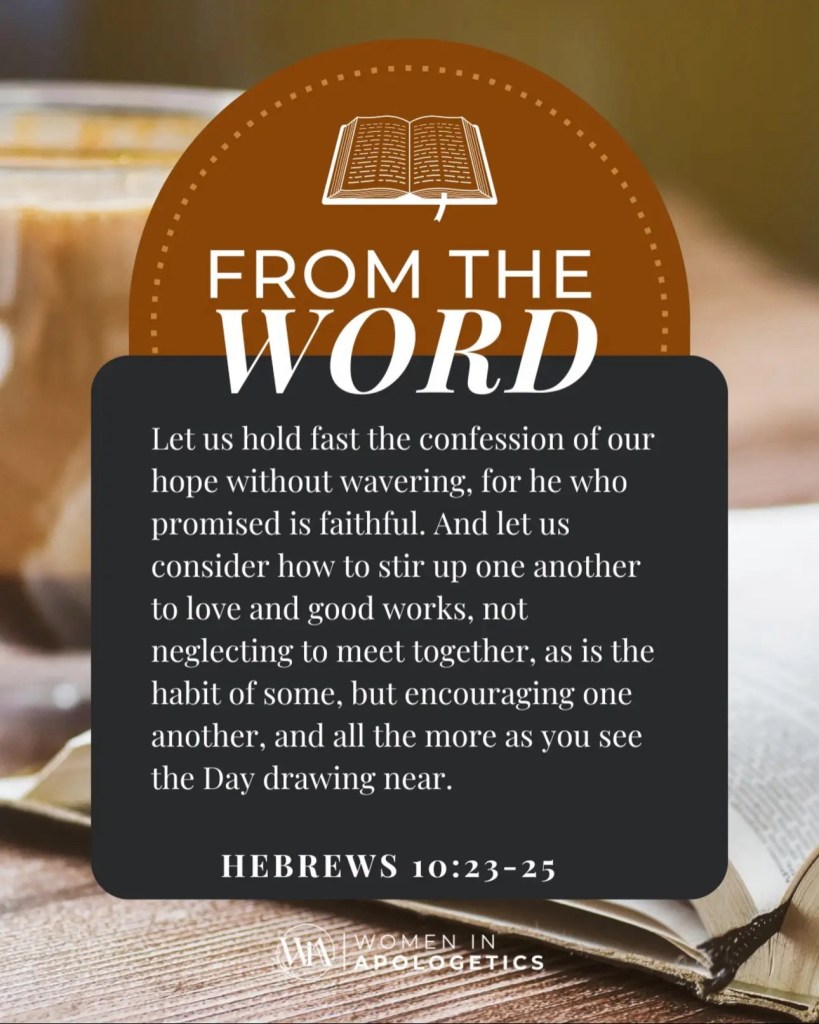
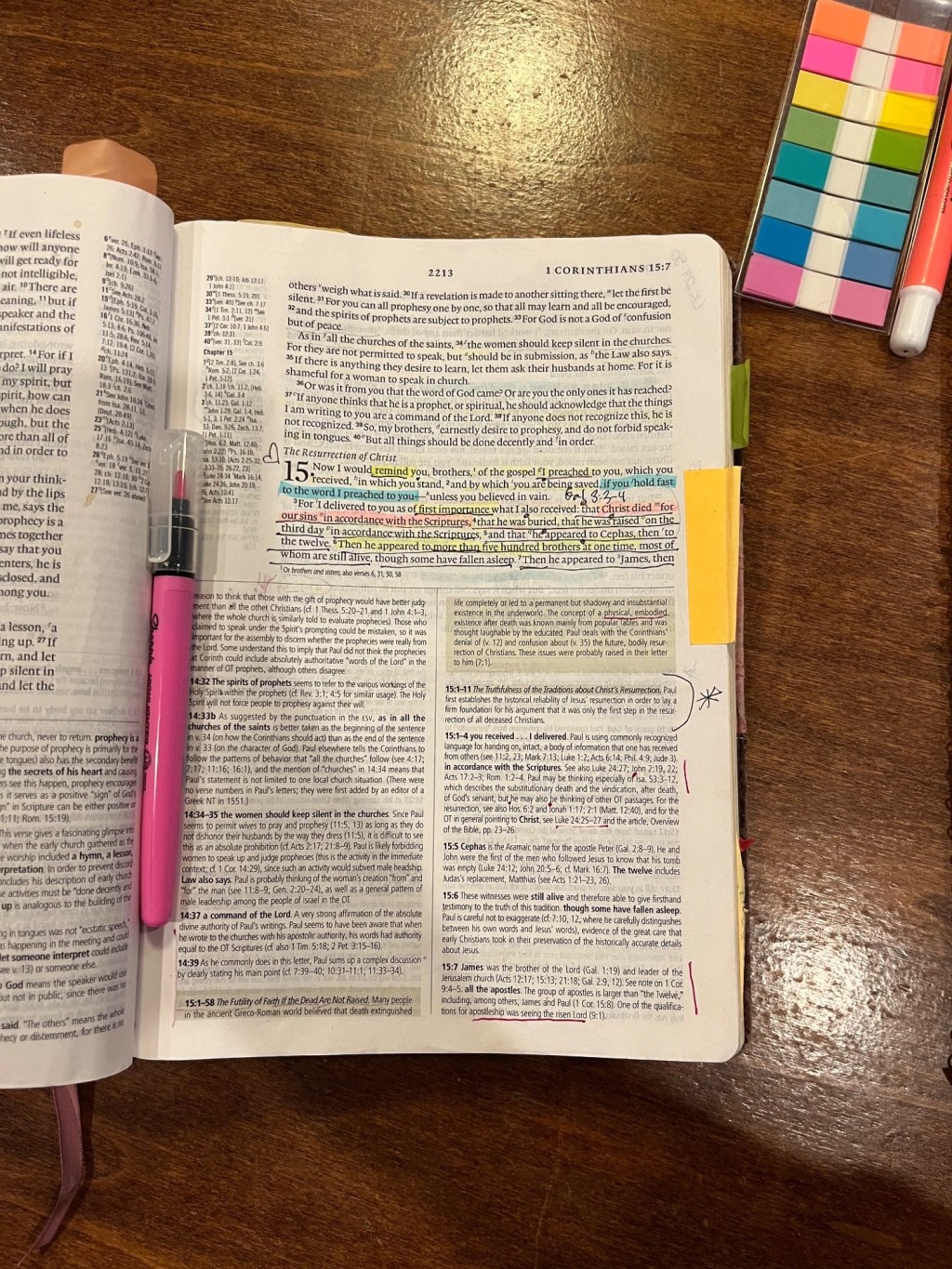
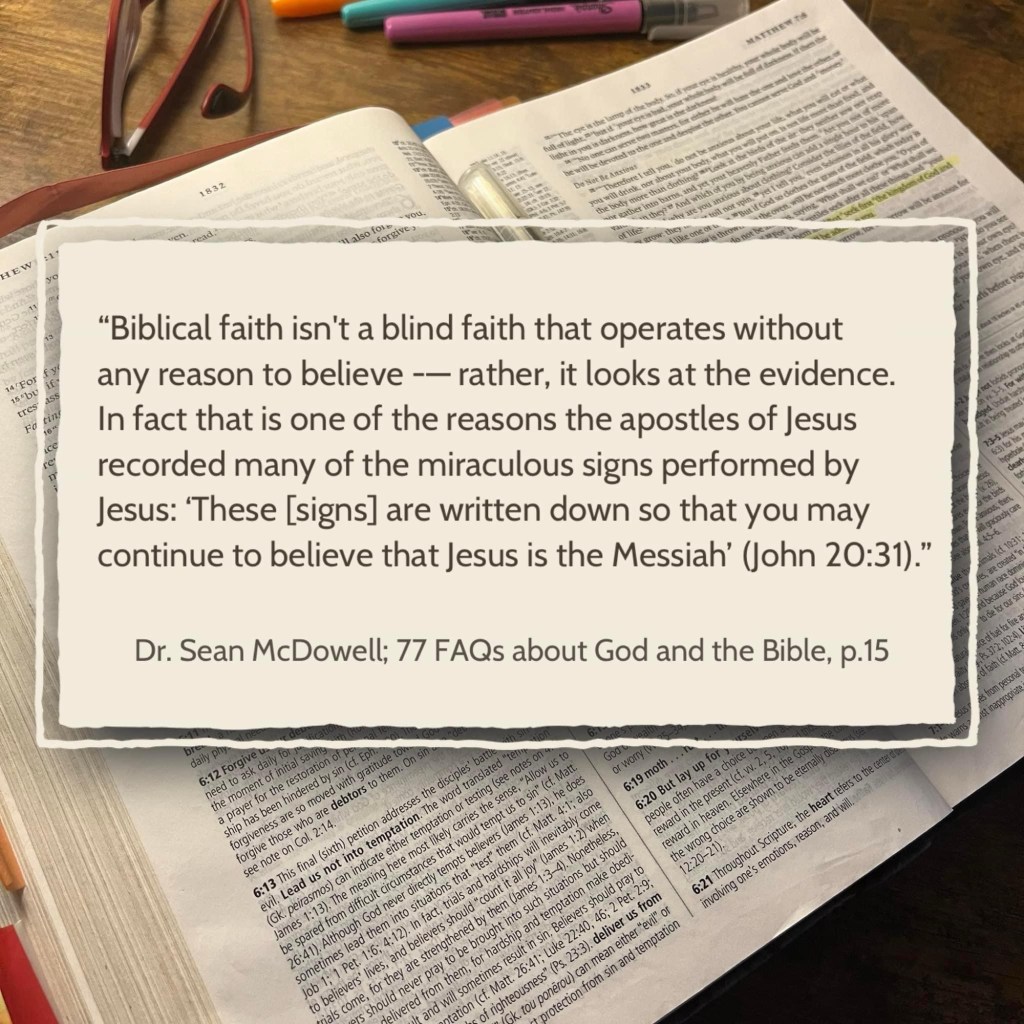

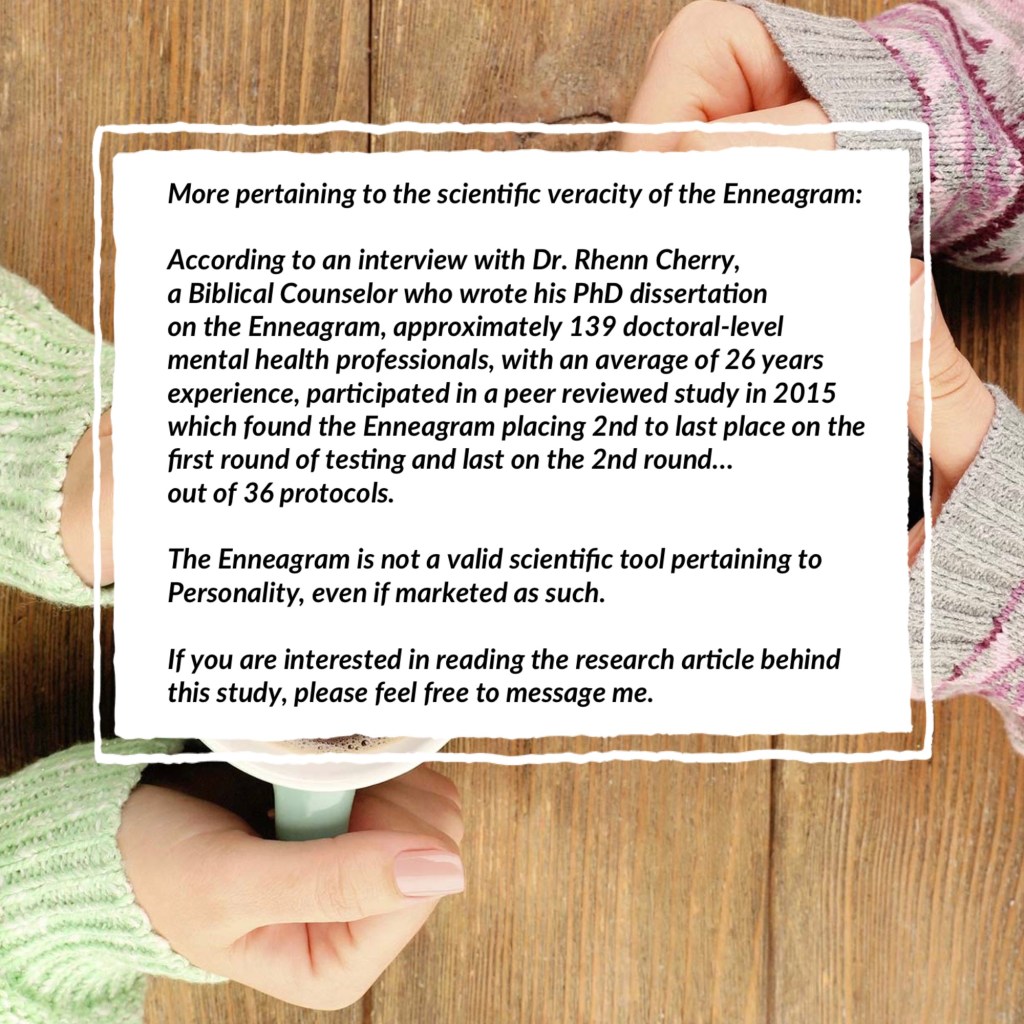


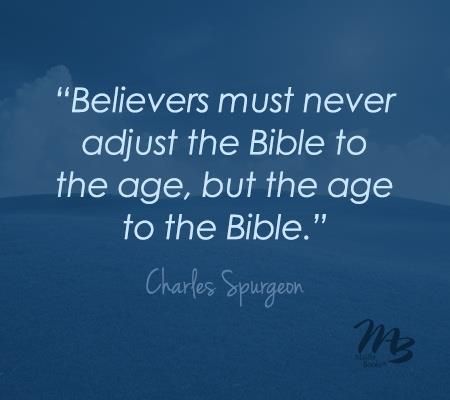
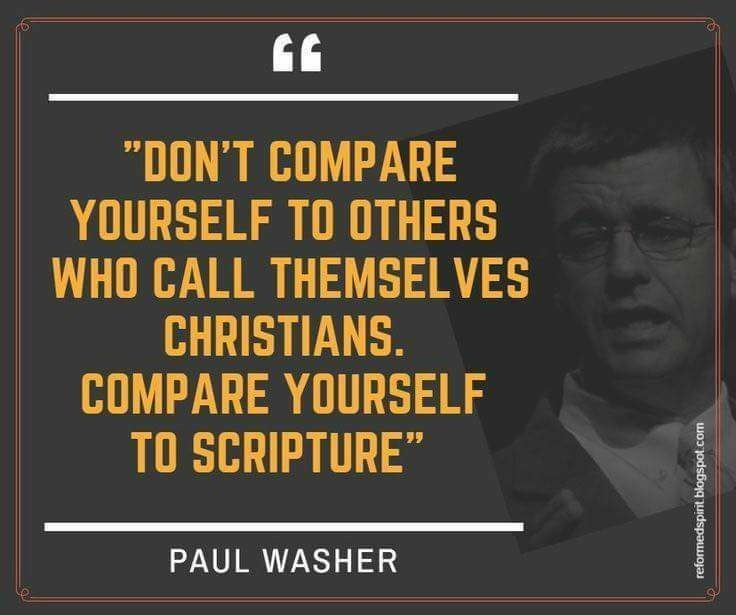

 Hold Fast Apologetics