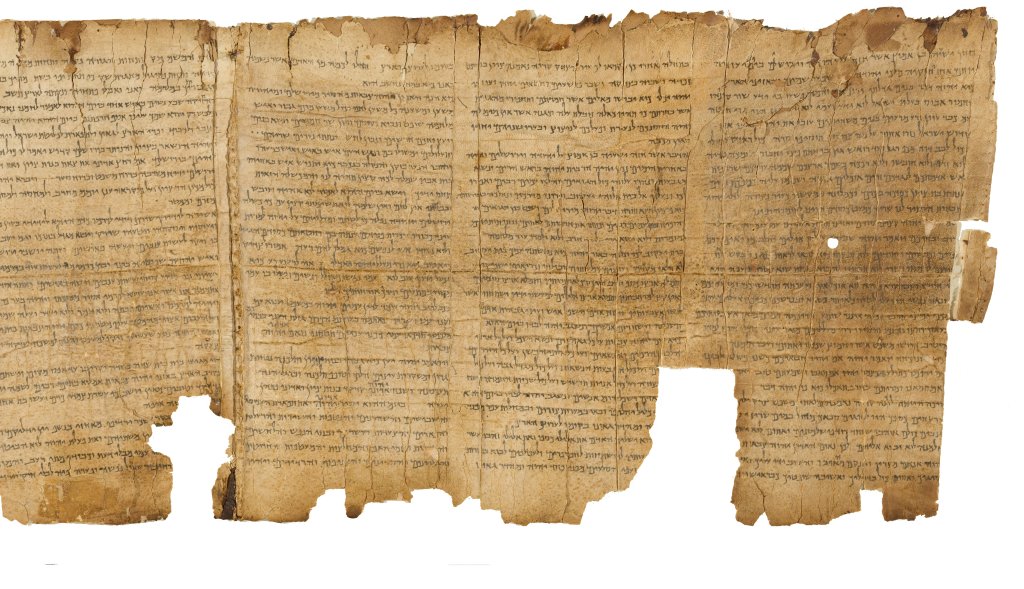
The identity of Isaiah 53’s Suffering Servant has been fervently debated by various scholars and theologians for centuries!
Christians assert that proper exegesis of Isaiah 53 points to a person, Jesus of Nazareth, as the Suffering Servant who redeems Israel and the Gentile nations. Whereas others view Isaiah 53 as representing the (corporate) nation of Israel, claiming Jesus was merely a good teacher, crucified for the charge of blasphemy (identifying Himself as one with the Father). As we can see, both could be wrong, but neither could be correct simultaneously.
It’s my genuine prayer that this post will be a helpful resource for anyone having questions about this incredibly important topic!
Written nearly 700 years before Jesus’ crucifixion (AD 30 or 33):
“Yet he himself bore our sicknesses,
and he carried our pains;
but we in turn regarded him stricken,
struck down by God, and afflicted.
5 But he was pierced because of our rebellion,
crushed because of our iniquities;
punishment for our peace was on him,
and we are healed by his wounds.
6 We all went astray like sheep;
we all have turned to our own way;
and the Lord has punished him
for the iniquity of us all.”
(Isaiah 53:4-6)
Written approximately 30 years after Jesus’s crucifixion and bodily resurrection:
“He did not commit sin, and no deceit was found in his mouth; 23 when he was insulted, he did not insult in return; when he suffered, he did not threaten but entrusted himself to the one who judges justly. 24 He himself bore our sins in his body on the tree; so that, having died to sins, we might live for righteousness. By his wounds you have been healed. 25 For you were like sheep going astray, but you have now returned to the Shepherd and Overseer of your souls.” (1 Peter 2:22-25)
Who wrote Isaiah?
| “The author of this book claims to be Isaiah, son of Amos. He was a great poet, orator, and statesman. Isaiah was highly educated, knowledgeable in international affairs, and on familiar terms with the royal court. He was no doubt the greatest of the writing prophets both in the extent and comprehensiveness of his message and in his ability to communicate.” (pgs 244-245) |
When was Isaiah written?
| The book of Luke was written between 740 and 690 BC (nearly 700 years before Jesus’s crucifixion in AD 30 or 33). During the reigns of Jotham, Ahaz, Hezekiah, and Manasseh. (p. 231) Isaiah wrote from Judah. Judah was “located in southern Palestine. Its capital was Jerusalem, where throughout the book, Isaiah centered his activity.” (p. 245) |
General Details about the Book of Isaiah
“In many aspects, Isaiah is a miniature Bible. It has sixty-six chapters; the Bible has 66 books. The first thirty-nine chapters correspond to the thirty-nine books of the Old Testament, speaking largely about Israel before the coming Messiah. The last twenty-seven chapters parallel the New Testament, speaking largely about the Messiah and His messianic kingdom. Isaiah is one of the Old Testament books most quoted in the New Testament.” (p. 243)
“The earliest manuscripts of Isaiah discovered among the Dead Sea Scrolls support the fact that Isaiah is one complete and whole book.”
“At the heart of the critic’s objection is their aversion to the fact that Isaiah contains supernatural predictive prophecy. For example, parts of Isaiah name Cyrus (who became king of Persia) more than one hundred fifty years before he lived (44:28; 45:1). But no one who believes in a God who created this world should have any problem believing that He can reveal the future in advance.” (p. 244)
To whom was Isaiah written?
“Isaiah as a prophet ministered primarily to the southern kingdom of Judah. His message was generally directed toward Judah’s sinful people (1:4) and particularly to is eveil leaders (1:23).” (p. 245)
Why was Isaiah written?
“The historical Purpose: “Isaiah was sent by God to warn Judah of the sins that lead ot Israel’s downfall, and ot warn of the evil that would lead to their own. His message to them was twofold: God will bring condemnation on Israel and Judah through thenations but He will also one day provide salvation through Israel and Judah to the nations.”
“I will put hostility between you and the woman, and between your offspring and her offspring. He will strike your head, and you will strike his heel.” (Genesis 3:15)
“I will bless those who bless you, I will curse anyone who treats you with contempt, and all the peoples on earth will be blessed through you.” (Genesis 12:3)
“Now the promises were spoken to Abraham and to his seed. He does not say “and to seeds,” as though referring to many, but referring to one, and to your seed, who is Christ.” (Galatians 3:16)
“The doctrinal purpose: This book comprehends all the great truths of the Old Testament regarding the salvation from man’s sin (1) through Christi’s redemptive work (53) as well as the final glorious restoration of this earth (65).”
“The Christological purpose: Isaiah presents the most complete and comprehensive descriptions of Christ found in the Old Testament. For example, Christ is referred to as the “Lord…high and lifted up” (6); the son of the virgin (7:14); the “Wonderful Counselor, Mighty God, Everyloasting Father, Prince of Peace” 9:6); a Branch from Jesse and Anointed of the Lord (11:1, 2); the “Compfro” of His people (40); the “Rdeemer” and the “Holy Oneof Hsrael” and their Crator and King (43); the Deliverer of the camptives (61) and more.”
“The message of Isaiah is one of salvation both for Israel in particular and for all nations in general. The book has been called “The Gospel According ot Isaiah.” The book may be divided into three sections: the prophetic (1-35), the historic (36-39), and the messianic (40-66).” (pgs. 245-246)
Was Isaiah 53 referring to the nation of Israel or to the promised Messiah (Jesus)?
📌 Jesus’s Crucifixion occurred in AD 30 or 33.
“The national servant, Israel, is loved by God but guilty, blind, and deaf, suffering for its own sins. The individual Servant is righteous, suffering vicariously for the sins of others. This agrees with the Sinai theology of blessings for national obedience and curses for national disobedience (Lv 26; Dt 28). In light of this, righteous, nbational Isreael wouldbe established in the land, triumphing over her enemies; unrighteous Israel would be exiled ot the nations, vanquished by her enemies. In other words, Daniel, while in Babylonian captivity, uttered, “All Israel has transgressed your law and turned aside, rfulsing ot obey your voice. And the curse and oath that are written in the Law of Moses, the servant of God has been poured out upon us, because we have sinned against him” (Daniel 9:11). Under no circumstances, then, would the Lord exile Israel if they were righteous as a people. Thus, Isaiah 53 cannot apply to the nation of Israel, regardless of Longstanding Jewish tradition.
Could Isa 53 instead apply to the rightwoud remnant, as posited by some rabbinic commentators? The voice of that remnannt appear sot be heard in passages like Ps 44, where the author protests that terrible calamities have come upon his people “though we have not forgotten you, and we have not been false to your covenant” (Ps 44:17 ESV).
Certainly, there were righteous individuals like Daniel and Ezekiel who suffered in exile because of the guilt of the nation as a whole. Yet once again, this interpretation breaks down since: (1) The suffering of hte righteous remnant did not bring healing to the nations which, instead, were severely judged by the Lord for their excessive treament of Israel (Jer 50:17-18; Mic 5:5-6); (2) In contrast to Ibn Exra’s view, that ht e”healing” of the nations came through exiled Isrel’s prayers for their wellbeing (Jer 29:7), not only were those nations note healed, but it appears tha tht erighteous remnant interveded for judgement (rather than healing) to come upon their enemies. See, e.g., Lam 1:22 and 3:61-66, and note that this righteous remnant identitfied with the sin and gilt of the rest of hte nation of Isreal, thereby recognizing that their suffering was just; (3) Since the servant is clealy an individual elsewhere in teh Isa 40-55, adn since Isa 53 reads most naturally as personal rather than collective, there is no good reason to apply it to the righteous remnant, unless that remnant is reduced otone, namely, the Messiah, the ruly righteous One whose vicarious suffereing brings healing to the repentant Isreal and the nations.” [1]
“When Israel saw the great power that the Lord used against the Egyptians, the people feared the Lord and believed in him and in his servant Moses.” Exodus 14:31
“So Moses the servant of the Lord died there in the land of Moab, according to the Lord’s word.” Deuteronomy 34:5
“After the death of Moses the Lord’s servant, the Lord spoke to Joshua son of Nun, Moses’s assistant: ‘Moses my servant is dead.’” Joshua 1:1-2
“The Lord your God will raise up for you a prophet like me from among you, from your brothers—it is to him you shall listen— just as you desired of the Lord your God at Horeb on the day of the assembly, when you said, ‘Let me not hear again the voice of the Lord my God or see this great fire any more, lest I die.’ And the Lord said to me, ‘They are right in what they have spoken. I will raise up for them a prophet like you from among their brothers. And I will put my words in his mouth, and he shall speak to them all that I command him. And whoever will not listen to my words that he shall speak in my name, I myself will require it of him.”
Deuteronomy 18:15:19
As we can see in the entire context of Isaiah 53, the Servant is a righteous person of Jewish descent, sent by God to save both Israel and the Gentile nations. For more information pertaining to Isaiah 53 and the Suffering Servant, this video resource by Nate Sala from Wise Disciple is an excellent resource!
| Isaiah 52:13 to Isaiah 53:12 | OT & NT Connections to Isaiah 52 & 53 |
| Isaiah 52:13 See, my servant will be successful; He will be raised and lifted up and greatly exalted. | Isaiah 42:1 CSB“This is my servant; I strengthen him, this is my chosen one; I delight in him. I have put my… Isaiah 49:3-7He said to me, “You are my servant, Israel, in whom I will be glorified.” But I myself said: I… Isaiah 50:10Who among you fears the Lord and listens to his servant? Who among you walks in darkness, and… Isaiah 53:11After his anguish, he will see light and be satisfied. By his knowledge, my righteous servant… Ezekiel 34:23-24 CSBI will establish over them one shepherd, my servant David, and he will shepherd them. He will… Zechariah 3:8 CSB“Listen, High Priest Joshua, you and your colleagues sitting before you; indeed, these men are a… Acts 3:13 CSB“The God of Abraham, Isaac, and Jacob, the God of our ancestors, has glorified his servant Jesus, whom you handed over and denied before Pilate, though he had decided to release him.” |
| Isaiah 52:14 “Just as many were appalled at you — His appearance was so disfigured that he did not look like a man, and his form did not resemble a human being—” | John 19:1 “Then Pilate had Jesus flogged with a lead-tipped whip.” Matthew 27:29 “and twisting together a crown of thorns, they put it on his head and put a reed in his right hand. And kneeling before him, they mocked him, saying, “Hail, King of the Jews!” Mark 15:19 “And they were striking his head with a reed and spitting on him and kneeling down in homage to him.” |
| Isaiah 52:15 “So he will sprinkle many nations. Kings will shut their mouths because of him, for they will see what had not been told them, and they will understand what they had not heard.” | Numbers 19:18-21“A person who is clean is to take hyssop, dip it in the water, and sprinkle the tent, all the…” Ezekiel 36:25 “I will also sprinkle clean water on you, and you will be clean. I will cleanse you from all your…” |
| Isaiah 53:1 “Who has believed what we have heard? And to whom has the arm of the Lord been revealed?” | Exodus 6:6 “Therefore tell the Israelites: ‘I am the LORD, and I will bring you out from under the yoke of the Egyptians. I will free you from being slaves to them, and I will redeem you with an outstretched arm and with mighty acts of judgment.’” John 12:37-38 “Although Jesus had performed so many signs in their presence, they still did not believe in Him. This was to fulfill the word of Isaiah the prophet: ‘Lord, who has believed our message? And to whom has the arm of the Lord been revealed?’” Acts 13:17 “The God of this people Israel chose our ancestors, made the people prosper during their stay in the land of Egypt, and led them out of it with a mighty arm.” |
| Isaiah 53:2 “He grew up before him like a young plant and like a root out of dry ground. He didn’t have an impressive form or majesty that we should look at him, no appearance that we should desire him.” | Isaiah 11:1“Then a shoot will grow from the stump of Jesse, and a branch from his roots will bear fruit.” Matthew 13:55 “Is not this the carpenter’s son? Is not his mother called Mary? And are not his brothers James and Joseph and Simon and Judas?” |
| Isaiah 53:3 “He was despised and rejected by men, a man of suffering who knew what sickness was. He was like someone people turned away from; he was despised, and we didn’t value him.” | Psalm 22:6“But I am a worm and not a man, scorned by mankind and despised by people.” Isaiah 49:7“This is what the Lord, the Redeemer of Israel, his Holy One, says to one who is despised, to one…” Luke 18:31-33“Then he took the Twelve aside and told them, ‘See, we are going up to Jerusalem. Everything that…’” Mark 9:12“And he said to them, ‘Elijah does come first to restore all things. And how is it written of the Son of Man that he should suffer many things and be treated with contempt?’” Mark 8:31 “Then He began to teach them that the Son of Man must suffer many things and be rejected by the elders, chief priests, and scribes, and that He must be killed and after three days rise again.” Luke 9:22 “The Son of Man must suffer many things and be rejected.” John 1:10-11 “He was in the world, and the world was created through him, and yet the world did not recognize…” Hebrews 4:15 “For we do not have a high priest who is unable to sympathize with our weaknesses, but one who…” |
| Isaiah 53:4 “Yet he himself bore our sicknesses, and he carried our pains; but we in turn regarded him stricken, struck down by God, and afflicted.” | Matthew 8:17 “so that what was spoken through the prophet Isaiah might be fulfilled: He himself took our…” 1 Peter 2:21“For you were called to this, because Christ also suffered for you, leaving you an example, that…” |
| Isaiah 53:5 “But he was pierced because of our rebellion, crushed because of our iniquities; punishment for our peace was on him, and we are healed by his wounds.” | Romans 4:25 CSB“He was delivered up for our trespasses and raised for our justification.” 1 Corinthians 15:3 “For I passed on to you as most important what I also received: that Christ died for our sins…” Hebrews 9:28 “so also Christ, having been offered once to bear the sins of many, will appear a second time,… Isaiah 1:4 “Oh sinful nation, people weighed down with iniquity, brood of evildoers, depraved children!” Jeremiah 2:30“I have struck down your children in vain; they would not accept discipline. Your own sword has…” Zephaniah 3:2“She has not obeyed; she has not accepted discipline. She has not trusted in the Lord; she has…” Hebrews 5:8 “Although he was the Son, he learned obedience from what he suffered.” 1 Peter 2:24 “He himself bore our sins in his body on the tree, that we might die to sin and live to righteousness. By his wounds you have been healed.” |
| Isaiah 53:6 “We all went astray like sheep; we all have turned to our own way; and the Lord has punished him for the iniquity of us all.” | 1 Peter 2:25 “For you were straying like sheep, but have now returned to the Shepherd and Overseer of your souls.” Matthew 18:12“What do you think? If someone has a hundred sheep, and one of them goes astray, won’t he leave…” |
| Isaiah 53:7“He was oppressed and afflicted, yet he did not open his mouth. Like a lamb led to the slaughter and like a sheep silent before her shearers, he did not open his mouth.” | Jeremiah 11:19“For I was like a docile lamb led to slaughter. I didn’t know that they had devised plots against…” Matthew 26:63“But Jesus kept silent. The high priest said to him, ‘I charge you under oath by the living God:…’” Matthew 27:12-14“While he was being accused by the chief priests and elders, he didn’t answer. Then Pilate said…” Luke 23:9“So he kept asking him questions, but Jesus did not answer him.” John 19:9“He went back into the headquarters and asked Jesus, “Where are you from?” But Jesus did not give…” Acts 8:32-33 “Now the Scripture passage he was reading was this: He was led like a sheep to the slaughter, and…” 1 Peter 2:23 “When he was insulted, he did not insult in return; when he suffered, he did not threaten but…” |
| Isaiah 53:8 “He was taken away because of oppression and judgment, and who considered his fate? For he was cut off from the land of the living; he was struck because of my people’s rebellion.” | Acts 13:28 “And though they found in him no guilt worthy of death, they asked Pilate to have him executed.” John 19:15“They cried out, ‘Away with him, away with him, crucify him!” Pilate said to them, ‘Shall I crucify your King?’ The chief priests answered, ‘We have no king but Caesar.’” |
| Isaiah 53:9 “He was assigned a grave with the wicked, but he was with a rich man at his death, because he had done no violence and had not spoken deceitfully.” | Matthew 27:57-60“When it was evening, a rich man from Arimathea named Joseph came, who himself had also become a…” 1 Peter 2:22 “He did not commit sin, and no deceit was found in his mouth;” 1 John 3:5“You know that he was revealed so that he might take away sins, and there is no sin in him.” |
| Isaiah 53:10 “Yet the Lord was pleased to crush him severely. When you make him a guilt offering, he will see his seed, he will prolong his days, and by his hand, the Lord’s pleasure will be accomplished.” | Isaiah 44:28 “who says to Cyrus, ‘My shepherd, he will fulfill all my pleasure’” 1 Timothy 2:5-6 “For there is one God and one mediator between God and mankind, the man Christ Jesus, 6 who gave himself as a ransom for all, a testimony at the proper time.” Titus 2:14 “He gave himself for us to redeem us from all lawlessness and to cleanse for himself a people for his own possession, eager to do good works.” |
| Isaiah 53:11 “After his anguish, he will see light and be satisfied. By his knowledge, my righteous servant will justify many, and he will carry their iniquities.” | Acts 13:39 “Everyone who believes is justified through him from everything that you could not be justified…” Romans 5:18-19“So then, as through one trespass there is condemnation for everyone, so also through one…” 2 Corinthians 5:21 “He made the one who did not know sin to be sin for us, so that in him we might become the righteousness of God.” 1 Peter 3:18“For Christ also suffered for sins once for all, the righteous for the unrighteous, that he might bring you to God. He was put to death in the flesh but made alive by the Spirit,” |
| Isaiah 53:12 “Therefore I will give him the many as a portion, and he will receive the mighty as spoil, because he willingly submitted to death, and was counted among the rebels; yet he bore the sin of many and interceded for the rebels.” | Matthew 26:42“Again, a second time, he went away and prayed, ‘My Father, if this cannot pass unless I drink…” John 10:14-18“I am the good shepherd. I know my own, and my own know me, just as the Father knows me, and I…” Philippians 2:6-8 “who, existing in the form of God, did not consider equality with God as something to be…” Luke 22:37“For I tell you, what is written must be fulfilled in me: And he was counted among the lawless….” Hebrews 9:28“so also Christ, having been offered once to bear the sins of many, will appear a second time,…” Luke 23:34“Then Jesus said, ‘Father, forgive them, because they do not know what they are doing.’ And they…” Romans 8:34“Who is the one who condemns? Christ Jesus is the one who died, but even more, has been raised;…” Hebrews 7:25“Therefore, he is able to save completely those who come to God through him, since he always…” Colossians 2:15 “He disarmed the rulers and authorities and disgraced them publicly; he triumphed over them in him.” |
“‘Christ died’ —that is history; ‘Christ died for my sins—that is doctrine.“ J. Gresham Machen; C & L, p. 23
Was Jesus Crucified?
“Even if you silenced the voices of the New Testament authors, you would still have a robust description of Jesus and his followers from ancient, hostile non-Christian voices in the fallout…There are more non-Christian voices in this extrabiblical collection (ninety-two historical figures) than Christian ones, and regardless of their social stature, ethnicity, motivation, or region, the common description of Jesus (at their core) remains the same.” [2]
The Chart below contains examples of both Christian and non-Christian attestations of Jesus’s existence, crucifixion, and worship. These quotes are from the first and second centuries, exhibited the compelling evidence of Jesus’s impact on the world and why his crucifixion/bodily resurrection matters (well before the Council of Nicaea).
| Name | Quote | Topics Covered |
| Thallus (AD 52) Samarian historian Non-Christian | “Another historian, Sextus Julius Africanus, wrote a text entitled History of the World in AD 221 which quoted Thallus’s chronicled statement pertaining to the darkness that was observed at the time of Jesus’s death.” [1] “On the whole world there pressed a most fearful darkness; and the rocks were rent by the earthquake, and many places in the Judea and other districts were thrown down. This darkness Thallus, in the third book of his History, calls, as appears to me without reason, an eclipse of the sun.” [1] Julius Africanus’s historical writings | – Jesus existed.- Jesus died.- Notable weather conditions coincided with Jesus’s death. |
| Josephus (AD 37-101) Jewish historian Non-Christian | “Now there was about this time Jesus, a wise man. For he was a doer of startling deeds, a teacher of such men as receive the truth with pleasure. And he gained a following both among many Jews and many of Greek origin. And when Pilate, at the suggestion of the principal men amongst us, condemned him to the cross, those that loved him at the first did not forsake him. And the tribe of Christians, so named from him, are not extinct at this day.” [2] Josephus’s Antiquities of the Jews (18:3:3) | – Jesus existed.- Brother of James.- Referred to Jesus as a wise man.- Referred to Pontius Pilate.- Acknowledged that Jesus performed miracles. |
| Clement (AD 70-96) First century church leader in Rome Christian | Clement “wrote a letter to the church at Corinth (ca. AD 70-96). In it he speaks of the teachings of Jesus (13:1), his death (21:6), and his resurrection from the dead (24:1).” [5] The First Letter of Clement to Rome | – Jesus existed.- Affirms Jesus’s death and resurrection. |
| Ignatius (AD 50-117) Disciple of John, Bishop in Antioch Christian | “For our God, Jesus the Christ, was conceived by Mary according to God’s plan, both from the seed of David and of the Holy Spirit.” [3] Ignatius, Letter to the Ephesians, 18.2 | – Jesus existed.- Jesus was the promised Messiah.- Jesus is God. |
| Tacitus (AD 56-120) Ancient Roman historian Non-Christian | “Consequently, to get rid of the report, Nero fastened the guilt and inflicted the most exquisite tortures on a class hated for their abominations, called Christians by the populace. Christus, from whom the name had its origin, suffered the extreme penalty during the reign of Tiberius at the hands of one of our procurators, Pontius Pilatus, and a most mischievous superstition, thus checked for the moment, again broke out not only in Judea, the first source of the evil, but even in Rome, where all things hideous and shameful from every part of the world find their centre and become popular.” [4] Annals 12 | – Jesus (Christus) existed.- Jesus had followers.- Pontius Pilate existed.- Nero persecuted Christians.-Tacitus “hated” Christians because their allegiance was to Jesus not to the worshiped gods of the culture. |
| Polycarp (AD 69-155) Disciple of John, Bishop at Smyrna Christian | “Now may the God and Father of our Lord Jesus Christ, and the eternal high priest himself, the Son of God Jesus Christ, build you up in faith and truth…and to us with you, and to all those under heaven who will yet believe in our Lord and God Jesus Christ and in his Father who raised him from the dead.” [3]The Letter of Polycarp to the Philippians 12.2 | – Polycarp was martyred for being a Christian.- Preached Jesus was a real man. – Preached that Jesus was/is God. |
| Mara Bar-Serapion (AD 70 – Unknown) Stoic (Syrian) philosopher Non-Christian | “What benefit did the Athenians obtain by putting Socrates to death? Famine and plague came upon them as judgment for their crime. Or, the people of Samos for burning Pythagoras? In one moment their country was covered with sand. Or the Jews by murdering their wise king?…After that their kingdom was abolished. God rightly avenged these men…The wise king…Lived on in the teachings he enacted.” [4] A Letter of Mara, Son of Serapion | – Jesus existed.- Confirmed Jesus’s Jewish heritage.- Claimed Jesus was wise. – Affirmed Jesus’s death. |
| Justin Martyr (AD 100-165) Christian apologist *”Apologia” is Greek for “Reasoned Defense” | “And that Christ being Lord, and God the Son of God, and appearing formerly in power as Man, and Angel, and in the glory of fire as at the bush, so also was manifested at the judgment executed on Sodom, has been demonstrated fully by what has been said.” [3] Justin Martyr, Dialogue with Trypho, 128. Translation from Alexander Roberts and James Donaldson, Ante-Nicene Fathers, I:264. | – Jesus existed.- Justin was martyred for following Jesus.- Jesus was/is God.- Jesus was the Messiah. |
| Pliny the Younger (AD 61-113) Governor of Bithynia; Connected with Trajan Non-Chrisitan | “Th never to falsify their wordey (the Christians) were in the habit of meeting on a certain fixed day before it was light, when they sang in alternate verses a hymn to Christ, as to a god, and bound themselves by a solemn oath, not to any wicked deeds, but never to commit any fraud, theft or adultery,, nor deny a trust when they should be called upon to deliver it up; after which it was their custom to separate, and then reassemble to partake of food—but food of an ordinary and innocent kind.” [4] Pliny, Letters 10.96-97 (Pliny to the Emperor Trajan) | – Followers of Jesus worshiped him as God. – Christ was a reference to Jesus. |
| Suetonius (AD 121) Roman writer& historian Non-Christian | “Because the Jews at Rome caused constant disturbances at the instigation of Chrestus (Christ), he (Claudius) expelled them from the city (Rome).” [4] Suetonius, Claudius 18.2 Christianity Under Claudius, F.F. Bruce | – Jesus was referred to as Chrestus.- Jesus had followers |
| Phlegon of Tralles (AD 140) Historian Non-Christian | Origen refers to Phlegon’s book of history: “And with regard to the eclipse in the time of Tiberius Caesar, in whose reign Jesus appears to have been crucified, and the great earthquakes which then took place, Phlegon too, I think, has written in the thirteenth or fourteenth book of his Chronicles” [5] Origen, Against Celsus, 2.14. Online | – Jesus existed.- Jesus was crucified.- Notable weather phenomenon occurred around the time of Jesus’s death. |
| Lucian of Samosata (AD 166) Greek Satirist Non-Christian | “The Christians, you know, worship a man to this day,–the distinguished personage who introduced their novel rites, and was crucified on that account…. You see, these misguided creatures start with the general conviction that they are immortal for all time, which explains the contempt of death and voluntary self-devotion which are so common among them; and then it was impressed on them by their original lawgiver that they are all brothers, from the moment that they are converted, and deny the gods of Greece, and worship the crucified sage, and live after his laws.” [5] The Lucian of Samosata Project | – Jesus existed.- Jesus had followers.- Jesus was crucified.- Affirmed that Christians would not worship the gods of Greece. |
“The narration of the facts is history; the narration of the facts with the meaning of the facts is doctrine. ‘Suffered under Pontius Pilate, was crucified, dead and buried’ that is history. ‘He loved me and gave Himself for me’ that was the Christianity of the primitive Church.”
– J. Gresham Machen; Christianity & Liberalism, p. 25
Citations
- Rydelnik, Michael, and Edwin Blum, eds. 2019. The Moody Handbook of Messianic Prophecy: Studies and Expositions of the Messiah in the Old Testament. N.p.: Moody Publishers. p. 965-966.
- J. Warner Wallace; Cold Case Christianity. Page 216.
- Bancarz, Steven. 2017. “A List Of Extra-Biblical Sources For The Historical Jesus.” Reasons for Jesus. https://reasonsforjesus.com/a-list-of-extra-biblical-sources-for-the-historical-jesus/.
- Barnett, Tim. 2016. “Nine Early Church Fathers Who Taught Jesus Is God.” Stand to Reason. https://www.str.org/w/nine-early-church-fathers-who-taught-jesus-is-god.
- Warner, J. n.d. “Is There Any Evidence for Jesus Outside the Bible?” Cold Case Christianity. Accessed July 8, 2024. https://coldcasechristianity.com/writings/is-there-any-evidence-for-jesus-outside-the-bible/.
- Windle, Bryan. 2022. “Top Ten Historical References to Jesus Outside of the Bible.” Bible Archaeology Report. https://biblearchaeologyreport.com/2022/11/18/top-ten-historical-references-to-jesus-outside-of-the-bible/.
 Hold Fast Apologetics